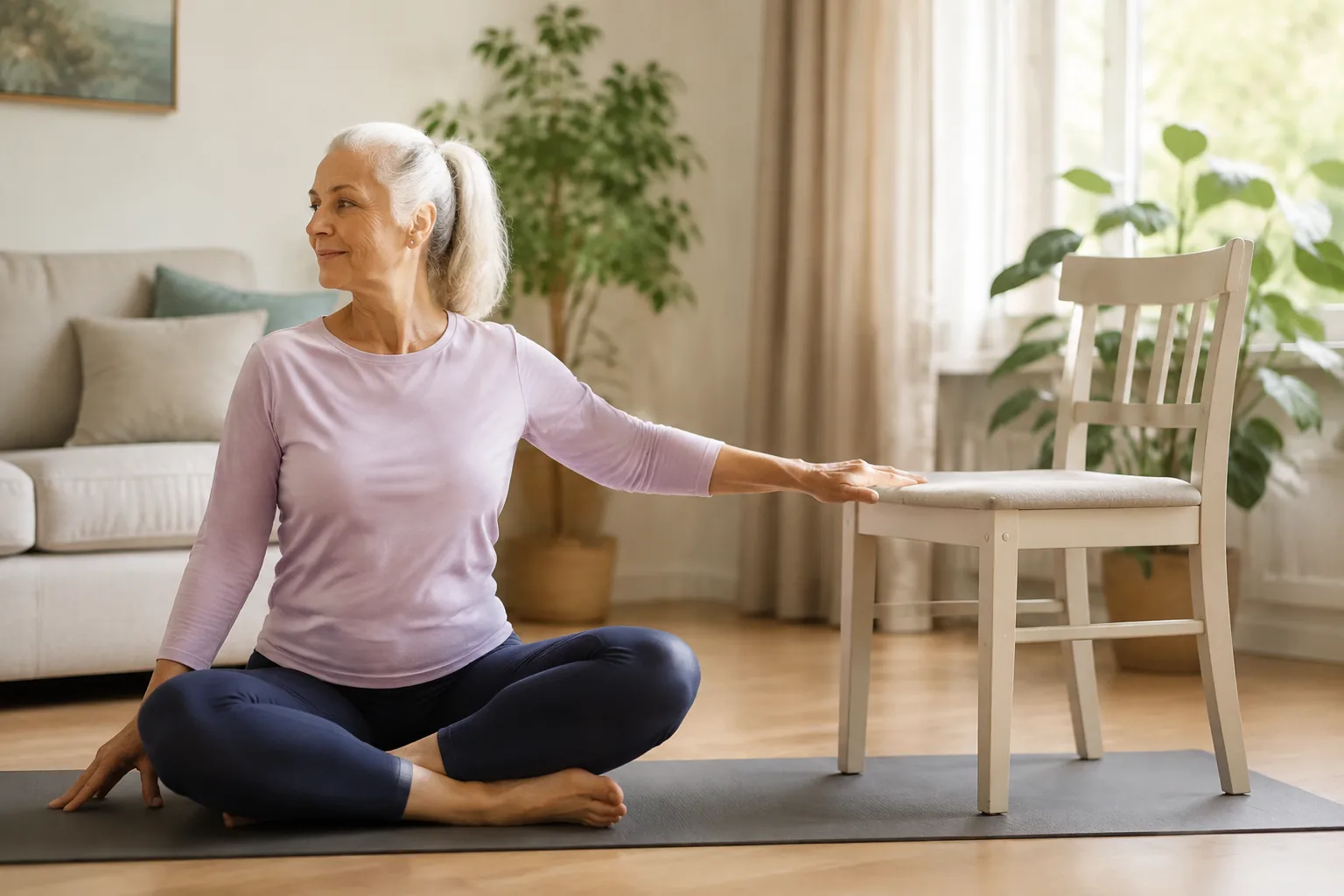
This gentle 15-minute routine is for adults over 50 who want a supported introduction to Pilates-inspired movement at home. It combines breathing and controlled movement with simple strength exercises. It is a suggested starting session, not a personalised rehabilitation plan or a replacement for instruction from a qualified teacher.
Before you start
Use a stable chair without wheels, a clear floor and a wall or bench for support. Choose a range you can control without pain. If you have recently had surgery, a fracture or a fall, or have osteoporosis, a balance problem or a changing health condition, ask a clinician or physiotherapist which movements suit you.
A gentle 15-minute session
- Minutes 0–2: settle and breathe. Sit with your feet supported. Take easy breaths without holding them, relax your shoulders and sit comfortably tall.
- Minutes 2–4: small seated pelvic tilts. Gently rock the pelvis forward and back through a small comfortable range. Try five slow repetitions, then rest.
- Minutes 4–6: seated marching. Lift one foot slightly, lower it with control and switch sides. Try five repetitions on each side without leaning or holding your breath.
- Minutes 6–8: wall push-ups. Place your hands on a wall around chest height. Bend your elbows slightly and press away slowly. Try six comfortable repetitions, with a rest if needed.
- Minutes 8–10: supported heel raises. Hold a secure bench or chair, raise your heels a small amount and lower slowly. Try six repetitions. Keep support throughout.
- Minutes 10–12: sit-to-stands. Stand from a stable chair and sit down slowly three to five times, using hand support as needed. If this is uncomfortable, stay seated and repeat gentle marching instead.
- Minutes 12–15: finish gently. Rest, make a small comfortable shoulder movement and return to easy breathing. Use this time for extra rests during the routine if needed.
Adjust the session to your body
The timings are flexible. Fewer repetitions and longer rests are fine. Stop for sharp or worsening pain, dizziness, unusual breathlessness or a new balance problem. Chest pain, fainting or severe breathing difficulty need urgent medical attention. Do not push through symptoms to finish the clock.
How to progress
Begin with a short session you can repeat comfortably. Improve control before adding repetitions or time, and change one thing at a time. You can combine this with familiar walking and use rest days. A qualified Pilates instructor can help you learn technique and adapt the exercises.
Related support and sources
For supported options, see Chair Pilates for Seniors and Standing Pilates Benefits. The Healthy Ageing Exercise Guide covers the broader strength and balance picture. For public-health guidance on starting activity, see Healthdirect: Fitness and exercise. That general guidance is not a clinical validation of this particular routine.
Edited by Ben Shannon. This is general educational information from a nonclinical publisher. It has not been medically reviewed. Read the editorial policy and health disclaimer.