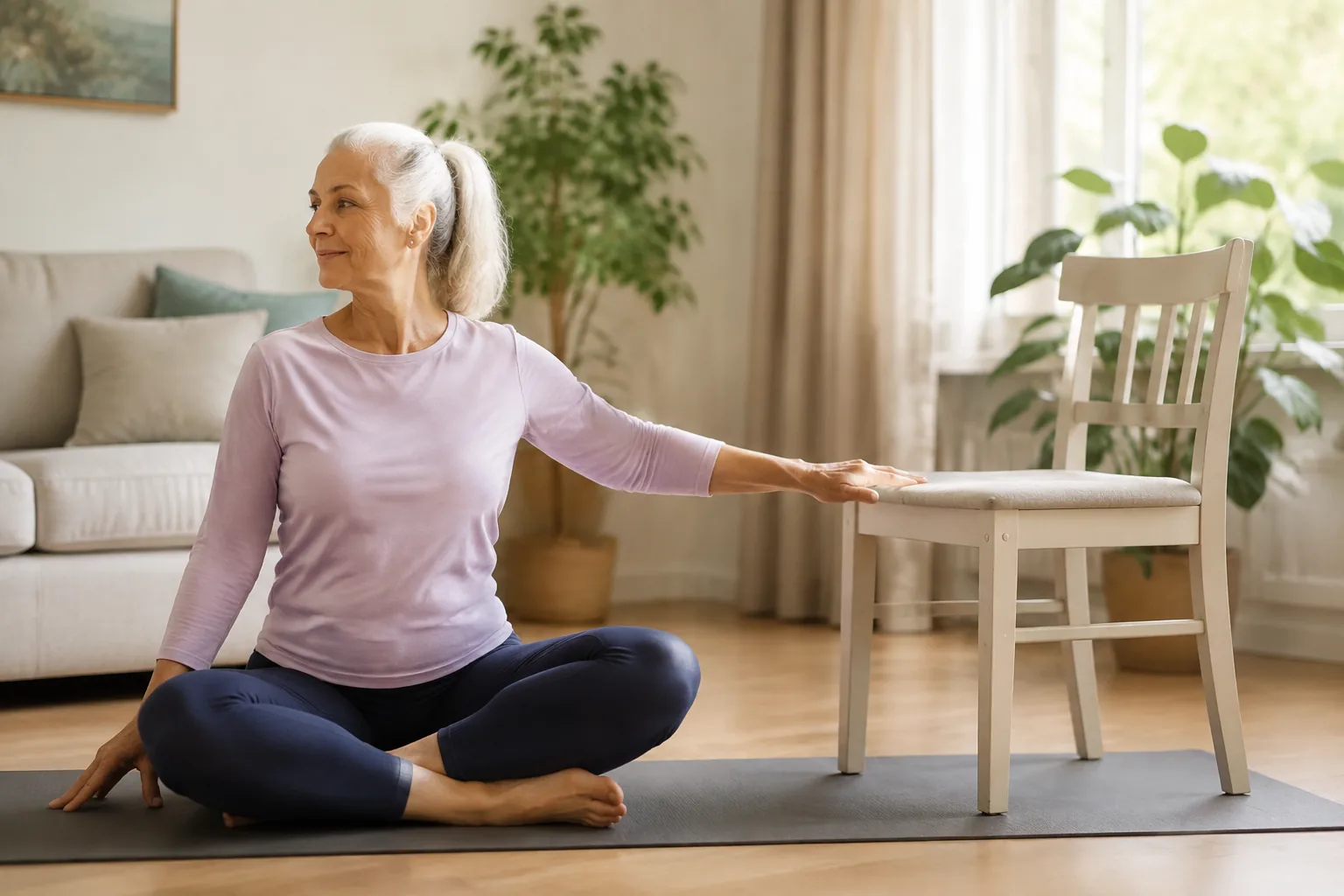
This ten-minute chair yoga wind-down is for a stressful evening when you want gentle seated movement without getting onto the floor. It is a short pause you can try after work, not a treatment for anxiety or a promise of better sleep. For a longer mat-based practice, use our separate 20-minute yoga for stress relief guide.
Set up your chair
Choose a stable chair without wheels on a clear, nonslip surface. Keep both feet supported and move within a comfortable range. If you have a recent injury, surgery, dizziness or a condition affecting your spine or balance, ask a clinician and a qualified yoga teacher about modifications.
Your ten-minute seated wind-down
- Minutes 0–2: arrive. Sit comfortably and notice your feet on the floor. Breathe normally. Keep your eyes open if that feels more comfortable.
- Minutes 2–4: ease the shoulders. Make small shoulder circles or slowly lift and relax your shoulders. Rest your hands on your thighs.
- Minutes 4–6: gentle chair cat-cow. With hands on your thighs, let your chest lift slightly, then soften back towards neutral. Keep the movement small; skip it if your back is uncomfortable.
- Minutes 6–8: supported side reach. Keep one hand resting on the chair or thigh. Reach the other hand a small amount to the side or upwards, then change sides. Avoid leaning far or forcing a stretch.
- Minutes 8–10: finish quietly. Return to a comfortable seated position. Notice your breath without slowing it forcefully or holding it. Choose one manageable next task, such as putting away work items.
Use the timing flexibly
You can spend the entire session sitting quietly, take extra rests or finish early. Stop for pain, dizziness, tingling or breathlessness. If focusing on breathing makes you more anxious, look around the room and notice a few ordinary objects instead.
What yoga can and cannot offer
The NCCIH overview of yoga research and safety describes possible wellbeing benefits but also limits in the evidence and the need for individual modifications. This exact ten-minute sequence has not been clinically tested. Persistent distress or disrupted sleep deserves professional support; yoga can accompany care but does not replace it.
Choose your next guide
See Mental Wellbeing and Stress Management for the broader picture, Bedtime Yoga for a separate sleep-focused practice, and Yoga for Beginners for foundational technique.
Edited by Ben Shannon. This is general educational information from a nonclinical publisher. It has not been medically reviewed. Read the editorial policy and health disclaimer.