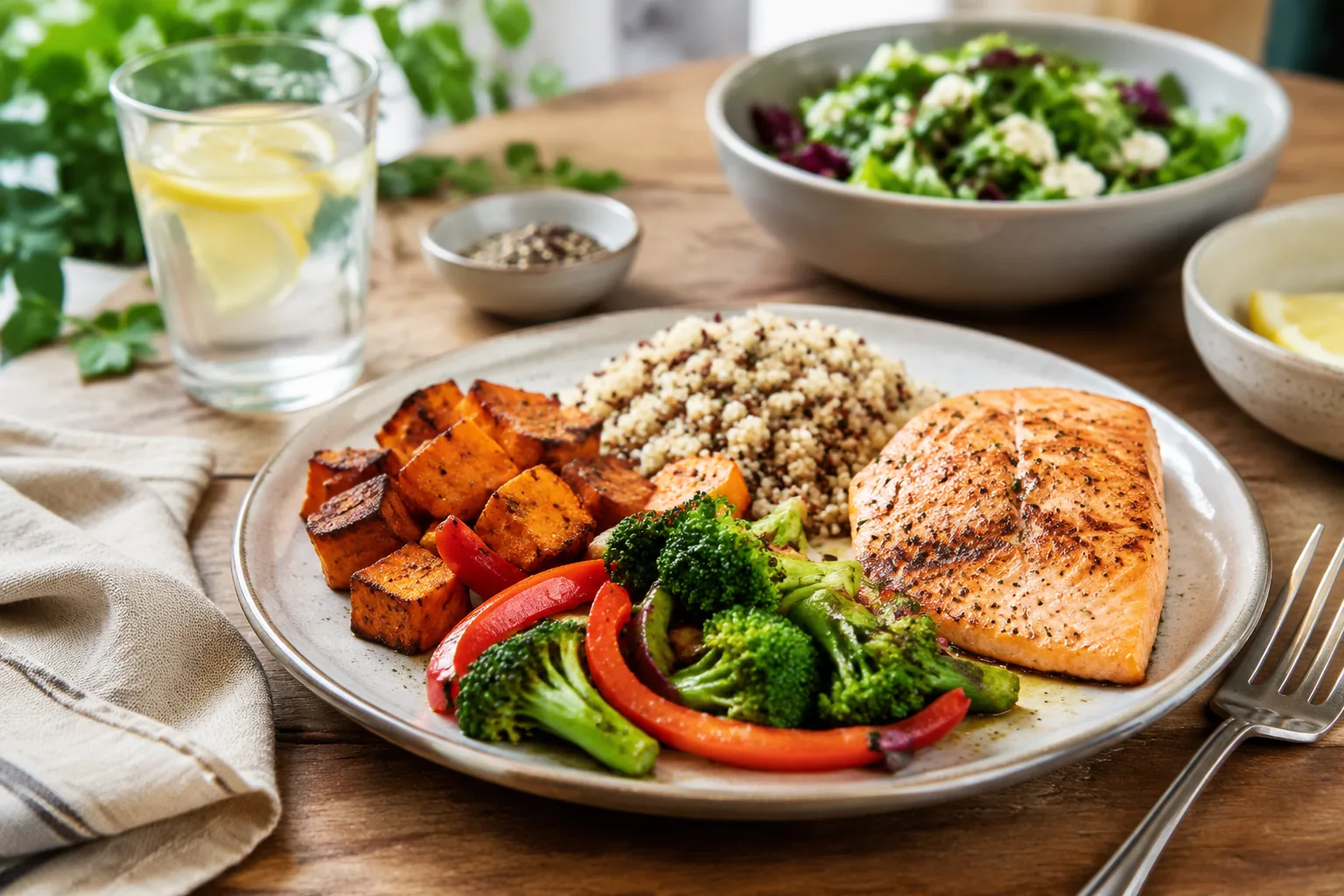
Fibre-rich foods for gut health include vegetables, fruit, legumes, whole grains, nuts and seeds. Fibre is the part of plant foods that is not fully digested in the small intestine. Different fibres add bulk, hold water or are fermented by gut microbes, so variety matters more than finding one “superfood”
Increasing fibre too quickly can cause bloating, gas or discomfort. A gentle approach adds one change at a time and includes enough fluid. People with bowel disease, strictures, recent gastrointestinal surgery, swallowing problems or medically prescribed low-fibre diets need individual advice before increasing intake.
What fibre does
Fibre can support bowel regularity, contribute to fullness and help manage cholesterol and blood glucose as part of an overall dietary pattern. Fermentable fibres provide substrates for gut microbes, which produce compounds including short-chain fatty acids.
The microbiome is complex. A food can support a varied diet without “resetting,” “detoxing” or guaranteeing a specific bacterial profile. Avoid tests or supplements that promise precise personal solutions without strong clinical evidence.
Soluble and insoluble fibre
These labels describe broad properties, and many foods contain both.
- Soluble fibre can form gels and is found in oats, barley, legumes, fruit and some seeds.
- Insoluble fibre adds bulk and is common in whole grains, vegetable skins, nuts and seeds.
- Resistant starch escapes digestion and can be fermented; sources include legumes, some whole grains and cooked then cooled potato or rice.
You do not need to calculate each type. Eat a range of plant foods.
High-fibre foods list
Legumes
Lentils, chickpeas, kidney beans, black beans, cannellini beans, split peas and edamame provide fibre and protein.
Start with a few tablespoons if legumes are new. Rinse canned varieties and increase gradually.
Whole grains
Rolled oats, barley, brown rice, quinoa, wholegrain bread and wholemeal pasta retain more of the grain than refined alternatives.
Check labels: colour alone does not prove a bread is wholegrain.
Vegetables
Broccoli, peas, carrots, leafy greens, cauliflower, pumpkin, sweet potato and many others contribute fibre and diverse plant compounds.
Fresh, frozen and reduced-salt canned vegetables all count.
Fruit
Berries, pears, apples, oranges, kiwi fruit and stone fruit provide fibre, especially when eaten whole rather than as juice.
Choose forms you tolerate. Peeled or cooked fruit may be more comfortable for some people.
Nuts and seeds
Almonds, walnuts, peanuts, chia, flax and pumpkin seeds add fibre and healthy fats.
Use ground forms when chewing or swallowing is a concern and follow allergy guidance.
A seven-day gentle increase
Day 1: choose wholegrain breakfast
Replace a refined cereal or bread with oats or wholegrain toast.
Day 2: add one fruit
Include fruit with breakfast or as a snack.
Day 3: add half a cup of vegetables
Use frozen vegetables in lunch or dinner.
Day 4: try a small legume serve
Add a few tablespoons of rinsed chickpeas or lentils to a familiar meal.
Day 5: choose nuts or seeds
Add a small handful of nuts or spoon of seeds if safe for you.
Day 6: vary the grain
Try barley, brown rice, quinoa or wholemeal pasta.
Day 7: repeat the best-tolerated change
Do not keep increasing if symptoms are uncomfortable. Maintain a level before adding more.
Fibre at breakfast
Try:
- oats with berries and chia;
- wholegrain toast with peanut butter and fruit;
- yoghurt with oats, pear and walnuts;
- savoury oats with spinach and beans; or
- wholegrain cereal with milk and fruit.
Our high-protein breakfast ideas combine fibre and protein for busy mornings.
Fibre at lunch and dinner
Use a “half-and-half” transition. Mix white and brown rice, regular and wholemeal pasta, or meat and lentils in a familiar dish. This can improve tolerance and acceptance.
Add vegetables to soups, curries, pasta sauces, stir-fries and sandwiches. Use beans in salads or bowls and serve fruit for a simple finish.
Fluids matter
Fibre holds water. Drink regularly according to thirst, climate, activity and medical needs. Increasing bran or fibre supplements without adequate fluid can worsen constipation for some people.
People with heart, kidney or other conditions may have fluid restrictions. Follow the treating team’s advice rather than generic water targets.
Reduce bloating while increasing fibre
- Add one food or portion change at a time.
- Spread fibre across the day.
- Cook vegetables and legumes until tender.
- Rinse canned legumes.
- Chew comfortably and avoid rushing.
- Keep a brief food-and-symptom note if needed.
Gas from fermentation can be normal, but severe pain, vomiting, blood in stool, unexplained weight loss or persistent bowel change needs assessment.
What about prebiotics and probiotics?
Prebiotics are substrates used by microorganisms, and some fibres have prebiotic effects. Probiotics are live microorganisms that may confer a benefit in specific amounts and contexts.
Not every fermented food is a proven probiotic, and effects are strain- and condition-specific. Supplements are not automatically better than a varied diet and may be unsuitable for some immunocompromised people. Ask a qualified clinician or dietitian for therapeutic use.
Fibre supplements
Psyllium and other supplements can be useful for some conditions, but dose, fluid and medicine timing matter. They can interact with absorption or be unsafe with swallowing or bowel obstruction risks.
Use professional advice when treating constipation, cholesterol, diarrhoea or irritable bowel symptoms. Food-first variety remains useful when tolerated.
A one-day fibre-rich example
- Breakfast: Oats, yoghurt, berries and chia
- Snack: Pear and a small handful of nuts
- Lunch: Lentil and vegetable soup with wholegrain toast
- Snack: Carrot sticks and hummus
- Dinner: Fish or tofu, brown rice and mixed vegetables
Portions and substitutions should suit the person. This is an example, not a target.
Common questions
How much fibre do I need?
Recommended amounts vary by age, sex and national guidance. Rather than chasing a number immediately, increase plant-food variety and discuss targets with a dietitian when needed.
Is more fibre always better?
No. Very high intake can worsen symptoms or displace other foods. Some medical conditions require temporary or long-term restriction.
Does blending remove fibre?
Blending generally retains fibre, while juicing removes much of it. Whole foods may be more satisfying, and smoothie portions can become large quickly.
Should I peel fruit and vegetables?
Peels can add fibre, but washing, tolerance and food safety matter. Peeled produce still contributes nutrition.
Can fibre cure gut problems?
No single dietary change treats every condition. Persistent symptoms deserve diagnosis and tailored care.
Cook legumes for better tolerance and value
For dried beans and chickpeas, sort and rinse them, soak when the recipe or variety recommends it, discard soaking water and cook in fresh water until fully tender. Cooking times vary and undercooked kidney beans can be unsafe, so follow reliable directions. A pressure cooker can reduce time when used correctly.
Canned legumes are already cooked and convenient. Start with lentils or canned chickpeas in small amounts, since a food only helps when preparation fits your week.
Read grain labels
Look for “wholegrain” or a whole grain early in the ingredient list. Compare fibre per 100 grams when serving sizes differ. Multi-grain, brown colour and artisan branding do not necessarily mean a product is mostly wholegrain.
Increase gradually by mixing products: half wholemeal and half regular pasta, or one slice of each bread. Taste and digestive comfort matter.
Fibre for constipation
Constipation can relate to fibre, fluid, medication, activity, pelvic-floor function and medical conditions. Adding fibre may help some people but can worsen symptoms when intake rises rapidly or when an obstruction or defecation disorder is present.
Seek medical advice for severe pain, vomiting, abdominal swelling, blood, unexplained weight loss, sudden bowel change or persistent symptoms. Do not keep adding bran when symptoms are worsening.
Fibre for irritable bowel symptoms
People with irritable bowel syndrome can respond differently to fibre types and fermentable carbohydrates. Broad restriction without guidance can reduce variety and create nutritional problems.
An accredited practising dietitian can help test a structured approach and reintroduce foods. Internet lists labelled “gut friendly” are not personalised diagnosis.
Support diversity across a week
Instead of counting grams every day, count variety lightly. Include several colours of vegetables and fruit, two or more legumes, different whole grains and a mix of nuts or seeds across the week.
A simple shopping pattern is:
- three vegetables for cooked meals;
- two vegetables for raw or quick use;
- three fruits;
- two legumes;
- two whole grains; and
- two nuts or seeds.
Frozen and canned options can fill gaps and reduce waste.
A gentle four-week progression
- Week 1: Add wholegrain breakfast on three days.
- Week 2: Add one extra vegetable serve most days.
- Week 3: Add a small legume portion twice.
- Week 4: Vary fruit, grains and nuts or seeds.
Hold each step longer when symptoms need time. The schedule is not a competition.
The bottom line
Fibre-rich foods for gut health work best as a varied pattern. Add whole grains, legumes, vegetables, fruit, nuts and seeds gradually, drink appropriately and respond to symptoms.
The goal is a comfortable, diverse diet—not the highest fibre score.
Further reading
Continue with these guides
- Healthy Eating for Beginners Guide
- Healthy Habits Guide
- Healthy Snacks for Work: 20 Ideas That Travel Well
- Nutrition tips for remote workers
- Exercise for Healthy Ageing: A Weekly Plan for Adults 60+
A note on this post: I’m Ben Shannon, the person behind Healthful Harbor. I’m not a doctor, dietitian, physiotherapist, psychologist or any other kind of clinician. I’m a regular person who reads research, tries things, and writes about what’s worked for me. Everything on this site is general educational information, not individual medical, nutrition or mental-health advice. For your own situation, please talk with a qualified professional who knows your circumstances. See the Health Information Disclaimer for the full picture.