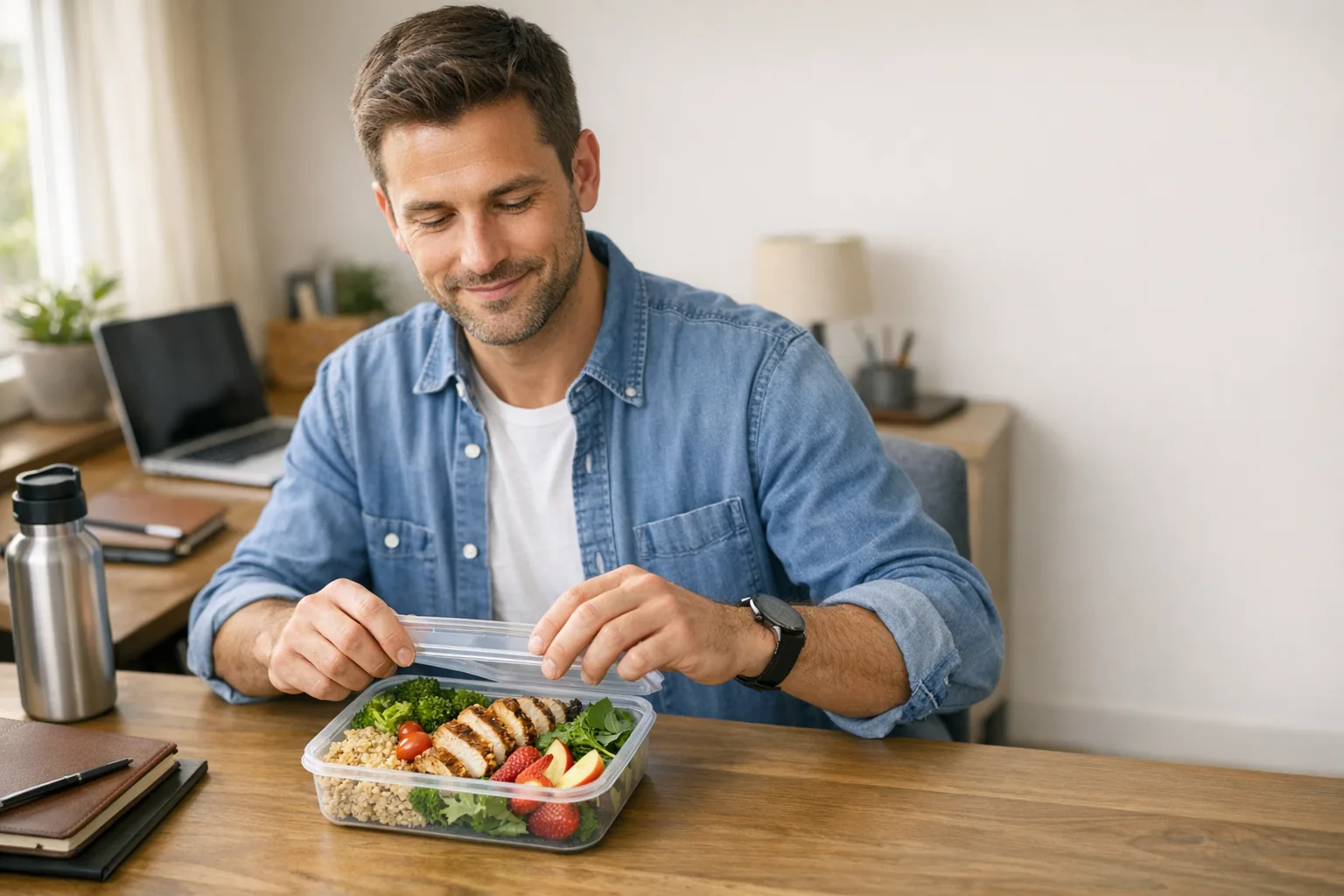
Working from home can make food convenient and easy to postpone at the same time. These nutrition tips focus on the workday: planning a reliable meal break, keeping flexible snacks available and making food practical around meetings. They are examples for general wellbeing, not a diet plan or a promise of sharper focus.
Start with your calendar, not a strict menu
Before the day begins, look for a realistic lunch window. If meetings cover the usual break, prepare a meal you can eat before or after them. Keep one backup option for an unexpectedly busy day. The goal is to make eating manageable rather than turning every meal into another performance target.
Build a flexible meal
The Healthdirect balanced-diet guide explains the five food groups. In practice, you might combine vegetables or fruit, a wholegrain or other starchy food, and a protein food such as beans, tofu, eggs, fish or lean meat. Include dairy or a suitable alternative across the day according to your needs.
- Warm lunch: leftover rice, frozen vegetables and beans or tofu, reheated safely.
- Quick cold lunch: wholegrain bread with egg, hummus or another filling, plus vegetables and fruit.
- Low-preparation backup: a bean pouch or tin, wholegrain crackers, ready-to-eat vegetables and a suitable yoghurt or alternative.
These combinations are examples, not prescribed portions. Appetite, allergies, cultural preferences, budget and medical needs vary. A qualified dietitian can help with individual advice. Use the Healthy Lunches for Remote Workers article when you want more meal ideas; this page concentrates on organising the workday.
Make a snack shelf that works for you
Keep a few choices you enjoy, rather than a cupboard full of foods you think you ought to eat. Fruit, nuts or seeds, wholegrain crackers, hummus and yoghurt are possible options, subject to allergies and safe storage. If you are hungry before your planned meal, having a snack is an option. You do not need to follow rigid rules about eating times.
Keep drinks easy to reach
Put drinking water within reach and take opportunities to refill it. Drink needs vary with weather, activity, health and medication. Avoid turning an app’s fixed water target into personal medical advice. If you have a prescribed fluid limit, follow your clinician’s instructions.
Protect the food break
Where possible, pause work and sit somewhere comfortable to eat. A brief change of setting can help separate lunch from the inbox. When the day does not allow that, a ready meal or simple sandwich is still useful; a busy day does not need to become a skipped-meal day.
Handle leftovers safely
Working at home does not remove the need for food-safe storage. Keep perishable foods refrigerated, follow use-by dates and storage instructions, and handle cooked food carefully. Use Food Standards Australia New Zealand’s food safety basics for current guidance on checking, preparing, cooking and storing food.
A workday checklist
- Before work: identify a meal window and choose a backup lunch.
- Before a long meeting block: check whether you need a meal, snack or drink first.
- At lunch: take a break if you can and eat a meal that suits your appetite and needs.
- After work: refrigerate food promptly where needed and decide whether tomorrow needs any preparation.
Make one change this week
Choose the problem that most often interrupts your day: no lunch ingredients, back-to-back meetings, an empty water bottle or unsafe leftovers. Make that one task easier. A workable routine is more useful than an elaborate meal-prep schedule you cannot maintain.
When individual advice matters
Seek qualified advice for a medical condition, persistent fatigue, unexplained weight changes, difficulty eating or concerns about your relationship with food. Food does not replace treatment or explain every concentration or energy problem.
Related guides
The Healthy Eating for Beginners Guide covers the wider nutrition picture. For advance preparation, see Meal Prep for Beginners. For portable choices away from home, see Healthy Snacks for Work.
Editorial update, 8 October 2026: This article was refocused on organising meals during remote work, with practical examples and clearer limits on health and productivity claims.
Edited by Ben Shannon. This is general educational information from a nonclinical publisher. It has not been medically reviewed. Read the editorial policy and health disclaimer.