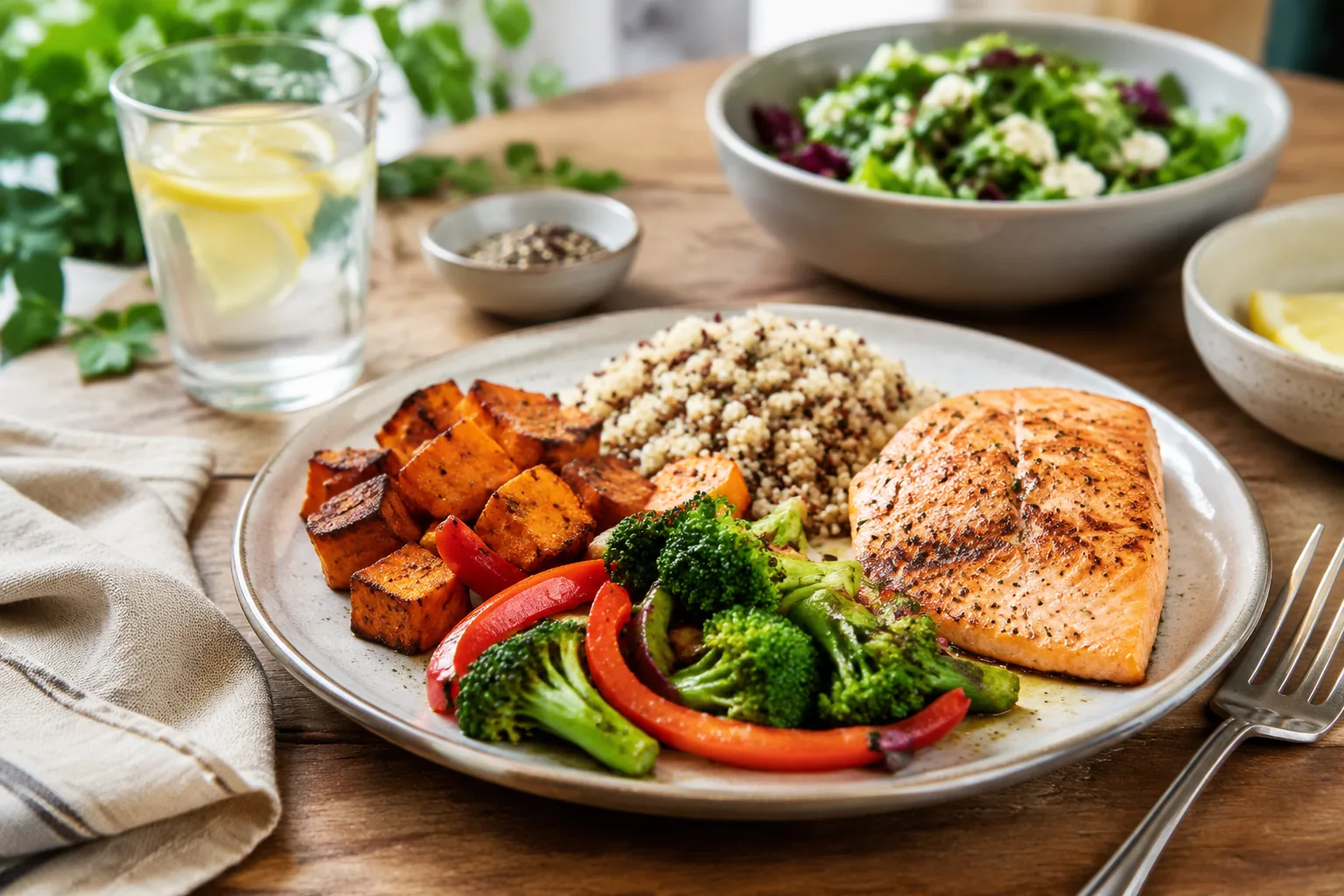
Meal prep for beginners does not have to mean seven identical containers or spending an entire Sunday cooking. A flexible system prepares useful building blocks—grains, protein foods, vegetables, sauces and snacks—so several meals can be assembled quickly.
The goal is to reduce decision fatigue while preserving appetite, variety and food safety. Two hours is a maximum framework, not a required performance. You can complete one 30-minute component session and still make the week easier. For broader practical food choices and routines, see our Functional Nutrition Tips 2026 guide.
This weekly meal prep plan is general education. Allergies, coeliac disease, pregnancy, diabetes, kidney disease, swallowing problems and other medical needs may require personalised guidance.
Start with the week, not recipes
Look at the calendar and answer:
- How many meals will actually be eaten at home?
- Which days need portable food?
- Are there evening commitments or late shifts?
- What ingredients need using?
- How much refrigerator and freezer space is available?
Plan only the meals you are likely to need. Over-preparation creates waste and makes eating feel compulsory.
Use the building-block formula
Prepare one or two items from each group.
Grains or starchy foods
Brown rice, quinoa, barley, wholemeal pasta, potatoes, oats or wholegrain bread.
Protein foods
Beans, lentils, tofu, eggs, chicken, fish, yoghurt, cheese or another preferred option.
Vegetables
One tray roasted, one quick fresh option and one frozen backup.
Sauce or flavour
Lemon dressing, tahini sauce, yoghurt-herb sauce, salsa, pesto or a culturally familiar condiment.
Snacks or breakfast
Fruit, yoghurt, nuts or seeds, boiled eggs, overnight oats or wholegrain crackers.
These pieces can become bowls, wraps, salads, soups, pasta, snack plates and breakfasts.
Choose three anchor meals
Do not plan fourteen different recipes. Select three anchors:
- Bowl: grain + vegetables + protein + sauce.
- Wrap or sandwich: protein + vegetables + spread.
- Quick cooked meal: pasta, stir-fry, soup or eggs using prepared components.
Add leftovers, social meals and flexible options around them.
A sample shopping list
Produce
- capsicum
- zucchini
- carrots
- cucumber
- tomatoes
- leafy greens
- onions
- lemons
- three types of fruit
Pantry
- brown rice or quinoa
- wholegrain wraps
- oats
- canned chickpeas and lentils
- olive oil
- tahini or nut/seed butter
- herbs and spices
Refrigerator or freezer
- eggs, tofu, chicken or another protein
- plain yoghurt or fortified alternative
- frozen mixed vegetables
- wholegrain bread
Adjust quantities to the household. Shop from the pantry first.
The two-hour preparation timeline
Minute 0–10: set up
Wash hands, clear benches, read labels and set out clean containers. Heat the oven and start water for grains or eggs.
Separate raw meat from ready-to-eat food and use dedicated boards or thorough cleaning to prevent cross-contamination.
Minute 10–25: start long-cooking items
Cook the grain according to package directions. Place vegetables in the oven. Begin an appropriate protein: bake tofu or chicken, cook lentils or boil eggs.
Use timers and avoid multitasking beyond what you can manage safely.
Minute 25–45: prepare fresh items
Wash and dry greens. Chop sturdy vegetables such as carrots and capsicum. Leave delicate tomatoes or avocado whole until later in the week.
Prepare fruit for easy access, but keep items whole when cutting reduces storage quality.
Minute 45–60: make sauces
Prepare two simple flavours.
Lemon dressing: olive oil, lemon juice, pepper and herbs.
Tahini or yoghurt sauce: tahini/yoghurt, lemon, water and herbs or spices.
Label for allergens and refrigerate.
Minute 60–80: assemble early-week meals
Build two or three containers for the next few days. Keep wet sauces separate from greens and wraps. Do not assemble every later-week meal if quality will decline.
Minute 80–100: prepare breakfast and snacks
Make two overnight oat jars, portion yoghurt toppings, boil eggs or assemble snack bags. Use the healthy snacks for work list for portable combinations.
Minute 100–120: cool, store and clean
Cool cooked foods promptly in shallow containers. Label dates, freeze later portions and place foods with the shortest life at the front. Clean surfaces and utensils.
If you finish earlier, stop. Two hours is a boundary, not a target to fill.
Turn the components into five dinners
Monday: grain bowl
Rice or quinoa, roast vegetables, chickpeas or chicken, greens and tahini sauce.
Tuesday: wrap
Wholegrain wrap, hummus, prepared vegetables and tofu, egg or chicken.
Wednesday: quick stir-fry
Heat frozen and roasted vegetables with protein and grain. Add a suitable sauce and heat thoroughly.
Thursday: pasta or soup
Cook wholemeal pasta and add vegetables, lentils and tomato sauce, or make a quick soup with stock and prepared components.
Friday: snack plate or leftovers
Use hummus, vegetables, fruit, wholegrain bread, eggs, cheese, tofu or remaining components. Discard anything unsafe rather than forcing completion.
A 30-minute minimum prep
When two hours is unrealistic:
- Cook one grain or buy a convenient cooked option.
- Drain two cans of legumes.
- Wash fruit and vegetables.
- Make one sauce.
- Prepare two breakfasts or snacks.
This still removes several decisions from the week.
Keep food safe
Use government guidance for refrigerator temperature, cooling, reheating and storage times. Refrigerate cooked food promptly and use insulated bags with ice bricks for transport.
Rice, pasta, meat, fish, eggs, dairy and cooked vegetables all need appropriate handling. Smell and appearance cannot identify every hazard. When uncertain, discard the food.
Avoid cooling large pots slowly. Divide food into shallow containers. Reheat only the portion you intend to eat and ensure it reaches an appropriate temperature.
Prevent boredom
Change sauce and assembly rather than cooking new components:
- grain bowl becomes a wrap;
- roast vegetables become pasta sauce;
- chickpeas become hummus or salad;
- cooked chicken becomes soup or sandwich filling; and
- oats become overnight oats or warm porridge.
Freeze extra portions before you are tired of them.
Meal prep for different appetites
Store components separately so portions can change. Add bread, grain, fruit, yoghurt, nuts or another protein when a meal is not enough. Do not use identical boxes to imply that every household member needs the same amount.
The mindful eating guide helps you notice satisfaction without turning meal prep into portion control.
Budget strategies
- Plan around ingredients already owned.
- Use seasonal and frozen produce.
- Choose dried or canned legumes.
- Cook one grain in bulk.
- Use expensive ingredients as flavour rather than the whole meal.
- Freeze bread and leftovers.
- Schedule a use-it-up meal.
Convenience products can be worth the cost when they prevent take-away spending or food waste.
Equipment you actually need
- one reliable knife and board;
- saucepan and baking tray or equivalent cooking equipment;
- clean, leakproof containers;
- labels or tape; and
- insulated lunch bag when needed.
Matching glass containers are optional. Reuse safe food containers according to their instructions and replace damaged plastic.
Common beginner mistakes
Planning too many meals
Leave space for leftovers, invitations and appetite changes.
Making only one texture
Add fresh vegetables, crunchy seeds, sauces or fruit to prevent every meal feeling soft and identical.
Ignoring cooling time
Food safety belongs in the schedule. Use shallow containers and refrigerate promptly.
Buying aspirational ingredients
Choose foods you already enjoy. Meal prep is not the best time to purchase six unfamiliar vegetables.
Forgetting backup meals
Keep eggs, canned beans, frozen vegetables, bread or soup available for weeks when prep does not happen.
A midweek reset
Spend 15 minutes on Wednesday:
- Check dates and quality.
- Freeze food you will not use soon.
- Chop one fresh vegetable.
- Refill fruit and snacks.
- Choose the remaining two meals.
This keeps the system flexible and reduces waste.
Frequently asked questions
Do I need to prep on Sunday?
No. Choose the day before your busiest stretch, or split the work into two shorter sessions. A Wednesday and Sunday rhythm may produce fresher food and fit shift work better.
Should I freeze meals immediately?
Freeze portions you will not eat within their safe refrigerated life. Label the name and date, cool appropriately and follow guidance for thawing and reheating. Not every ingredient freezes well, so store sauces and fresh vegetables separately.
Can I meal prep without cooking?
Yes. Use wholegrain bread or wraps, canned legumes or fish, prewashed vegetables, fruit, hummus, yoghurt, cheese, nuts and safely prepared convenience foods. Assembly is still preparation.
What if my family dislikes leftovers?
Prepare neutral components and change the format. Rice and chicken can become bowls, wraps or soup. Allow household members to add sauces and choose portions.
How many containers do I need?
Begin with enough for two or three meals plus component storage. Use containers you already own if they are food-safe, intact and suitable for heating or freezing as labelled.
The bottom line
Meal prep for beginners is a system of useful components, not a row of identical boxes. Plan the actual week, cook a grain and protein, prepare vegetables, make one or two sauces and assemble only the early meals.
Use the two-hour framework when it helps and the 30-minute minimum when it does not. A flexible system is the one you can repeat.