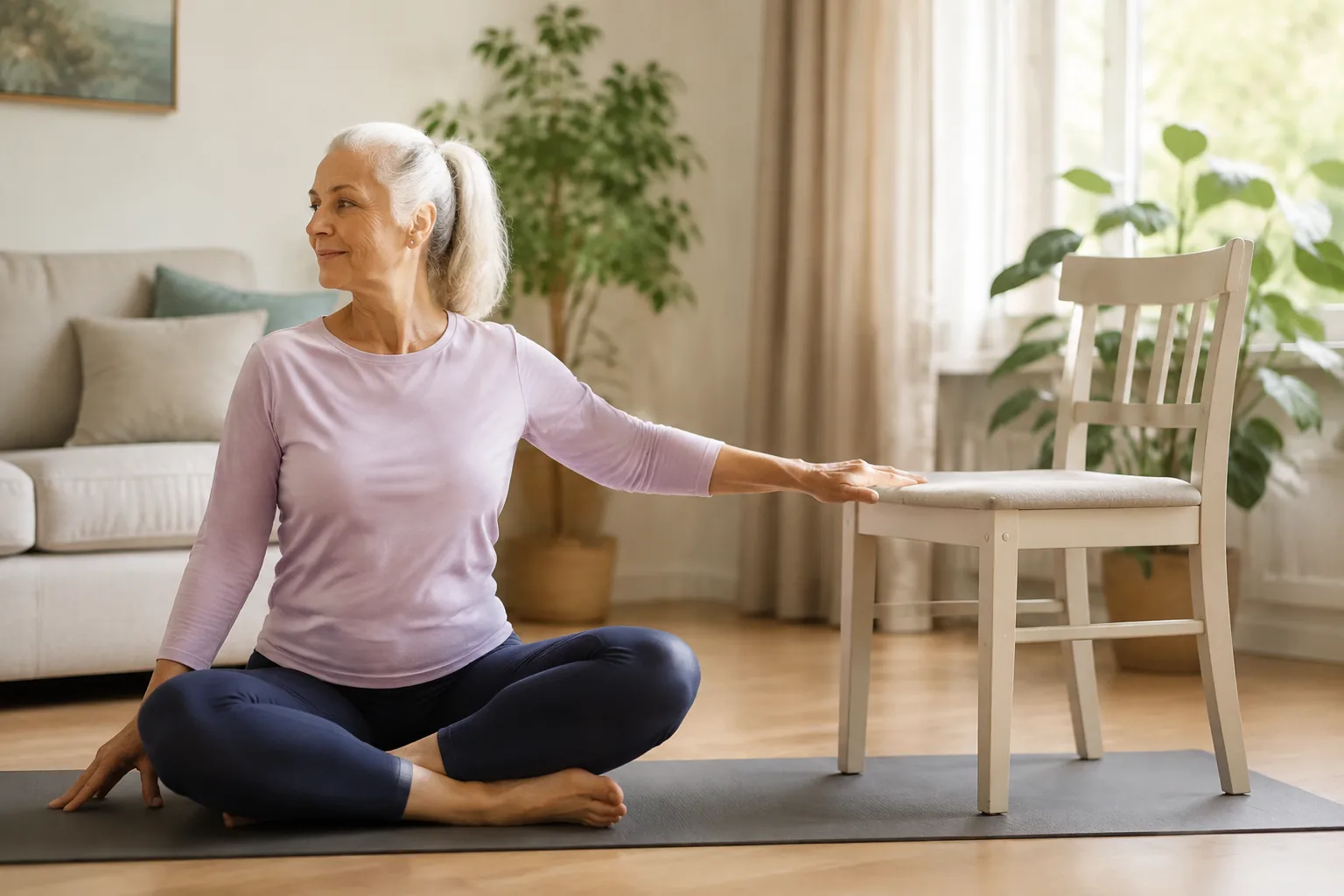
Pilates for Seniors With Back Pain: Gentle Options
Pilates for seniors with back pain should begin with comfort, support and small movements—not difficult floor exercises or a promise to “fix” pain. Gentle, adapted movement can help some people stay active and practise everyday strength, but back pain has many causes. The right plan is the one that respects your symptoms and is adjusted when needed.
A stable chair, clear space and slow pace are enough for a starting point. If any movement sharpens pain, sends it down a leg, causes new symptoms or leaves you noticeably worse afterward, stop and seek individual advice.
When to get medical advice first
Seek urgent care for bladder or bowel changes, numbness around the groin, sudden severe or worsening weakness, fever, major trauma, unexplained weight loss, or pain that is new and severe. Arrange clinical or physiotherapy guidance if pain is persistent, you have had recent surgery, have osteoporosis, a history of falls, cancer, or are unsure what activity is appropriate for you.
Helpful principles for a gentle start
- Choose a comfortable range: smaller motion is still useful.
- Use support: a chair or bench can reduce fear and improve control.
- Move slowly: avoid bouncing, rushing or holding your breath.
- Notice the response: mild effort is different from sharp, spreading or worsening pain.
- Build gradually: add repetitions only after the current amount feels manageable.
A supported six-movement sequence
1. Seated tall breathing
Sit toward the front of a stable chair with both feet supported. Rest hands on the thighs and take five easy breaths. Let the shoulders soften. The goal is not to force posture; it is to find a comfortable, steady starting position.
2. Small pelvic tilts
While seated, gently tip the pelvis forward and back as though changing the pressure through the sitting bones. Keep the movement small and smooth. Try five repetitions if comfortable.
3. Seated marching
Lift one foot a few centimetres, lower it, then switch sides. Keep the trunk relaxed and use the chair for support. Begin with five repetitions on each side.
4. Ankle lifts and heel raises
Lift the toes while heels stay down, then lift the heels while toes stay down. This is a simple way to include lower-leg movement without demanding a lot from the back.
5. Gentle upper-back turns
Cross arms lightly over the chest or keep hands on the thighs. Turn the ribcage a small amount to one side, return to centre, then repeat to the other side. Keep the pelvis stable and stop if symptoms increase.
6. Supported sit-to-stands
Only if comfortable, use the arms of a stable chair or a nearby bench to help you stand and sit slowly. Three to five repetitions is a sensible starting point. This movement can be useful for everyday strength, but it is optional.
How to progress without overdoing it
Try one round twice a week for the first two weeks. If symptoms remain settled, add one or two repetitions or a short walk on another day. Better control, steadier breathing and more confidence are meaningful signs of progress. You do not need to chase soreness, a deeper stretch or a faster pace.
Movement beyond Pilates
Walking, water exercise and adapted strength work can all fit into a broader plan when they are comfortable for you. The Healthy Ageing Guide explains how strength, balance and regular movement work together. For supported options, explore Chair Pilates for Seniors and Gentle Yoga for Seniors. The Healthy Habits Guide can help you build a gradual routine, while Nutrition for Cognitive Health offers food-habit guidance that supports healthy ageing.
Frequently asked questions
Can Pilates cure back pain?
No exercise can promise that. Some people find adapted movement helpful, while others need assessment and a more individual plan.
Should I stretch through pain?
No. Stay in a comfortable range. Sharp, radiating or worsening pain is a reason to stop and get advice.
Can I do these movements every day?
Short, gentle movement may suit some people, but the best frequency depends on your symptoms and overall activity. Start with a small amount and reassess.
Further reading
For clear Australian information about back pain and when to seek care, see Healthdirect Australia: Back pain.
A note on this post: I’m Ben Shannon, the person behind Healthful Harbor. I’m not a doctor, dietitian, physiotherapist, psychologist or any other kind of clinician. I’m a regular person who reads research, tries things, and writes about what’s worked for me. Everything on this site is general educational information, not individual medical, nutrition or mental-health advice. For your own situation, please talk with a qualified professional who knows your circumstances. See the Health Information Disclaimer for the full picture.