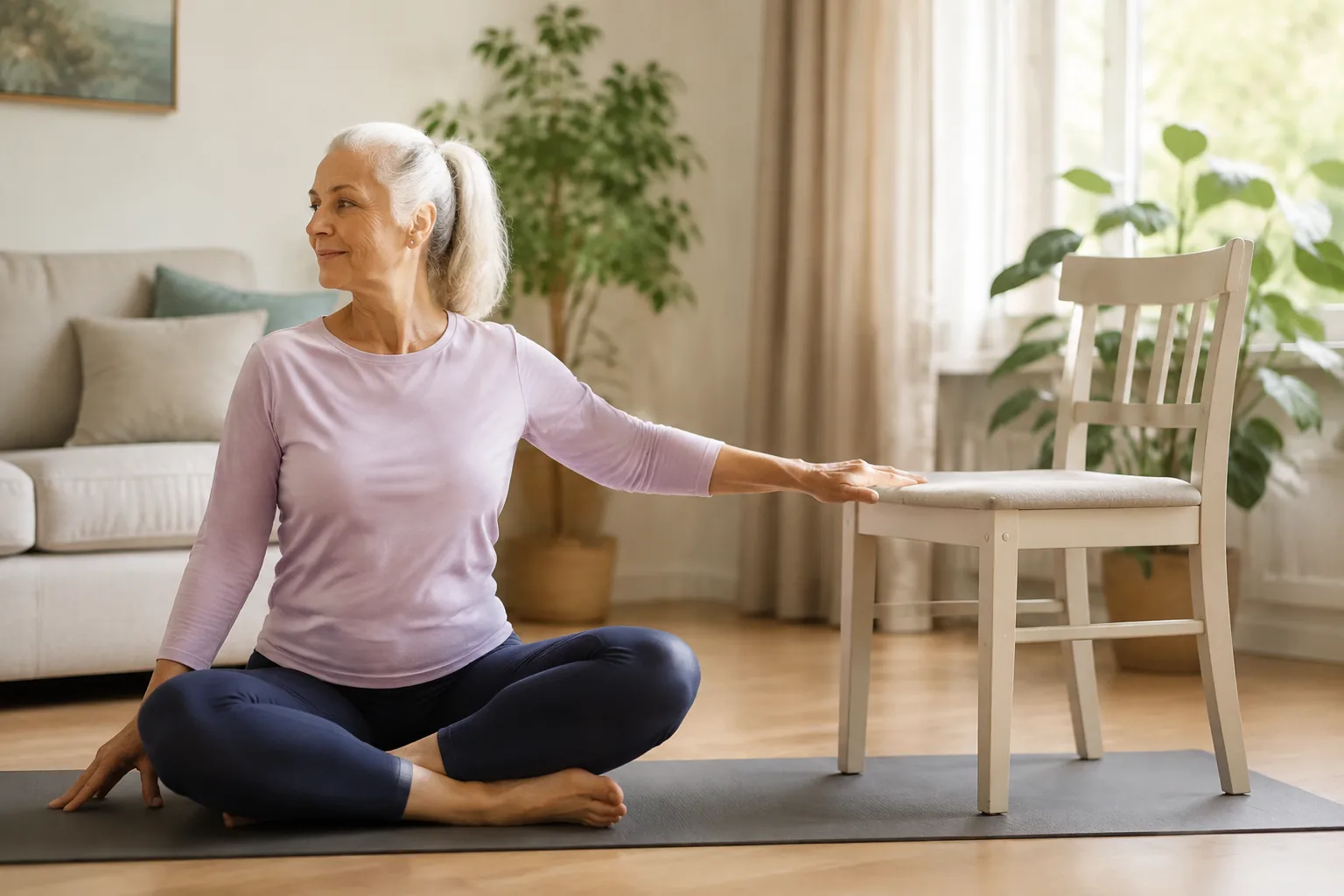
Gentle Yoga for Seniors: A Safe, Flexible Home Practice
Gentle yoga for seniors is about moving with attention, not achieving a picture-perfect pose. A useful practice can include comfortable breathing, supported standing, seated mobility and a calm finish. It can suit beginners who want a low-impact way to work on flexibility, balance and confidence—but it should always be adapted to the person, their health and the day they are having.
You do not need to get onto the floor. Have a sturdy chair and a clear wall or kitchen bench nearby. Move slowly enough to notice how your body responds. The pose is only useful if you can enter and leave it safely. If you choose to use a mat, our guide to choosing a yoga mat for seniors covers grip and cushioning; a mat is optional.
Safety first
Move in a clear space, wear secure footwear where relevant, and use a stable chair, pool rail, or counter for support. Work at a pace that lets you breathe and speak in short sentences. Stop and seek urgent help for chest pain, fainting, severe shortness of breath, or new neurological symptoms. Ask a clinician or physiotherapist for individual advice before starting if you have had a recent fall, surgery, uncontrolled blood pressure, new dizziness, severe osteoporosis, or a condition that affects balance.
What makes yoga “gentle”?
Gentle yoga uses a smaller range, stable support and unhurried transitions. It avoids competitive stretching, rapid position changes and difficult balances. The biggest difference is the decision to work below your limit. A mild stretch or muscular effort can be fine; sharp pain, numbness, dizziness or a sense of instability is not.
Yoga can complement the strength, aerobic and balance work covered in our Healthy Ageing Exercise Guide. It is best treated as one helpful tool, not a cure-all.
Before you begin
- Wear shoes with grip for standing practice, or practise barefoot only on a non-slip surface.
- Keep a chair close enough to touch without reaching.
- Use a folded towel or cushion for seated comfort.
- Avoid holding your breath; breathe normally through every movement.
- Skip inversions and deep twists unless specifically cleared and taught for you.
A 15-minute gentle yoga routine
Arrive with supported breathing
Sit upright. Rest hands on thighs and take five easy breaths. Let the exhale be slightly longer than the inhale. Notice whether you feel light-headed when sitting or standing; if you do, pause and speak with a health professional before continuing.
Seated cat-cow
Place hands on thighs. Inhale to gently lift the breastbone and allow a small arch through the upper back. Exhale to round the upper back slightly, letting the head follow naturally. Repeat six times. Keep the movement in the middle of your range.
Seated side reach
Hold the chair with the left hand. Raise the right arm as far as feels comfortable and lean a little left. Keep both sit bones grounded. Take two breaths, return, and change sides. Do two rounds each side.
Supported mountain and weight shifts
Stand behind the chair and hold its back lightly. Place feet hip-width apart. Feel both feet on the floor, then slowly shift a little weight right and left without lifting the feet. Continue for eight shifts. This is quiet but useful balance practice; keep both hands on the chair whenever needed.
Supported heel-toe movement
Still holding the chair, lift the heels and lower them. Then lift the toes and lower them. Repeat eight times each. Keep the knees soft and the movement small.
Wall or chair-supported calf stretch
Step one foot behind the other and keep the back heel down only as far as comfortable. Lean forward slightly with hands on the chair or wall. Hold for 15 to 20 seconds, then switch. Do not bounce.
Seated figure-four alternative
Rather than placing one ankle on the opposite knee, extend one leg forward with the heel lightly down and toes up. Hinge forward from the hips only a little until the back of the thigh feels gently stretched. Hold, then change sides. This is often a steadier option for hips and knees.
Rest
Sit back in the chair with feet grounded. Relax the shoulders and take a minute of easy breathing. A calm finish is part of the practice.
Balance work without risky poses
Yoga balance does not need one-legged poses in the middle of a room. Stand with both hands at the chair, then practise taking one hand away for a few seconds if you are steady. Progress to a narrower stance only when it feels safe. For a more focused, strength-and-balance approach, see fall prevention fitness.
When to modify or skip poses
Neck pain may call for keeping the head level rather than looking up. Knee pain may make a shorter stance or seated practice more comfortable. With osteoporosis, sudden or forceful forward bending and deep twisting may not be appropriate; ask your clinician or physiotherapist. People with glaucoma, uncontrolled blood pressure, recent joint replacement, severe neuropathy or a history of falls should seek individual advice.
Build a lasting practice
Try this routine two or three times a week. On other days, a brief chair Pilates routine, walk or water-based session can add variety. Regularity matters more than intensity. Use a calendar or leave the chair in its practice spot as a simple cue.
Make it part of the week
A useful routine is one you can repeat. Start with two or three short sessions each week, record what felt comfortable, and add only a little time or a few repetitions after several steady sessions. Older adults benefit from a mix of aerobic activity, muscle-strengthening work, and balance practice; the right starting point depends on your health and current ability. Consistency matters more than making any one session hard.
Build your wider routine with our Healthy Ageing Exercise Guide. You may also find the beginner yoga guide, healthy eating guide, and healthy meal-prep guide useful.
Frequently asked questions
Can seniors start yoga with no experience?
Yes, many can start with a gentle, supported format. An older-adult or beginner class can offer useful supervision, especially if balance is limited.
Should yoga hurt?
No. Mild muscular effort or a gentle stretch is different from pain. Back off immediately from sharp, pinching or radiating pain.
Is chair yoga enough exercise?
It is a valuable starting point, but a balanced week also includes aerobic activity and muscle-strengthening work appropriate to your ability.
A four-week gentle yoga starter plan
For the first week, do only the seated breathing, cat-cow and side reach. In week two, add supported standing weight shifts. In week three, include the calf stretch and a few more slow breaths at the end. In week four, repeat the complete routine two or three times during the week. This gives the joints, muscles and confidence time to adapt without chasing quick results.
Use ordinary daily movements as feedback. You may notice it feels easier to turn toward a conversation, reach for a shelf or settle into a chair. You do not need to become more flexible to benefit. Better awareness of your limits, calmer breathing and a little more regular movement are useful outcomes in their own right.
Choosing an instructor
When trying a class, tell the teacher that you are new and ask whether chair options and standing support are available. A good instructor welcomes questions, offers alternatives and does not pressure you to match the group. Leave any class that makes you feel rushed, unsafe or dismissed. Your practice should support everyday life, not leave you anxious about the next session.
Continue with these guides
Evidence-based source
See the NCCIH yoga safety and effectiveness overview for evidence and precautions.
A note on this post: I’m Ben Shannon, the person behind Healthful Harbor. I’m not a doctor, dietitian, physiotherapist, psychologist or any other kind of clinician. I’m a regular person who reads research, tries things, and writes about what’s worked for me. Everything on this site is general educational information, not individual medical, nutrition or mental-health advice. For your own situation, please talk with a qualified professional who knows your circumstances. See the Health Information Disclaimer for the full picture.