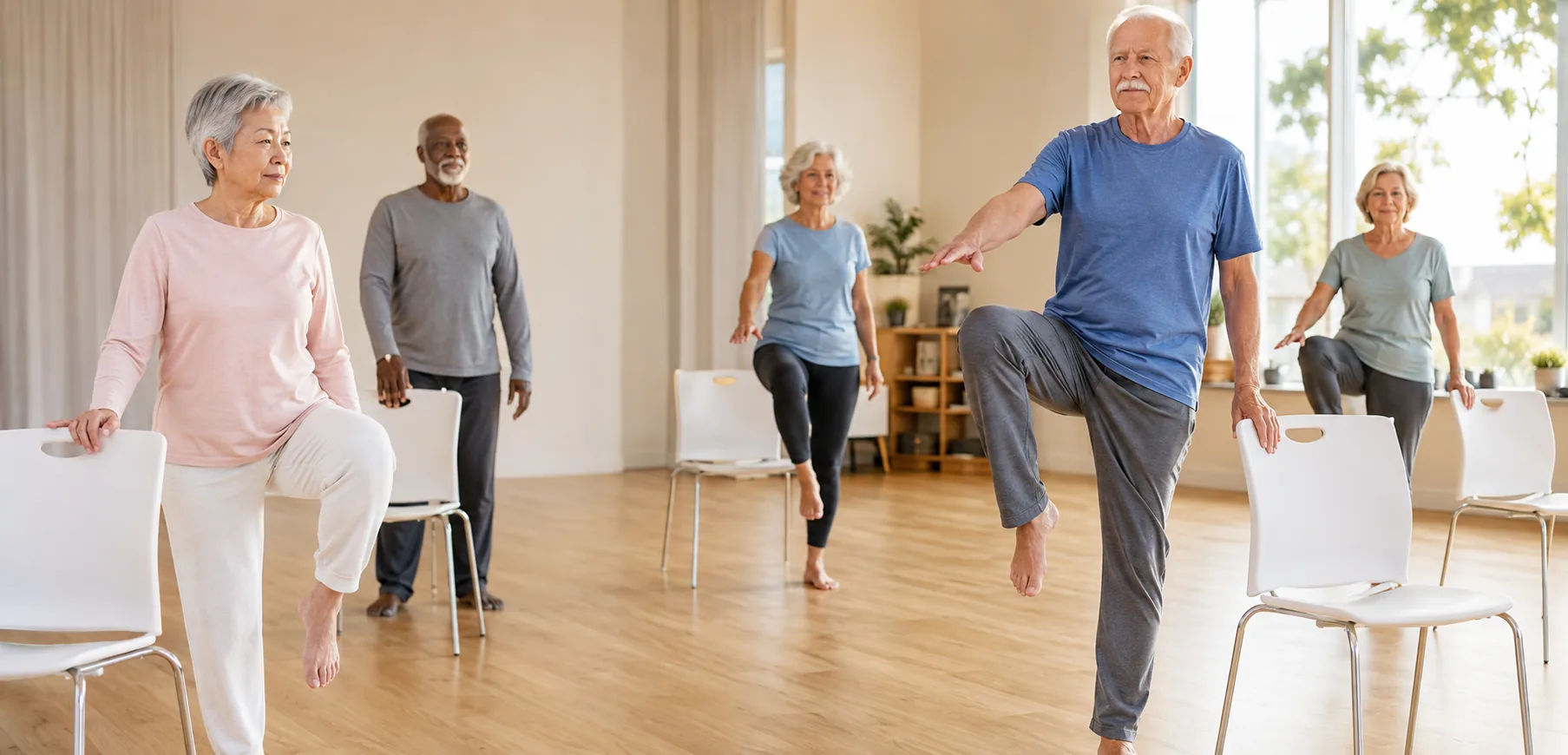
Fall Prevention Fitness: Strength and Balance Exercises for Older Adults
Fall prevention fitness is not one magic exercise. It is a practical combination of leg strength, regular balance practice, safer movement habits and attention to health factors that can affect steadiness. Falls are common but not an unavoidable part of ageing. Building capacity and reducing hazards can work together to help you move with more confidence.
Begin in a clear area with a stable chair or kitchen counter within reach. Keep the work easy enough that you stay in control. If you have fallen recently, feel dizzy, use a mobility aid, or are worried about your balance, ask a clinician or physiotherapist for an assessment and personalised plan.
Safety first
Move in a clear space, wear secure footwear where relevant, and use a stable chair, pool rail, or counter for support. Work at a pace that lets you breathe and speak in short sentences. Stop and seek urgent help for chest pain, fainting, severe shortness of breath, or new neurological symptoms. Ask a clinician or physiotherapist for individual advice before starting if you have had a recent fall, surgery, uncontrolled blood pressure, new dizziness, severe osteoporosis, or a condition that affects balance.
Why strength and balance both matter
Leg muscles help you stand from a chair, manage stairs and recover from small trips. Balance practice teaches the body to organise itself while still and while moving. Neither is useful as a once-a-month effort. Short, regular sessions are more valuable than occasional hard workouts.
The National Institute on Aging recommends activity matched to the individual and highlights strength and balance work as part of reducing fall risk. The Healthy Ageing Exercise Guide shows how these pieces fit into a wider week.
Start with a quick safety check
- Clear loose mats, cords, pet toys and clutter from the practice area.
- Wear shoes with firm soles and a secure heel.
- Use a stable counter or heavy chair; never a chair with wheels.
- Keep light switched on and glasses clean and current.
- Do not practise when you are ill, dehydrated, unusually tired or light-headed.
A beginner fall prevention fitness routine
Practise two or three times each week, leaving a day between strength sessions. Start with one set and rest as needed.
Chair sit-to-stands
Sit toward the front of a firm chair. Bring feet back beneath the knees. Lean the chest slightly forward, press through the feet and stand. Lower slowly until the hips touch the chair. Do five to eight repetitions. Use chair arms or a counter if necessary. This trains the same basic action needed for everyday transfers.
Supported heel raises
Face the counter and hold it with both hands. Rise onto the balls of the feet, pause, then lower slowly. Do eight to twelve repetitions. Stronger ankles and calves can support more confident walking, but use the counter throughout.
Side leg lifts
Stand tall behind a chair. Shift weight into one leg, then move the other leg a short distance sideways without leaning. Return with control. Do six to ten per side. Keep toes facing forward and make the range smaller if the hip or back protests.
Supported marching
Hold the counter and lift one knee, then the other, as though marching slowly. Do eight each side. Stay tall rather than folding forward. The goal is controlled weight transfer, not lifting the knees high.
Weight shifts
With hands on the counter, move a little weight from one foot to the other. Pause for two seconds over each foot. Do ten shifts. As confidence grows, reduce to fingertips on the counter; do not remove support until you are genuinely steady.
Walking practice
Choose a familiar, even route or walk indoors. Focus on looking ahead rather than down at the feet. Begin with five to ten minutes and increase gradually. A walking companion or supervised group can make the habit easier to sustain.
Fitness is only one part of fall prevention
Review medications with a clinician or pharmacist if any make you sleepy, dizzy or unsteady. Keep eye and hearing checks current. Discuss foot pain and make sure footwear fits well. Make the home easier to move through with good lighting, rails where appropriate and clear paths. The CDC notes that falls often have more than one contributing factor, so it makes sense to address more than exercise.
What not to do
Do not test balance by standing on one leg without a support. Do not use a wobble board at home to “challenge” yourself. Do not push through dizziness. Fast, unpredictable movements can turn a useful session into a risky one. Progress from stable, well-supported work and add challenge in small steps.
Pair this routine with other movement
For controlled seated strength and posture work, try chair Pilates for seniors. Gentle yoga for seniors can add comfortable mobility, while senior aquatic wellness may be a good low-impact choice for people who enjoy the pool.
Make it part of the week
A useful routine is one you can repeat. Start with two or three short sessions each week, record what felt comfortable, and add only a little time or a few repetitions after several steady sessions. Older adults benefit from a mix of aerobic activity, muscle-strengthening work, and balance practice; the right starting point depends on your health and current ability. Consistency matters more than making any one session hard.
Build your wider routine with our Healthy Ageing Exercise Guide. You may also find the beginner yoga guide, healthy eating guide, and healthy meal-prep guide useful.
Frequently asked questions
How often should older adults do balance exercises?
Frequent, short practice is usually useful. Start two or three days each week and build only if it remains safe and manageable.
Should I exercise after a fall?
Get medical advice first, particularly after an injury, head impact, unexplained fall or repeated falls. Exercise may be part of recovery, but it should match the cause and your current capacity.
Can walking prevent falls?
Walking supports general fitness, but it does not replace dedicated balance and strength practice. Combining the three is more complete.
A simple weekly fall prevention plan
Try strength-and-balance practice on Monday and Thursday, and easy walking on two other days. On a fifth day, repeat just the movements that felt most useful. A short, repeatable plan is easier to keep than an ambitious routine that demands a lot of energy. Once the current amount feels easy and steady for two weeks, add one or two repetitions to one exercise—not all of them at once.
Notice patterns in your steadiness. Feeling unsteady only when you stand quickly, turn your head, walk in low light, or take a particular medication is valuable information for a clinician. Do not self-diagnose; bring these observations to an appointment. A tailored assessment can identify whether vision, blood pressure, footwear, strength, medication effects or another issue needs attention.
After a near fall
Pause, regain your balance and think about what happened. Was the path clear? Were you rushing? Had you eaten and drunk enough? Did a foot catch on a mat? A near fall is a useful cue to improve the environment and review your plan, not a reason to stop moving altogether. Repeated near falls deserve prompt clinical advice.
Continue with these guides
- Healthy Habits Guide
- Exercise for Healthy Ageing: A Weekly Plan for Adults 60+
- Balance Exercises for Seniors: 12 Simple Moves at Home
- Nutrition for Cognitive Health: Food Habits for Healthy Ageing
Evidence-based source
See the CDC falls prevention guidance for practical risk-reduction information.
A note on this post: I’m Ben Shannon, the person behind Healthful Harbor. I’m not a doctor, dietitian, physiotherapist, psychologist or any other kind of clinician. I’m a regular person who reads research, tries things, and writes about what’s worked for me. Everything on this site is general educational information, not individual medical, nutrition or mental-health advice. For your own situation, please talk with a qualified professional who knows your circumstances. See the Health Information Disclaimer for the full picture.