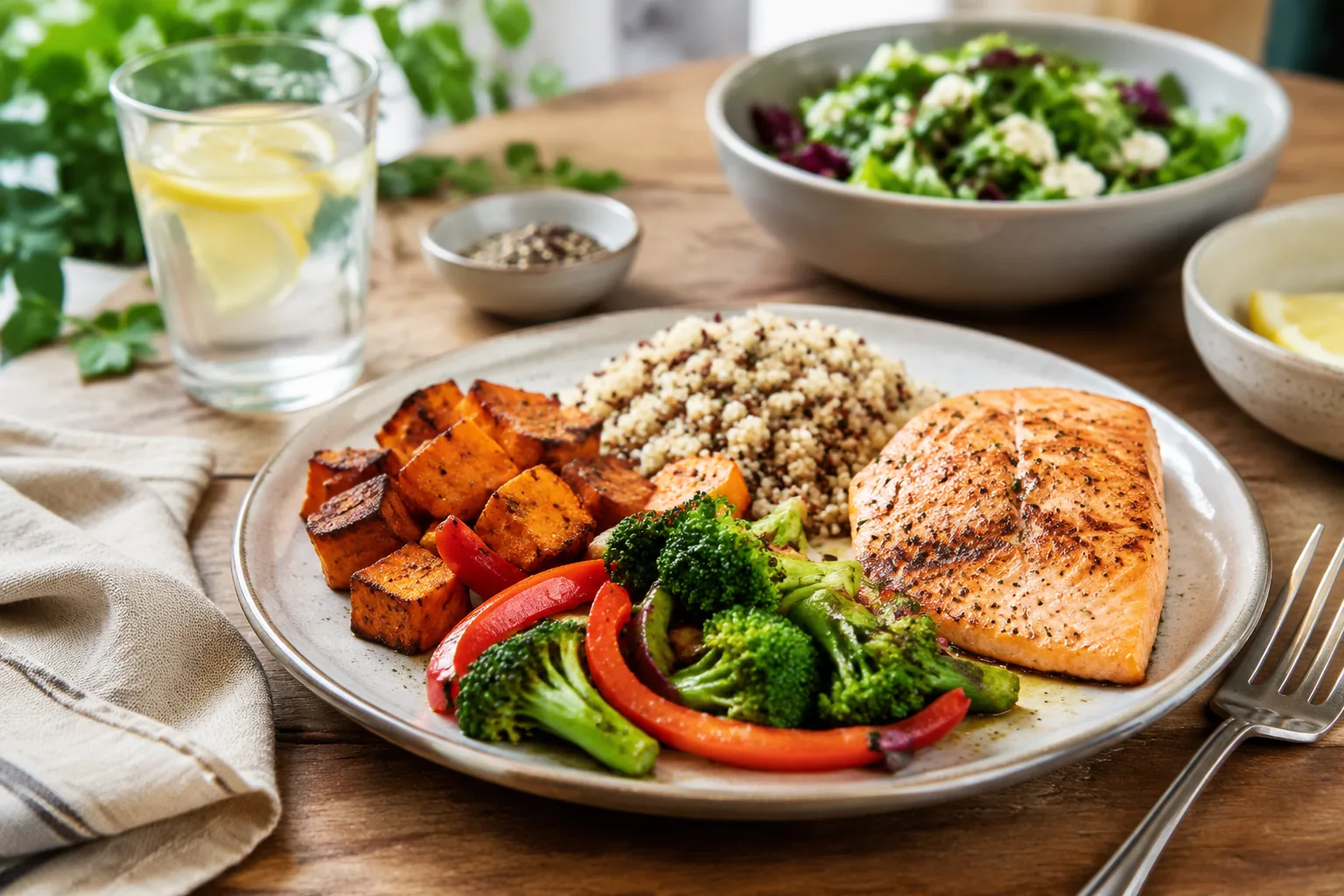
High-protein desk snacks without refrigeration can make busy workdays much easier. When lunch is late, meetings run long, or the office fridge is unavailable, a shelf-stable option can help you build a more satisfying snack than a random handful of sweets from the vending machine.
The best desk snack is not the “perfect” one. It is a food you enjoy, can store safely, and can pair with your actual schedule. Protein can help a snack feel more filling, while fibre-rich carbohydrates and healthy fats add staying power. This guide offers practical ideas, not rigid rules.
For a wider foundation, visit our healthy eating for beginners guide. If you work from home or have irregular meal breaks, our nutrition tips for remote workers can help you make food decisions simpler.
What makes a good desk snack?
A useful work snack should be easy to keep, easy to eat, and satisfying enough to bridge the gap to your next meal. Protein is one helpful building block, but it does not have to be the only one. Pairing a protein food with fruit, whole grains, or vegetables can make the snack feel more complete.
There is no single protein target that suits every person. Your needs depend on your body, activity, appetite, health conditions, and overall eating pattern. Instead of trying to hit an exact number at your desk, aim to include a recognisable protein source and choose portions that fit your hunger.
Food-safety note for shelf-stable snacks
“No refrigeration” should mean the package is designed to be stored at room temperature until opened. Check the label, best-before date, and storage instructions. Once you open a pouch, tin, or multipack item, eat it promptly or follow the package directions. Do not leave foods that require refrigeration in a warm bag or drawer just because they looked convenient.
If you have food allergies, coeliac disease, kidney disease, diabetes, high blood pressure, or another health condition, read labels and seek individual advice where needed. For national dietary guidance, see the Australian Dietary Guidelines. Shelf-stable does not automatically mean suitable for every person.
15 high-protein desk snacks without refrigeration
1. Roasted chickpeas
Crunchy roasted chickpeas are easy to portion into a small container. Look for options with flavours you enjoy and compare sodium if you eat them often. Pair with a piece of fruit for extra fibre.
2. Roasted broad beans or fava beans
These have a crisp texture and a savoury flavour. They are a practical alternative when you want something more substantial than chips.
3. Tuna or salmon pouch
Single-serve pouches are portable and usually need no refrigeration until opened. Keep a fork or crackers in your drawer. Choose varieties you like, and be mindful of sodium if that is relevant to you.
4. Tinned fish with a pull tab
A small pull-tab tin can work where a pouch is not available. Store it in a cool, dry desk drawer and eat it with whole-grain crispbreads. Consider workplace smell and choose a lunch area if possible.
5. Nut or seed butter sachet
Individual sachets of peanut, almond, or seed butter are easy with a banana, apple, rice cake, or whole-grain crackers. Nut-free seed butters can be useful where workplaces restrict nuts.
6. Mixed nuts
Nuts provide some protein along with unsaturated fats. A small handful is usually more satisfying than eating directly from a large bag. Choose unsalted or lightly salted options if you want more control over sodium.
7. Pumpkin seeds
Pepitas are compact, crunchy, and easy to scatter over a piece of fruit or eat by the handful. Keep a small sealed container at your desk.
8. Shelf-stable protein milk or soy drink
Some long-life cartons are made for room-temperature storage before opening. Check the label for protein content and storage directions, then chill only if you prefer the taste cold.
9. Protein bar you genuinely enjoy
A bar can be a practical back-up, especially during travel or back-to-back meetings. Look beyond the front label: compare protein, fibre, added sugars, and ingredients. A bar does not need to be “clean” to be useful; it should simply fit your needs and taste good enough to eat.
10. Jerky or biltong
Beef, turkey, or plant-based jerky can be portable and protein-forward. These products can be high in sodium, so treat them as one option in a varied snack rotation rather than the only choice.
11. Dry-roasted edamame
Crunchy dried edamame is a convenient plant-protein choice. It works well when you want something salty and crisp without needing a fridge.
12. Whole-grain crackers with a single-serve hummus alternative
Traditional hummus needs refrigeration after opening, but shelf-stable snack packs vary. Only use a version whose label clearly allows room-temperature storage unopened. If not, keep crackers with nut butter or a tuna pouch instead.
13. Lentil or pea-based snack crisps
These can offer more protein than standard crisps, though the nutrition profile differs by brand. Check serving size and choose them because you enjoy them, not because the package makes a dramatic promise.
14. Soy nuts
Roasted soy nuts are shelf-stable, crunchy, and easy to pack. They can be a useful alternative for people who do not enjoy traditional nuts.
15. DIY trail mix with protein pieces
Make a mix with nuts or seeds, roasted chickpeas, whole-grain cereal, and a small amount of dried fruit or dark chocolate. Portion it into small containers so you can grab one without thinking.
Easy snack pairings that feel more like a mini meal
A protein food often feels more satisfying with a carbohydrate or produce item. Try roasted chickpeas with an orange, a nut-butter sachet with an apple, tuna with whole-grain crispbreads, or a protein drink with a banana. These pairings provide different flavours and textures, which can make a snack more enjoyable than a single packaged item.
If you often arrive at lunch extremely hungry, a mid-morning snack may be useful. If you graze all afternoon without feeling satisfied, try a defined snack plate and take a five-minute break from your screen to eat it.
How to read a snack label without overthinking it
Start with the serving size. Some small packets contain two servings, which can make comparisons confusing. Then scan protein and fibre, check the ingredient list if allergies matter, and look at sodium if you have been advised to limit it. Finally, ask a simple question: Will I actually enjoy eating this at work?
Do not let one number decide whether a food is “good” or “bad.” A lower-protein snack can still fit a healthy day, and a high-protein snack may be less satisfying if it tastes unpleasant. Variety and overall patterns matter more than a perfect drawer.
Build a desk-snack kit in five minutes
Choose two protein options, two crunchy sides, and two fruit choices. For example: tuna pouches and roasted edamame; crispbreads and trail mix; apples and easy-peel citrus. Keep the dry items in a labelled container and refresh the fruit each week.
This setup gives you choices without turning your desk into a pantry. It also makes it less likely that one forgotten meeting leads to skipping food altogether.
When a snack is not enough
If you are regularly shaky, dizzy, overly hungry, or unable to concentrate, a small snack may not be enough for the gap between meals. Plan a more complete lunch or talk with a registered dietitian or clinician if appetite, weight, energy, or blood-sugar concerns are persistent.
For portable meal ideas beyond snacks, visit our healthy meal prep guide. You may also like healthy snacks for work without refrigeration for a broader list of desk-friendly ideas and our guide to healthy daily habits for making routines stick.
Frequently asked questions
What is the healthiest shelf-stable protein snack?
There is no one best option. A mix of foods such as roasted legumes, nuts, seeds, fish pouches, and shelf-stable soy drinks gives you variety. Choose options that fit your dietary needs, budget, taste, and storage situation.
Do protein bars count as a healthy snack?
They can be a useful convenience food. Compare labels, but do not expect a bar to replace every kind of snack. It is one tool for busy days.
How long can I keep snacks at my desk?
Follow the package’s best-before date and storage instructions. Keep foods dry and away from direct heat or sunlight. Once opened, follow the label and do not store perishable leftovers in a desk drawer.
Keep variety without wasting food
Rotate two or three options at a time so you do not get tired of the same snack. Store unopened packets together, write the month on a small reminder card, and use the oldest items first. When buying in bulk, check that the best-before dates leave enough time for you to use the food comfortably.
A snack drawer is also a useful place for a reusable spoon, napkins, and a small rubbish bag. These small details make it easier to choose the food you packed rather than skip it because it is inconvenient. Keep water nearby as well; thirst can sometimes be mistaken for hunger, and regular fluids support concentration.
Next step
Choose two shelf-stable protein foods you would genuinely eat this week, put them where you work, and pair one with fruit or whole-grain crackers. The best desk snack is the one that is ready when your day becomes busy.