Exercise for weight management is often reduced to a calorie number. That narrow view misses several important roles of movement: preserving or building lean tissue, supporting fitness and function, improving sleep, creating routine and helping people maintain health across weight changes.
The American College of Sports Medicine ranked exercise for weight management among the top fitness trends for 2026. Its updated language matters. Weight management can include loss, maintenance or gain, and exercise may complement medical or dietary care. A workout should not be punishment for eating.
This guide provides a sustainable workout plan for weight management using strength, cardio, daily movement and recovery. Body weight is influenced by many factors, including genetics, environment, medication, sleep, stress, health conditions and food access. Seek personalised medical and nutrition advice when your situation requires it.
Exercise helps even when the scale is slow
Physical activity can improve cardiovascular fitness, strength, mobility, mood and metabolic health without a dramatic scale change. Those outcomes are not consolation prizes. They are meaningful health benefits.
Body weight also fluctuates with hydration, digestion, hormones and glycogen. A single weigh-in cannot tell you how much body fat changed. If weighing causes distress or compulsive behaviour, use other progress markers or work with a professional.
The four-part plan
1. Strength training
Train major muscle groups two or three times a week. Strength work helps preserve lean mass during weight loss and supports function at any body size.
Use movements such as:
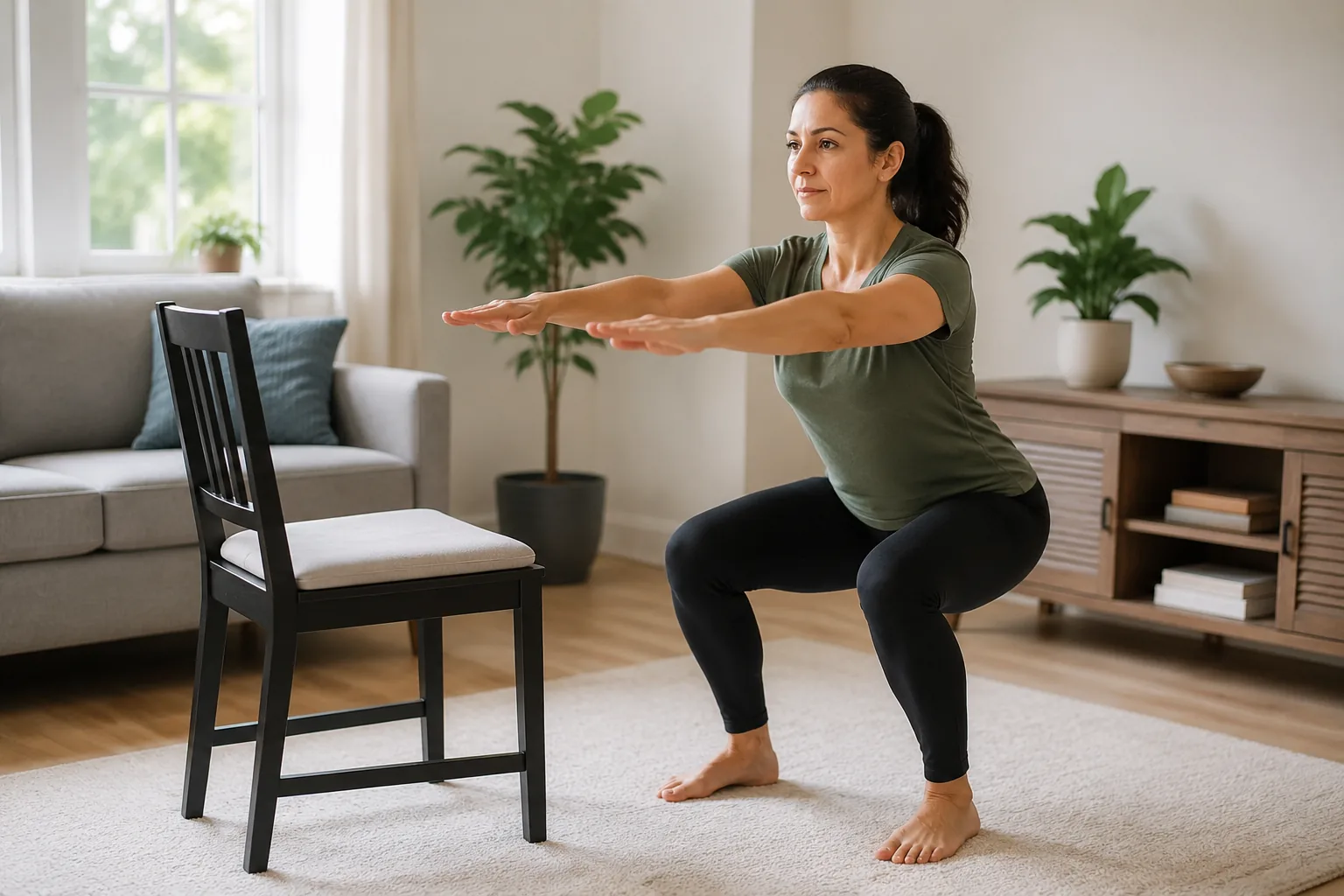
- chair squat or goblet squat;
- hip hinge;
- incline push-up;
- row;
- step-up or supported split squat; and
- carry or trunk-bracing exercise.
Perform one to three sets of 6 to 15 repetitions, usually finishing with two or three good repetitions available. Start with the site’s 20-minute beginner strength workout.
2. Aerobic activity
Walking, cycling, swimming, dance and other rhythmic activities support heart and lung fitness and increase total movement. Choose options you can access and tolerate.
The WHO recommends 150 to 300 minutes of moderate aerobic activity weekly for adults, or an equivalent vigorous combination, plus strength work. Beginners can build from shorter sessions. More is not automatically better if it disrupts recovery or becomes impossible to maintain.
3. Everyday movement
Non-exercise activity includes walking to transport, household tasks, standing breaks and active recreation. It can vary widely between days and may be easier to distribute than formal workouts.
Practical options include:
- a ten-minute walk after one meal;
- stairs for one or two floors when appropriate;
- walking during a phone call;
- gardening or household tasks;
- parking a little farther away; and
- breaking long sitting periods with two minutes of movement.
These actions do not need to feel like workouts to count.
4. Recovery
Sleep, rest days and adequate food support training. Trying to offset every meal with exercise can create fatigue and an unhealthy relationship with movement. Plan easier days before you need them.
A sustainable beginner week
Monday: full-body strength
Complete the six-movement routine for 20 to 30 minutes. Record variations, repetitions and load.
Tuesday: moderate cardio
Walk, cycle or swim for 20 to 30 minutes at a pace that allows conversation.
Wednesday: everyday movement and mobility
Take one or two short walks and complete ten minutes of mobility. Keep the day easy.
Thursday: full-body strength
Repeat Monday. Familiar movements make gradual progression easier.
Friday: cardio intervals
Warm up, then alternate two minutes purposeful with two minutes easy for five rounds. Cool down. Adjust the faster period so it feels challenging but controlled.
Saturday: enjoyable longer activity
Choose a walk with a friend, recreation club, hike, dance class or active household project. Duration is flexible.
Sunday: rest and plan
Review the coming week and identify two non-negotiable sessions plus optional movement. This protects the minimum when life becomes busy.
The minimum-effective version
If the full week is too much, begin with:
- two 20-minute strength sessions;
- three ten-minute walks; and
- one enjoyable active task.
Keep it for two to four weeks. Add time only when the current pattern feels recoverable. A repeatable baseline is more valuable than a large burst followed by inactivity.
Progress one variable at a time
For strength, add a repetition, a small amount of resistance or a set. For cardio, add five minutes to one session or a single interval. For everyday movement, attach one short walk to an existing cue.
Avoid simultaneously increasing workout frequency, duration and intensity. Rapid jumps raise fatigue and injury risk, especially when eating less or returning from inactivity.
Why strength deserves priority
In my own experience, cardio and strength work each have something to offer, but the calorie numbers on a wearable are not a reliable way to compare them. Strength training has tended to feel more useful for daily function and body composition, while cardio has different benefits. Many guides point to resistance work as a useful part of a sustainable plan.
Do not let an app persuade you that a walk “counts” while strength does not. Both have distinct jobs.
Combine exercise with flexible eating habits
Exercise cannot supply a complete nutrition plan. For general health, base meals around a variety of vegetables and fruit, whole grains, protein foods and appropriate dairy or alternatives, while limiting foods high in added salt, sugar and saturated fat. Needs vary.
For the broader food, activity and routine side, see our Healthy Weight Loss and Management guide.
Our healthy eating for beginners pillar explains balanced meals without rigid rules. For individual energy needs, food allergies, medical conditions or eating-disorder concerns, consult an accredited practising dietitian or appropriate clinician.
Avoid creating a system where food must be “earned.” Fuel supports movement and recovery.
Measure a broader set of outcomes
Choose three to five markers:
- workouts completed;
- walking time or active minutes;
- strength repetitions or load;
- waist or clothing fit, if emotionally neutral;
- blood pressure or clinical markers measured appropriately;
- sleep and daytime energy;
- ease of stairs or daily tasks; and
- body weight trend, if useful and safe for you.
Review monthly rather than reacting to a single day. Measurements are tools, not grades.
Plateaus are information
When progress stalls, first check consistency and recovery. A plateau does not automatically require a much harder workout. Ask:
- Has the planned routine actually been completed most weeks?
- Is sleep or stress disrupting recovery?
- Has everyday movement fallen as formal training increased?
- Does the program need a small progression?
- Is professional nutrition or medical guidance appropriate?
Make one change and give it time. Constantly rewriting the plan makes it difficult to learn what works.
Watch for an unhealthy relationship with exercise
Warning signs can include training through illness or injury, intense guilt after rest, exercising to compensate for eating, hiding activity or allowing workouts to displace relationships and responsibilities.
If these patterns appear, step back from calorie goals and seek support. Healthful movement should expand life rather than narrow it.
Frequently asked questions
Is walking enough for weight management?
Walking is accessible aerobic activity and can make a valuable contribution. A balanced plan also includes strength work to support muscle and everyday function. Start with walking if that is what you can sustain, then add one or two short resistance sessions.
Should I exercise every day?
Daily movement can be healthy, but hard training every day is unnecessary. Alternate demanding sessions with easy walking, mobility or rest. Recovery allows adaptation and helps keep the routine compatible with work, family and sleep.
Is fasted exercise better?
Exercising before eating is not automatically superior for long-term weight management. Comfort, medical needs, training quality and the overall eating pattern matter more. People who use glucose-lowering medication, experience dizziness or have an eating-disorder history should seek individual advice rather than follow generic fasting claims.
How quickly should I increase cardio?
Add a small amount after the current schedule feels comfortable for at least a week or two. Five minutes on one or two sessions is enough. If joints become painful, energy drops or the new volume disrupts strength training, return to the previous dose.
What if the scale does not move?
Check the wider outcome set and the time frame. Improved strength, waist fit, blood pressure, sleep or walking capacity may be occurring. If weight change remains an important medical or personal goal, an accredited dietitian or clinician can assess factors that a workout plan cannot.
The bottom line
Exercise for weight management works best as a balanced, repeatable system. Strength train two or three times a week, build aerobic activity gradually, increase ordinary movement and protect recovery. Track function, fitness and wellbeing alongside any body-weight goal.
The best plan is not the one that promises the fastest burn. It is the one that helps you maintain muscle, energy and useful habits through real life.
Further reading
- ACSM: Top Fitness Trends for 2026
- World Health Organization: Physical activity
- Australian Dietary Guidelines
Continue with these guides
- Beginner Fitness Guide
- Healthy Habits Guide
- Functional Fitness: Exercises for Everyday Movement
- Healthy Snacks for Work: 20 Ideas That Travel Well
A note on this post: I’m Ben Shannon, the person behind Healthful Harbor. I’m not a doctor, dietitian, physiotherapist, psychologist or any other kind of clinician. I’m a regular person who reads research, tries things, and writes about what’s worked for me. Everything on this site is general educational information, not individual medical, nutrition or mental-health advice. For your own situation, please talk with a qualified professional who knows your circumstances. See the Health Information Disclaimer for the full picture.