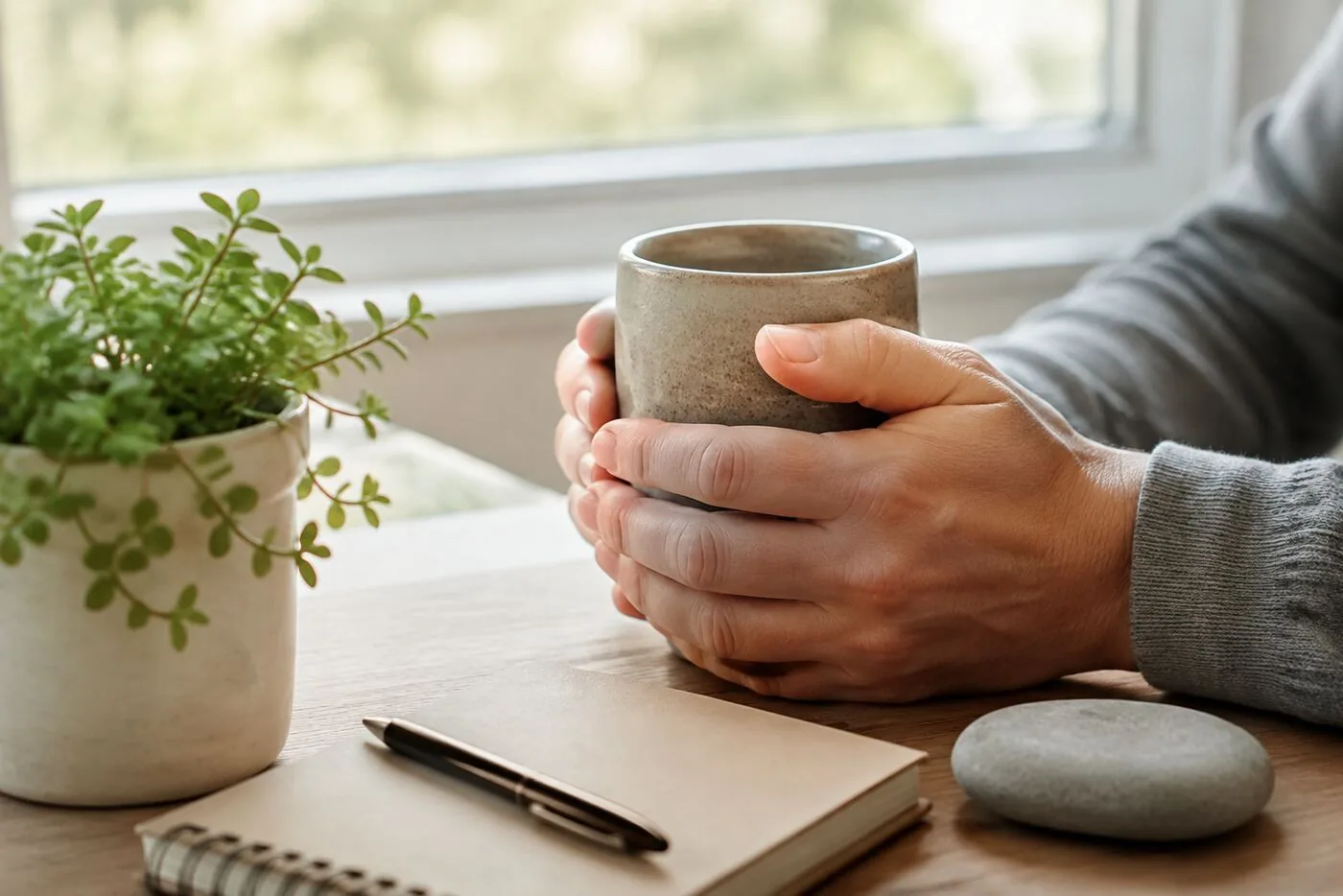
Grounding techniques for anxiety are short practices that bring attention back to your immediate surroundings. They may help during a stressful moment, but they are not a cure for anxiety and they do not replace professional care. The goal is simply to notice what is here now: your feet on the floor, objects in the room, sounds nearby or the rhythm of a safe activity.
If you feel at risk of harming yourself, cannot stay safe, or are experiencing severe symptoms, seek urgent support from local emergency services or a qualified crisis service.
The 5-4-3-2-1 grounding method
This method uses the senses. There is no need to do it perfectly; quietly naming a few things is enough.
- Five things you can see: notice colours, shapes or light around you.
- Four things you can feel: your feet, the chair, fabric, a cool glass or your hands together.
- Three things you can hear: close sounds or distant sounds both count.
- Two things you can smell: or remember two familiar smells if none are obvious.
- One thing you can taste: a sip of water, tea, or simply the taste in your mouth.
Other gentle grounding exercises
Name the details
Pick one ordinary object and describe five details about it: colour, texture, shape, weight and temperature. This redirects attention without asking you to argue with your thoughts.
Feel your support
Press both feet lightly into the floor, notice where your body meets a chair, and slowly look around the room. Keep the breath natural rather than forcing a deep inhale.
Use a routine task
Wash a mug, fold a towel, water a plant or take a slow walk while noticing the environment. Familiar tasks can be more helpful than trying to make yourself feel calm immediately.
Make a small plan for difficult moments
Write down two grounding options, one person you can contact and one place that feels safer or quieter. Keep the note in your phone or wallet. This is not about predicting every difficult moment; it reduces the decision-making needed when you are already stressed.
When to seek extra support
It is a good idea to talk with a health professional if anxiety is frequent, worsening, disrupting sleep or work, leading you to avoid everyday life, or if self-help tools are not enough. A clinician can help you find care that fits your situation.
Related guides
Use grounding alongside the Mental Wellbeing Guide and the Healthy Habits Guide. For nearby tools, try progressive muscle relaxation, mindfulness meditation for beginners, gentle breathwork, and movement during stressful weeks.
Further reading
For trustworthy information and pathways to mental-health support in Australia, visit Healthdirect Australia: Mental health.
Leave a Reply