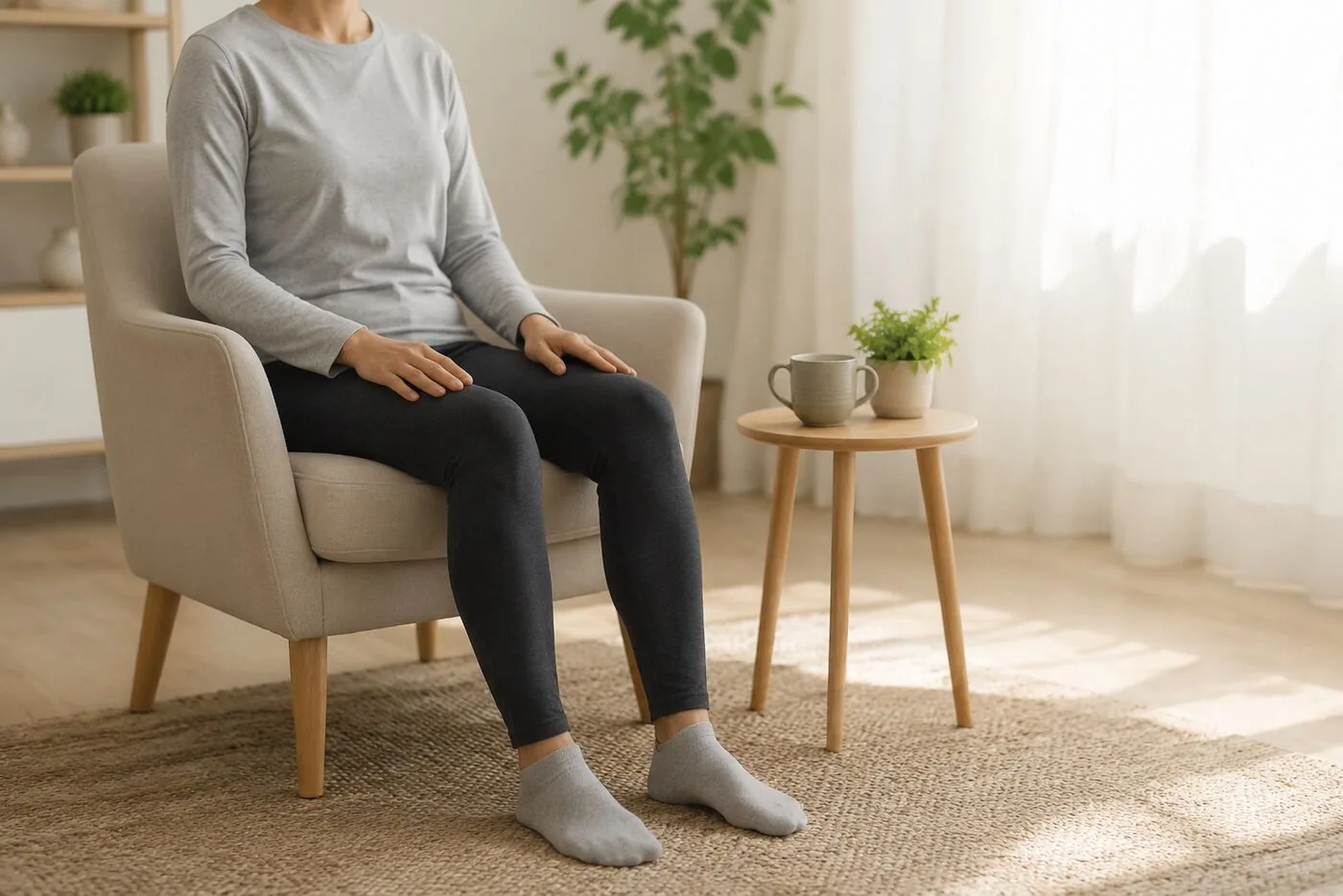
Progressive muscle relaxation is a simple practice that involves gently tensing and then releasing one muscle group at a time. It can help you notice the difference between tension and ease after a stressful day. The aim is not to force relaxation or make discomfort disappear; it is to create a short, calm pause that you can repeat.
This beginner guide uses a seated or lying-down version. If you have an injury, severe pain, recent surgery, uncontrolled blood pressure, a condition affected by muscle tension, or you feel worse when focusing inward, ask a qualified health professional for advice or choose another calming activity.
How progressive muscle relaxation works
Stress can make the jaw, shoulders, hands, stomach or legs feel braced without you noticing. In progressive muscle relaxation, you gently tighten an area for a few seconds, then let it soften. That contrast can make it easier to recognise tension earlier in the day.
A 10-minute beginner practice
Set up
Choose a quiet place where you can sit with your feet supported or lie down comfortably. Loosen anything restrictive. Take two unforced breaths and decide that you can stop at any point.
Hands and arms
Make a light fist in both hands for about three seconds, then release fully. Notice the feeling of the palms, fingers and forearms settling. Repeat once if it feels comfortable.
Shoulders
Gently raise the shoulders a small amount toward the ears, then lower them. Avoid straining the neck or holding the breath.
Face and jaw
Press the lips together lightly or notice the jaw without clenching. Release and let the tongue rest comfortably. Skip this step if it aggravates jaw pain.
Legs and feet
Press the feet lightly into the floor or point and relax the toes. Keep the effort mild. If cramps or pain appear, stop.
Finish
Take three easy breaths. Notice the room around you before standing. A calmer feeling is welcome, but it is not a performance target.
Use it for stress or sleep
Try the practice after work, before a difficult conversation, or as part of an evening wind-down. For sleep, keep lights low and choose a slower pace. If you wake during the night, do not force a complete routine; a few relaxed breaths or one muscle group may be enough.
When to choose another tool
Some people find body-focused exercises uncomfortable, particularly during intense anxiety, trauma-related symptoms or pain flare-ups. In that moment, a short walk, a warm drink, music, a conversation with someone safe, or an external-focus exercise may suit you better. Seek urgent support if you feel at risk of harming yourself or unable to stay safe.
Build a realistic stress routine
Progressive muscle relaxation fits within the Mental Wellbeing Guide. Pair it with the Healthy Habits Guide, a short mindfulness meditation practice, practical sleep hygiene tips, and gentle yoga for stress relief.
Frequently asked questions
How often should I do progressive muscle relaxation?
Try a few times each week or whenever a short calming pause would help. Consistency matters more than length.
Should I tense muscles strongly?
No. Use gentle effort. Pain, cramping, shaking or breath-holding are signs to reduce the effort or stop.
Further reading
The US National Center for Complementary and Integrative Health explains relaxation techniques and their limits.
Leave a Reply