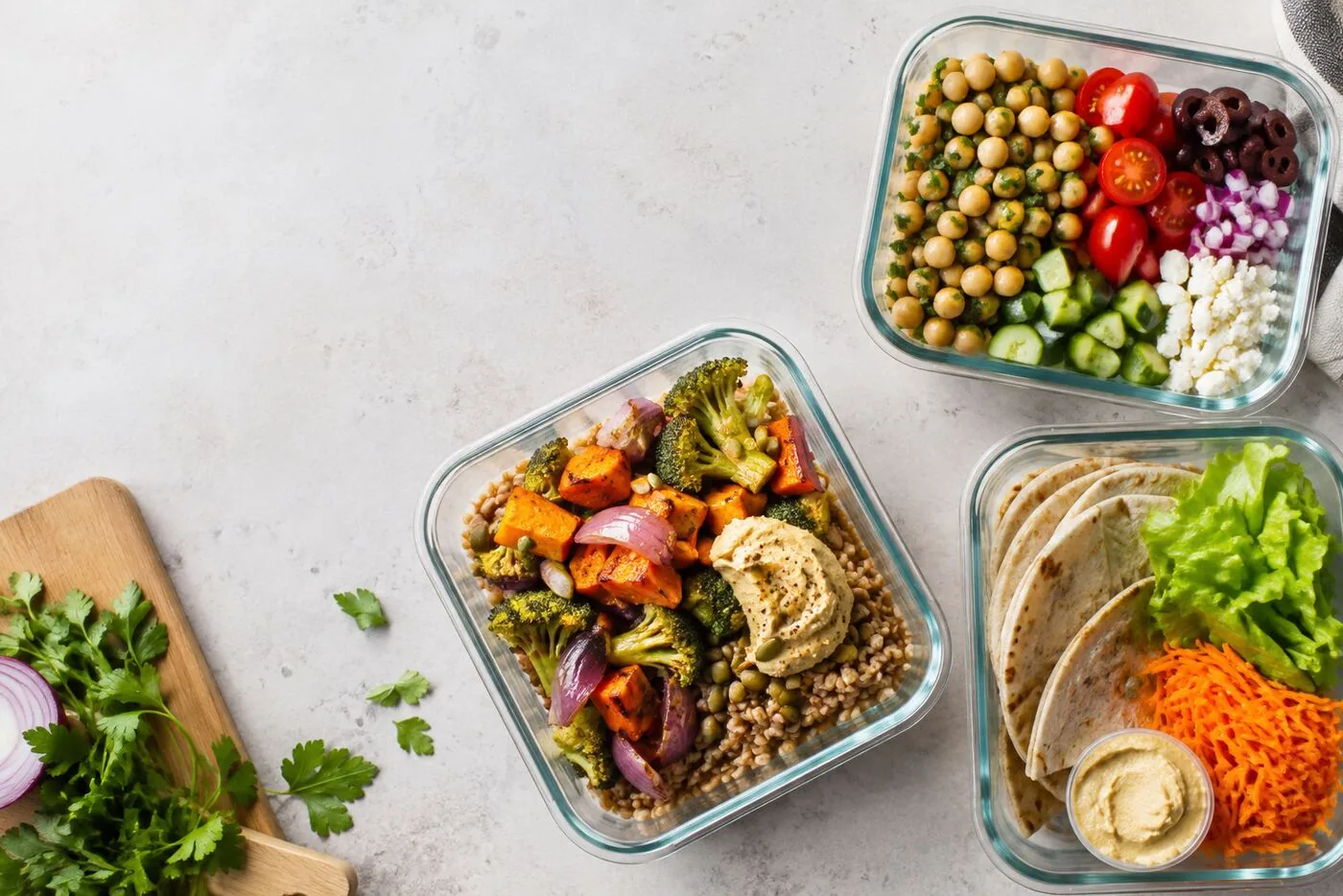
Lunch meal prep ideas are most useful when they make weekdays easier, not when they force you to eat the same meal five times. A good beginner system uses a few flexible components—protein foods, vegetables, a grain or starchy base, flavourful extras and simple backups—so lunches can change through the week.
This guide offers 12 easy lunch meal prep ideas, a simple prep method and food-safety reminders. Use the ideas as templates: swap ingredients for your budget, culture, dietary needs and appetite.
Start with a simple lunch formula
Build most lunches from four parts: a protein food, vegetables or fruit, a carbohydrate-rich food for energy, and a flavour element such as herbs, yoghurt dressing, hummus, olive oil, nuts or a sauce. You do not need every lunch to look identical for the system to work.
12 lunch meal prep ideas for beginners
1. Grain bowl with roast vegetables
Cook a grain you enjoy, such as brown rice, couscous or quinoa. Add roast vegetables, chickpeas, chicken, tofu or tinned fish, then pack dressing separately.
2. Mediterranean chickpea lunch boxes
Combine chickpeas, chopped vegetables, olives, a wholegrain pita and a portion of yoghurt or cheese if suitable for you.
3. Leftover dinner bowls
Set aside one portion while serving dinner. Add extra salad leaves, fruit or a small tub of beans the next morning so the lunch feels complete.
4. Soup plus a filling side
Prepare a vegetable, lentil or chicken soup. Pair it with wholegrain toast, a wrap or a bean salad rather than relying on soup alone if it does not keep you satisfied.
5. Wrap components
Pack a wholegrain wrap with sliced vegetables, a protein filling and a spread separately. Assemble at lunch to avoid a soggy wrap.
6. Pasta and vegetable salad
Use wholegrain or regular pasta, colourful vegetables and a protein such as beans, tuna, egg or chicken. Dress lightly and add delicate leaves when serving.
7. Baked potato or sweet potato boxes
Cook potatoes in advance and top them at lunch with beans, cottage cheese, tuna, leftover chilli or a vegetable filling.
8. Egg and vegetable snack plate
Hard-boiled eggs, cut vegetables, fruit, crackers and hummus can become a satisfying lunch when a hot meal is not practical.
9. Lentil or bean salad jars
Place dressing at the bottom, then sturdy vegetables, beans or lentils and grains. Keep leaves at the top and shake into a bowl when ready to eat.
10. Fried-rice-style leftovers
Use cooked rice with vegetables, egg, tofu, chicken or beans. Cool it promptly, refrigerate it safely and reheat thoroughly if you serve it hot.
11. Tuna, bean and corn salad
Combine tinned tuna, beans, corn, tomato and a simple dressing. Add bread, crackers or cooked grains for a more complete lunch.
12. Freezer-ready portions
Freeze individual portions of soup, chilli, curry or a pasta bake. Label the date and use them as a backup for weeks when prep time disappears.
A 45-minute beginner prep session
- Choose two protein foods and one carbohydrate base.
- Wash and chop vegetables while the base cooks.
- Make one dressing or flavourful sauce.
- Pack two or three lunches, then leave ingredients separate for the remaining days.
- Keep one freezer or pantry backup for a disrupted week.
Preparing three lunches is enough for many beginners. You can make the remaining days from leftovers, a sandwich, a salad kit or a simple pantry meal.
Keep lunches safe and appealing
Cool cooked food promptly, refrigerate it in shallow containers and use an insulated bag with an ice pack if your lunch will be away from a fridge. Reheat hot foods until steaming, and follow the storage instructions on packaged foods. If in doubt about safety or freshness, throw the food away.
Variety often comes from small changes: use the same roast vegetables in a wrap one day and a grain bowl the next, or change the dressing rather than cooking an entirely new recipe.
Make the plan fit your week
Before shopping, check your calendar. A work-from-home day may suit a reheated lunch; a day out may need a portable option. Plan for one lunch bought out or one low-prep day if that makes the routine more realistic.
A simple shopping list for five flexible lunches
Shop for components that can be mixed rather than five separate recipes. A useful starting list is one or two protein foods, two vegetables for roasting, two vegetables that can be eaten raw, one grain or starchy base, fruit, a wholegrain bread or wrap, and one sauce or dressing. Pantry backups such as tinned beans, tuna, soup, crackers and microwave rice can prevent a missed lunch when the week changes.
- Protein: eggs, beans, lentils, tofu, chicken, fish, yoghurt or cheese, depending on your needs.
- Produce: choose sturdy options that keep well, plus one item you can add fresh.
- Energy foods: rice, pasta, potatoes, bread, wraps or another familiar staple.
- Flavour: hummus, pesto, salsa, herbs, nuts, seeds or a simple dressing.
Keep the cost and effort realistic
Use seasonal produce, supermarket own-brand staples and frozen vegetables where they save money. Cook only the components you will genuinely use, and leave some foods unassembled so they stay fresher. If you become bored easily, freeze one portion and change the format: yesterday’s grain bowl can become today’s wrap or warm plate.
A good lunch-prep routine also includes an exit plan. Keep one quick option—such as soup with toast, eggs on a wrap, or beans with microwave rice—so a missed preparation session does not derail the whole week.
Frequently asked questions
How many lunches should I meal prep?
Start with two or three. A system that you repeat is more valuable than a full week of food you do not want to eat.
Do lunches need to be low calorie to be healthy?
No. A helpful lunch provides enough food for your needs and includes a mix of foods. Restrictive plans can be hard to sustain and are not appropriate for everyone.
Can I meal prep without a microwave?
Yes. Use wraps, grain salads, snack plates, sandwiches, bean salads and other foods that are safe and enjoyable cold.
Related guides
- Healthy Meal Prep Guide
- Healthy Habits Guide
- Healthy Snacks for Work
- Nutrition Tips for Remote Workers
- Nutrition for Cognitive Health