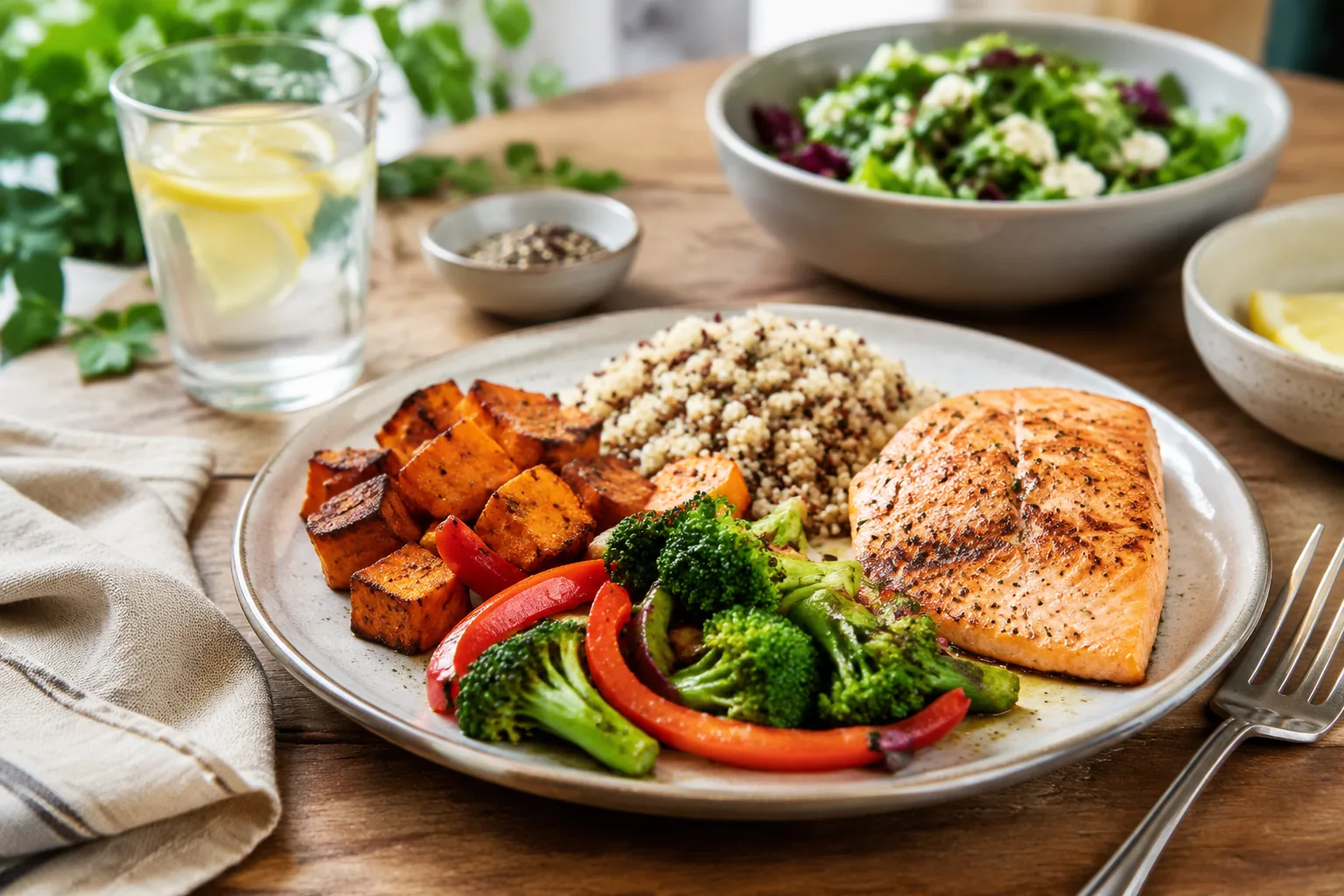
Mediterranean meal prep is not about reproducing one country’s cuisine or following a rigid menu. It is a practical pattern built around vegetables, fruit, legumes, whole grains, nuts, seeds, olive oil and regular use of fish or other protein foods, with flexibility for culture, budget and preference.
This five-day lunch plan uses shared ingredients so preparation stays manageable. It is general education, not an individual therapeutic diet. Allergies, coeliac disease, diabetes, kidney disease, pregnancy and other conditions may require personalised advice.
The mix-and-match lunch formula
Build each container or plate from:
- Vegetables: roasted, raw, leafy or leftover;
- Whole grain or starchy food: brown rice, quinoa, barley, wholegrain bread or potato;
- Protein: chickpeas, lentils, beans, eggs, fish, chicken, tofu, yoghurt or cheese;
- Healthy fat: olive oil, nuts, seeds, avocado or tahini; and
- Flavour: herbs, lemon, garlic, spices or vinegar.
Variety across the week matters more than making every box identical.
The five lunches
Monday: chickpea quinoa salad
Combine cooked quinoa, rinsed chickpeas, cucumber, tomato, capsicum, parsley and a lemon–olive oil dressing. Add feta if desired.
Pack leafy greens separately if you prefer them crisp. Add the dressing shortly before eating.
Tuesday: roast vegetable and hummus wrap
Fill a wholegrain wrap with roasted zucchini, capsicum and eggplant, hummus and spinach. Add leftover chicken or tofu when you want more protein.
Keep the filling away from the wrap until morning if sogginess is a problem.
Wednesday: lentil grain bowl
Use brown rice or barley, cooked lentils, roasted vegetables, greens and a tahini–lemon sauce. Top with pumpkin seeds.
This meal shares ingredients with Monday and Tuesday while changing texture and flavour.
Thursday: tuna and white bean salad
Combine canned tuna, rinsed cannellini beans, tomato, cucumber, olives, parsley and olive oil with lemon. Serve with wholegrain crackers or bread.
Choose fish according to local pregnancy and mercury guidance. Use tofu, egg or extra beans for a fish-free option.
Friday: Mediterranean snack plate
Pack hummus or yoghurt dip, wholegrain pita, chopped vegetables, fruit, nuts and boiled egg, cheese or roasted chickpeas.
This low-cook lunch uses remaining ingredients and reduces waste.
Shopping list for one person
Adjust quantities to appetite and household size.
Produce
- cucumbers
- tomatoes
- capsicums
- zucchini
- eggplant
- leafy greens
- parsley or another herb
- lemons
- fruit for five lunches
Grains
- quinoa, brown rice or barley
- wholegrain wraps or pita
- wholegrain crackers or bread
Protein foods
- two cans chickpeas
- one can lentils or cooked lentils
- one can white beans
- canned tuna or alternative
- hummus
- eggs, tofu, chicken, yoghurt or cheese as preferred
Pantry and flavour
- olive oil
- vinegar
- tahini
- nuts or seeds
- herbs and spices
- olives, optional
The 75-minute preparation order
Step 1: start grains and oven
Heat the oven and cook the chosen grain according to packet directions. Use separate utensils and preparation surfaces when managing allergies or coeliac disease.
Step 2: roast vegetables
Chop zucchini, capsicum and eggplant into similar sizes. Toss lightly with olive oil and seasoning. Roast until tender, turning once.
Step 3: prepare fresh vegetables
Wash cucumber, tomato, greens and herbs. Dry leafy vegetables well. Chop only what will hold its quality; whole tomatoes may store better than cut ones.
Step 4: rinse legumes
Drain and rinse canned chickpeas, lentils and beans. Portion them into sealed containers.
Step 5: make two sauces
Lemon dressing: olive oil, lemon juice, pepper and herbs.
Tahini sauce: tahini, lemon and enough water to loosen, with garlic if desired.
Store sauces cold in labelled containers.
Step 6: cool and store
Cool cooked foods promptly and refrigerate in shallow containers. Do not leave rice, grains, roast vegetables or proteins sitting at room temperature for extended periods.
Food-safety basics
Follow local storage guidance and use your refrigerator at a safe temperature. Transport lunch with an insulated bag and ice brick when refrigeration is unavailable.
Many people prefer to prepare three days at once and freeze or assemble later-week components separately. Fish, eggs, dairy and cooked grains need particular care. When in doubt, use government food-safety advice rather than smell alone.
Keep Friday fresh
To avoid storing every assembled lunch for five days:
- freeze cooked grain portions and thaw safely;
- keep vegetables whole until midweek;
- use sealed canned protein on the day;
- prepare Friday’s snack plate on Thursday night; and
- store dressing separately.
Meal prep can mean preparing components, not five identical finished boxes.
Adapt for budget
- Buy seasonal vegetables and frozen options.
- Use dried legumes when time and cooking facilities allow.
- Choose one herb rather than several.
- Replace quinoa with brown rice or barley.
- Use canned fish or extra beans instead of expensive portions.
- Plan the snack plate around leftovers.
Frozen vegetables remain nutritious and can reduce waste.
Adapt for plant-based eating
Use extra legumes, tofu, tempeh, hummus and fortified soy foods. Nuts and seeds add texture but may not provide the same protein quantity as a main serving of legumes or tofu.
Vegans should pay attention to vitamin B12 and may need individual advice for iron, calcium, iodine and omega-3 sources.
Make portions flexible
Appetite changes with activity, body size and the day. Pack extra wholegrain crackers, fruit or yoghurt instead of trying to predict perfectly. If lunches consistently leave you hungry, increase the grain, protein, healthy fat or overall volume.
Mindful eating is not about choosing the smallest container. The mindful eating guide explains hunger and satisfaction without rigid tracking.
Reduce waste
Use herb stems in sauces, freeze extra grain, roast vegetables that are losing freshness and turn remaining legumes into soup or hummus. Label containers and put the earliest food at the front of the fridge.
The healthy snacks for work guide uses overlapping fruit, yoghurt, nuts and whole grains.
Common questions
Is the Mediterranean diet only Italian or Greek food?
No. The research pattern reflects several Mediterranean food cultures, and its principles can be adapted respectfully to many cuisines. Local legumes, grains, vegetables and flavourings can fit.
Do I need olive oil at every meal?
No single ingredient makes the pattern. Olive oil is a common unsaturated fat, but portions and alternatives depend on preference, access and health needs.
Can I repeat lunches?
Yes. Repetition reduces work. Aim for variety across the week or month rather than demanding novelty daily.
Is meal prep safe for five days?
Storage time varies by ingredient and refrigeration. Assemble later-week meals closer to use or freeze suitable components. Follow local food-safety guidance.
A no-oven variation
When an oven is unavailable, use canned legumes, microwave brown rice, prewashed greens, cucumber, tomato, grated carrot, frozen vegetables cooked according to directions and canned fish or tofu. Make lemon dressing in a jar and assemble bowls as needed.
Convenience foods are not a failure. Compare labels, choose reduced-salt options where possible and use products that help you eat a varied meal consistently.
A family-style version
Store components in larger containers and let household members build their own lunches. Offer a grain, two vegetables, two protein options, fruit and sauce. This allows different appetites and preferences without cooking separate meals.
Label ingredients for allergies and use clean utensils to prevent cross-contact. Children and adults have different needs, so avoid presenting one portion as correct for everyone.
Flavour variations across the week
Change flavour without changing the core prep:
- lemon, parsley and black pepper;
- tahini, garlic and cumin;
- yoghurt, cucumber and dill;
- tomato, basil and olive oil; or
- paprika, oregano and vinegar.
Sauces can carry significant salt or energy, but they also make vegetables and legumes enjoyable. Use an amount that supports the meal rather than treating flavour as a problem.
A 20-minute midweek refresh
On Wednesday:
- Check stored components and discard anything unsafe.
- Cook or thaw another grain portion.
- Chop fresh tomato and cucumber.
- Prepare Friday’s snack items.
- Move earliest-use foods to the front.
This short reset improves quality and reduces the temptation to store delicate foods for too long.
Eating out within the pattern
Look for meals that include vegetables, legumes or whole grains and a protein food. Add a side salad or fruit when practical. One restaurant meal does not need to match the pattern perfectly; Mediterranean-style eating describes the overall pattern.
The bottom line
Mediterranean meal prep is easiest when you prepare flexible components: a whole grain, legumes, roasted and fresh vegetables, two sauces and several protein options. Turn them into five different lunches instead of cooking five recipes.
The pattern succeeds when it increases variety and convenience without creating food waste or a Sunday marathon.
Further reading
- Australian Dietary Guidelines
- Healthdirect Australia: Mediterranean diet
- Food Standards Australia New Zealand: Food safety
Related guides
- Healthy meal prep guide
- Healthy eating for beginners
- Healthy snacks guide
- Nutrition for cognitive health
- Nutrition tips for remote workers