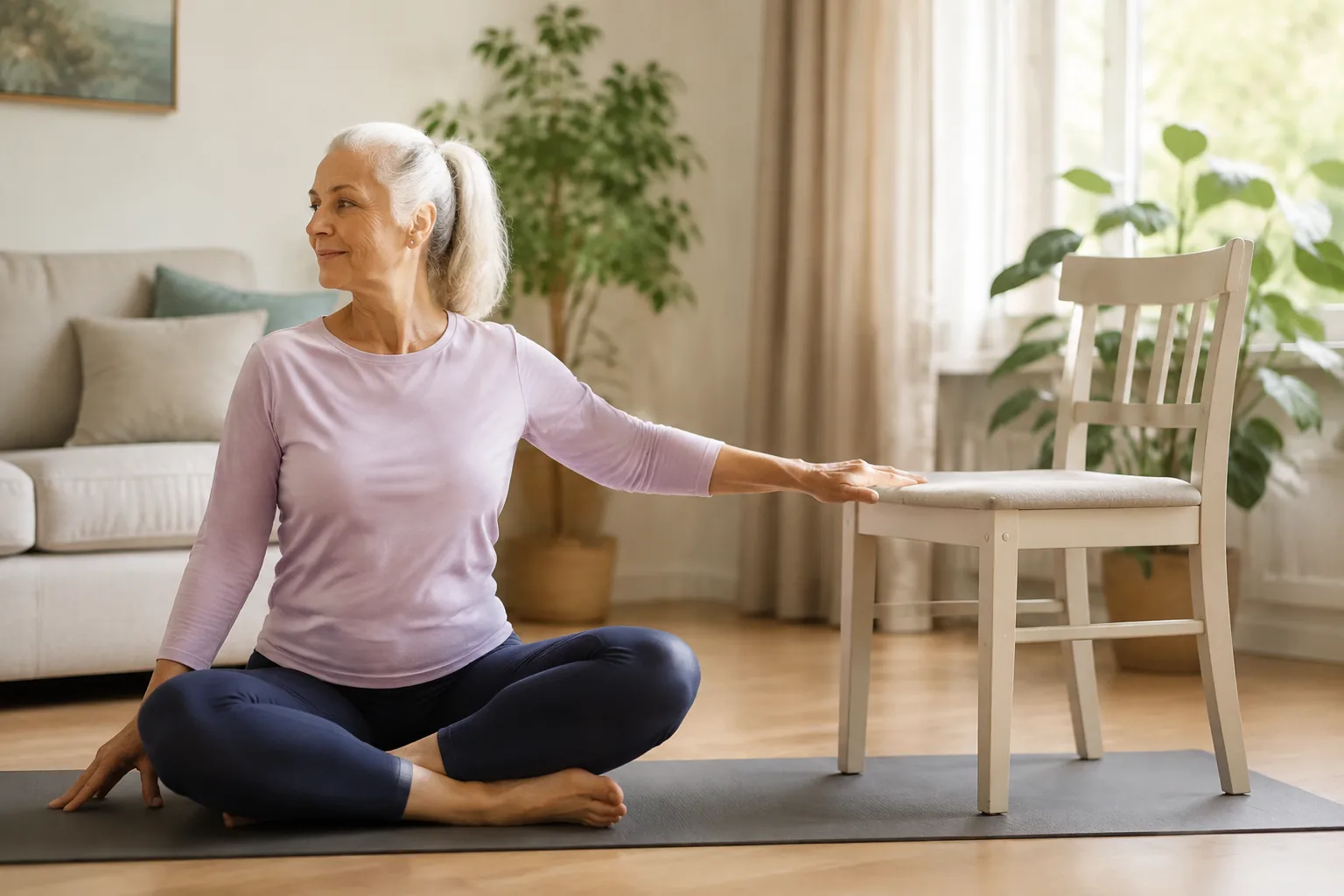
Morning yoga for beginners can be a short transition from sleep to ordinary movement. You do not need an elaborate routine or a deep stretch. Ten minutes of breathing, joint movement and simple standing poses can help you notice how your body feels before the day accelerates.
This gentle morning stretch routine uses a chair and offers floor-free options. Move slowly, especially after getting out of bed, and keep the range comfortable. If you feel dizzy when standing, have a recent injury or have a condition that affects exercise, use appropriate professional advice.
Before you begin
Clear enough space to reach your arms and step back. Place a sturdy chair nearby and use a non-slip surface. Drink a little water if you are thirsty, but you do not need special equipment or an empty stomach.
Morning stiffness is not a command to stretch harder. Body temperature, sleep position and previous activity can change how you feel. Begin small and let the range grow only if movement becomes easier.
The 10-minute morning yoga routine
Minute 0–1: stand or sit and arrive
Stand with one hand near the chair, or sit with both feet supported. Look around the room and take two ordinary breaths. Feel the contact under your feet.
Reach both arms forward as you inhale, then lower them as you exhale. Repeat three times without forcing breath length.
Minute 1–2: neck and shoulders
Turn your head gently right and left three times. Keep the movement within a range that feels smooth. Lift the shoulders toward the ears and release them five times, then circle them slowly backward.
Avoid large neck circles, especially if they cause dizziness or discomfort.
Minute 2–3: standing or seated cat–cow
Place hands on thighs. Inhale and tip the pelvis slightly forward while lifting the chest. Exhale and tip the pelvis back while allowing the upper back to round. Repeat six times.
The movement can be almost invisible. Coordinate with breathing only if it feels natural.
Minute 3–4: side reach
Hold the chair with the right hand and reach the left arm up. Lean a small amount to the right while keeping both feet grounded. Return and switch sides. Repeat twice each way.
Imagine length through the side of the body rather than trying to reach far.
Minute 4–5: chair half-sun flow
Face the chair. Inhale and reach the arms forward or overhead. Exhale, bend the knees and hinge at the hips, placing hands on the chair. Inhale and lengthen the spine in a comfortable halfway position. Exhale and return upright.
Repeat three or four times. Keep your head above your heart if forward bending makes you light-headed or is medically unsuitable.
Minute 5–6: supported low lunge
Hold the chair and step the right foot back. Keep the stance short and bend the front knee slightly. Feel a gentle opening at the front of the right hip. Take two breaths, step in and switch.
Keep both feet on parallel tracks for balance. The back heel may stay lifted.
Minute 6–7: supported chair pose
Stand in front of the chair with feet comfortable. Reach hips back and bend the knees as though sitting. Hover or lightly touch the seat, then stand. Repeat five to eight times.
Use hands on the chair arms or thighs if needed. This movement adds a small dose of leg strength rather than only stretching.
Minute 7–8: calf and ankle movement
Hold the chair. Rise onto the balls of the feet and lower slowly eight times. Then keep heels down and lift the toes five times.
Finish with five slow ankle circles each direction, one foot at a time. Use a small circle if balance is uncertain.
Minute 8–9: wide stance reach and rotate
Take a comfortable wide stance. Reach both arms forward, then rotate gently to the right and open the right arm. Return to centre and repeat left. Complete three rounds.
Let the feet and hips participate instead of twisting sharply through the lower back.
Minute 9–10: choose the day’s intention
Stand or sit. Notice whether breathing, stiffness or energy changed. Choose a practical intention such as “take a short walk at lunch,” “move gently after long sitting” or “leave room for rest.”
Take one ordinary breath and finish. An intention is a cue, not a promise you must keep perfectly.
A three-minute minimum version
When time is tight:
- Seated or standing cat–cow: six repetitions
- Chair half-flow: three repetitions
- Chair sit-to-stand: five repetitions
- Side reach: once each way
- One calm breath and a practical intention
The minimum routine protects continuity without requiring you to wake earlier.
Make morning yoga easier to repeat
Attach it to an existing cue
Practise after brushing your teeth, starting the kettle or opening the curtains. A stable cue is more dependable than waiting for motivation.
Keep the setup visible
Leave the chair space clear and the routine bookmarked. If a mat creates friction, use a safe floor without one.
Repeat the same sequence
Use this order for two weeks before adding variety. Familiarity lets you notice changes and reduces decisions.
Avoid your phone first
If possible, complete the ten minutes before news or messages. If the phone holds your timer, use do-not-disturb mode.
How hard should it feel?
Morning yoga should sit around 2 to 4 on a 10-point effort scale. Breathing stays easy and you finish ready for the day rather than needing recovery.
If you want a workout, schedule strength or cardio separately. This sequence can be a warm-up, but do not assume ten minutes of gentle movement replaces all weekly activity.
Common morning issues
Lower-back stiffness
Use small pelvic tilts, a supported hinge and chair sit-to-stands. Avoid forcing deep forward folds. Persistent pain, pain down the leg, weakness or numbness deserves assessment.
Tight hamstrings
Keep knees bent during hinges. The goal is comfortable movement, not straight legs. Strength and gradual exposure may be more useful than aggressive stretching.
Wrist discomfort
This routine does not require hands-and-knees positions. Keep using the chair. Yoga remains yoga when poses are adapted.
Dizziness
Move slowly between levels, stay seated and avoid bending the head down. New, severe or repeated dizziness needs medical advice.
Low energy
Use the three-minute version. If fatigue is persistent or unexplained, do not rely on exercise to mask it; seek appropriate care.
Progress after two weeks
Choose one addition:
- hold the low lunge for one extra breath;
- add three chair squats;
- repeat the half-flow twice more;
- follow the routine with a five-minute walk; or
- practise on one additional morning.
Do not turn a successful ten-minute habit into a 30-minute obligation overnight.
How it fits with other yoga practices
Use morning yoga for gentle mobility and intention. The 20-minute yoga for stress relief sequence provides more supported rest, while the bedtime yoga routine offers a quieter evening cue. The yoga for beginners guide explains foundational poses, safety and progression.
For a balanced week, add two strength sessions and enough aerobic activity for your current capacity. Yoga can complement them rather than compete with them.
Frequently asked questions
Should I practise before breakfast?
You do not need to. Choose the timing that feels comfortable and fits medical needs. Some people prefer a small meal or drink first, especially if they experience nausea, low blood glucose or dizziness. Avoid treating an empty stomach as a purity rule.
Is morning yoga a warm-up for strength training?
It can begin a warm-up, but add movements specific to the planned workout and gradually increase effort. A strength session needs rehearsal with the relevant patterns and loads; gentle stretching alone does not fully prepare you.
How many mornings a week should I do it?
Begin with two or three. If the routine feels useful and does not create irritation, practise more often. Daily is optional. A missed morning does not require a longer session later.
Can I do the whole routine seated?
Yes. Use seated arm reaches, cat–cow, gentle rotation, knee extensions, heel raises and marching. Keep both feet supported when balance or dizziness is a concern. The purpose is a safe transition into movement.
Why do I feel tighter on some mornings?
Sleep position, yesterday’s activity, stress, temperature and normal variability all play a role. Treat stiffness as information. Use smaller ranges and reassess after moving rather than trying to force consistency.
A simple two-week experiment
Choose three mornings each week and record only one phrase afterward: more awake, unchanged or less comfortable. Note any pose that repeatedly helps or irritates. At the end of two weeks, keep the useful movements, modify the rest and decide whether the ten-minute slot belongs in your routine.
The bottom line
Morning yoga for beginners can be ten simple minutes: arrive, move the spine and shoulders, open the hips, use the legs and finish with a practical intention. Keep the range comfortable and the setup easy.
The routine succeeds when it helps you begin the day with more awareness—not when every pose looks impressive.
Further reading
Related guides
- Yoga for beginners guide
- Healthy habits guide
- Mental wellbeing and stress management
- Gentle yoga for seniors
- Healthy ageing exercise guide