Qigong Flow Exercises: A Gentle Beginner Routine for Balance and Calm
Qigong flow exercises combine slow, controlled movement, relaxed breathing and attention. They are not a test of flexibility, athleticism or memorising a long sequence. For many beginners, qigong is a low-impact way to practise posture, weight shifting and steady movement while taking a break from rushed exercise.
This guide uses a simple standing flow that can be shortened, supported by a chair, or done mostly seated. Work within a comfortable range. The purpose is to leave you feeling more settled and mobile, not exhausted.
Safety note: Use a clear space, stable footwear and a chair or bench within reach. Stop for dizziness, chest pain, faintness, severe breathlessness, new weakness or sharp pain. If you have had a recent fall, surgery, uncontrolled symptoms or a condition that affects balance, ask a clinician or physiotherapist for tailored guidance before starting.
What are qigong flow exercises?
Qigong is a traditional Chinese mind-body practice with many styles. A beginner flow generally links simple arm movements, soft knees, gentle turns and calm breathing. Unlike a workout built around speed or heavy load, the challenge comes from control: staying upright, moving evenly from side to side and avoiding unnecessary tension in the jaw, shoulders and hands.
The National Center for Complementary and Integrative Health describes qigong as generally safe and notes research suggesting tai chi and qigong may help reduce falls in older adults. It is still exercise, not a replacement for clinical treatment or for the strength and aerobic activity that make up a balanced week.
How to set up safely
- Stand with feet about hip-width apart, close to a wall, kitchen bench or stable chair.
- Keep knees soft; do not lock them back.
- Wear shoes that grip the floor. Avoid socks on smooth tiles.
- Move only as far as you can control without leaning or holding your breath.
- Use the chair for one or both hands whenever you need it.
Eight qigong flow exercises for beginners
Take one or two calm breaths between movements. Complete one round first; a whole routine can take 10 to 15 minutes.
1. Settling posture
Stand tall with arms resting by your sides. Feel the pressure under both feet. Let shoulders drop away from the ears. Inhale gently and exhale slowly for five breaths. There is no need to force deep breathing.
2. Opening the chest
With elbows soft, float both hands forward to about chest height as you inhale. Turn the palms outward and gently open the arms to the sides as you exhale. Lower the hands. Repeat six times. Keep the ribs relaxed rather than thrusting the chest forward.
3. Cloud hands
Hold hands in front of the body, one slightly higher than the other. Slowly shift a little weight to the right as the hands travel right in a smooth arc. Change hand position and shift left. Keep the steps small or leave the feet planted. Do five slow shifts each way.
4. Scooping the water
Let hands lower near the thighs, then sweep them forward and upward only to a comfortable height. Turn palms down and let them drift back to the start. Use the legs to stay grounded. Repeat six to eight times.
5. Supported side reach
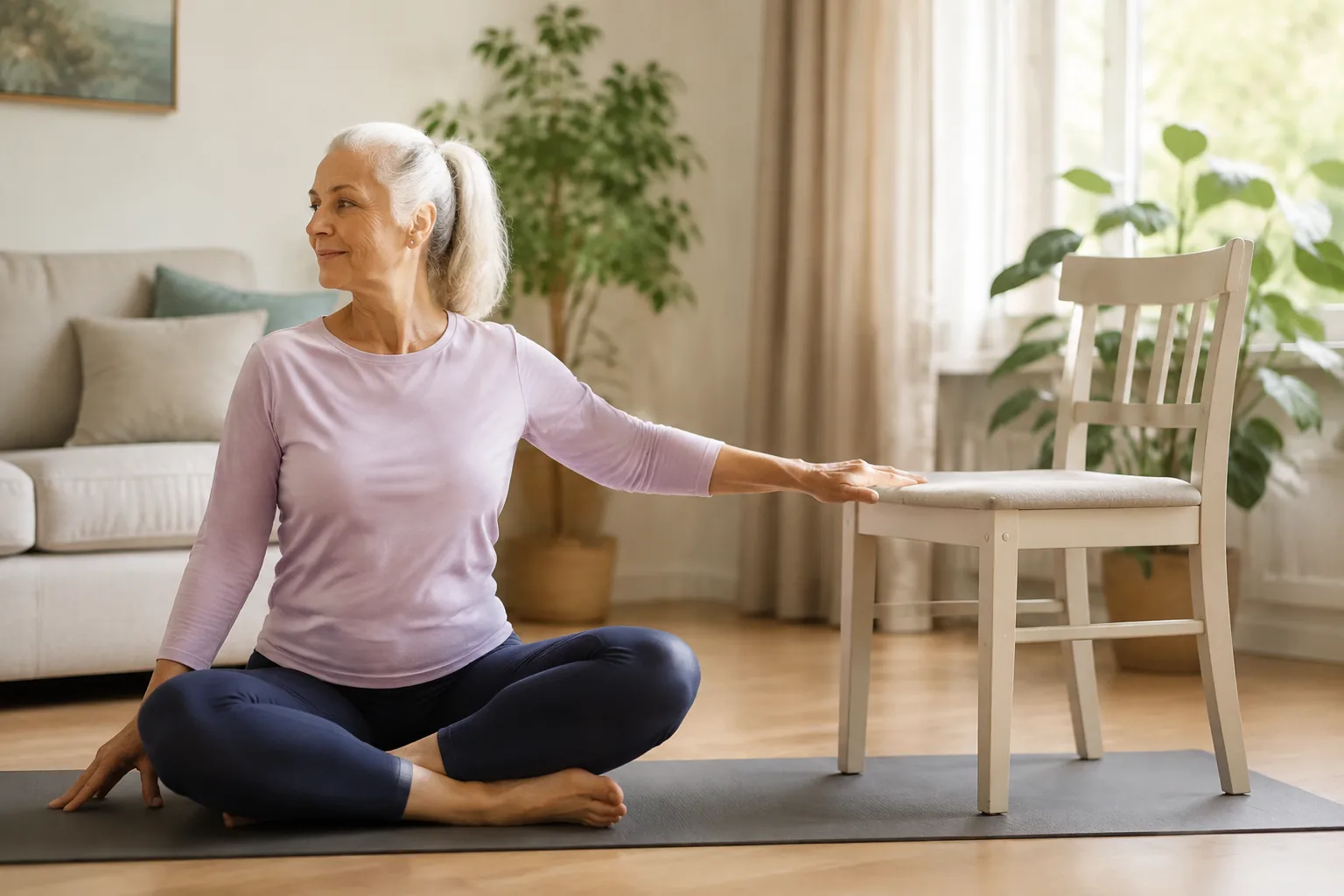
Keep one hand on the chair. Raise the other arm comfortably, then lean a little away from that hand. Return to centre and switch sides. Take two calm breaths per side. Avoid forcing a stretch through the shoulder or low back.
6. Gentle weight transfer
With both hands lightly on a counter, shift a small amount of weight to one foot without lifting the other. Pause, then shift across. This is one of the most useful qigong flow exercises for learning controlled side-to-side movement. Complete eight to ten transfers.
7. Heel lifts
Keep hands on the support. Rise slowly onto the balls of both feet, pause, then lower without dropping the heels. Do eight repetitions. This adds gentle ankle and calf work without turning the session into a hard strength workout.
8. Closing the flow
Return to your starting stance. Rest hands over the lower ribs or thighs. Take five comfortable breaths and notice whether you feel steady before walking away. Stand still for a moment before turning.
How to make the movements easier or harder
Make the flow easier by sitting for the upper-body movements, keeping both hands on support, reducing arm height, or shortening the session to five minutes. To add a little challenge, slow the movement, make the weight shifts more deliberate, or add one or two repetitions. Do not make it harder by removing support before you are ready.
A good next-day check is simple: ordinary walking should feel normal, any muscular soreness should be mild and improving, and balance should feel unchanged or better. If fatigue, pain or dizziness lingers, reduce the next session and seek advice if symptoms are concerning.
Qigong, yoga and a balanced exercise week
Qigong and yoga overlap in their focus on breathing, controlled movement and body awareness, but neither needs to replace other activity. The Yoga for Beginners guide explains safe ways to build a broader yoga practice. For seated mobility, use Chair Yoga for Seniors or Gentle Yoga for Seniors; for specific strength and balance work, see the Healthy Ageing Exercise Guide.
Older adults are generally encouraged to include aerobic, muscle-strengthening and balance activity each week. Qigong can be a useful balance and mobility component, while walking, resistance work and activities such as swimming supply other parts of the plan. Pair regular movement with consistent meals and recovery habits from our Healthy Eating for Beginners guide.
A simple weekly plan
- Two or three days: 10–15 minutes of qigong flow exercises.
- Two days: a strength routine appropriate to your ability.
- Most days: short walks, cycling, swimming or another comfortable aerobic activity.
- One easier day: gentle movement, rest and a check-in with how you are recovering.
Frequently asked questions
Can beginners do qigong at home?
Yes. Begin with a small supported routine, a clear space and a pace you can control. A qualified instructor can be helpful when you want individual feedback or have a health condition affecting movement.
Do qigong flow exercises improve balance?
They can practise controlled weight shifting, posture and attention. They should sit alongside appropriate leg-strength and balance training rather than being the only strategy for fall prevention.
How often should I practise?
Two or three short sessions per week is a sensible starting point. Consistency is more useful than a long session that leaves you sore or unsteady.
Bottom line
Qigong flow exercises offer a calm, accessible way to move with more awareness. Start small, use support without hesitation and let good technique—not range or speed—guide the session.