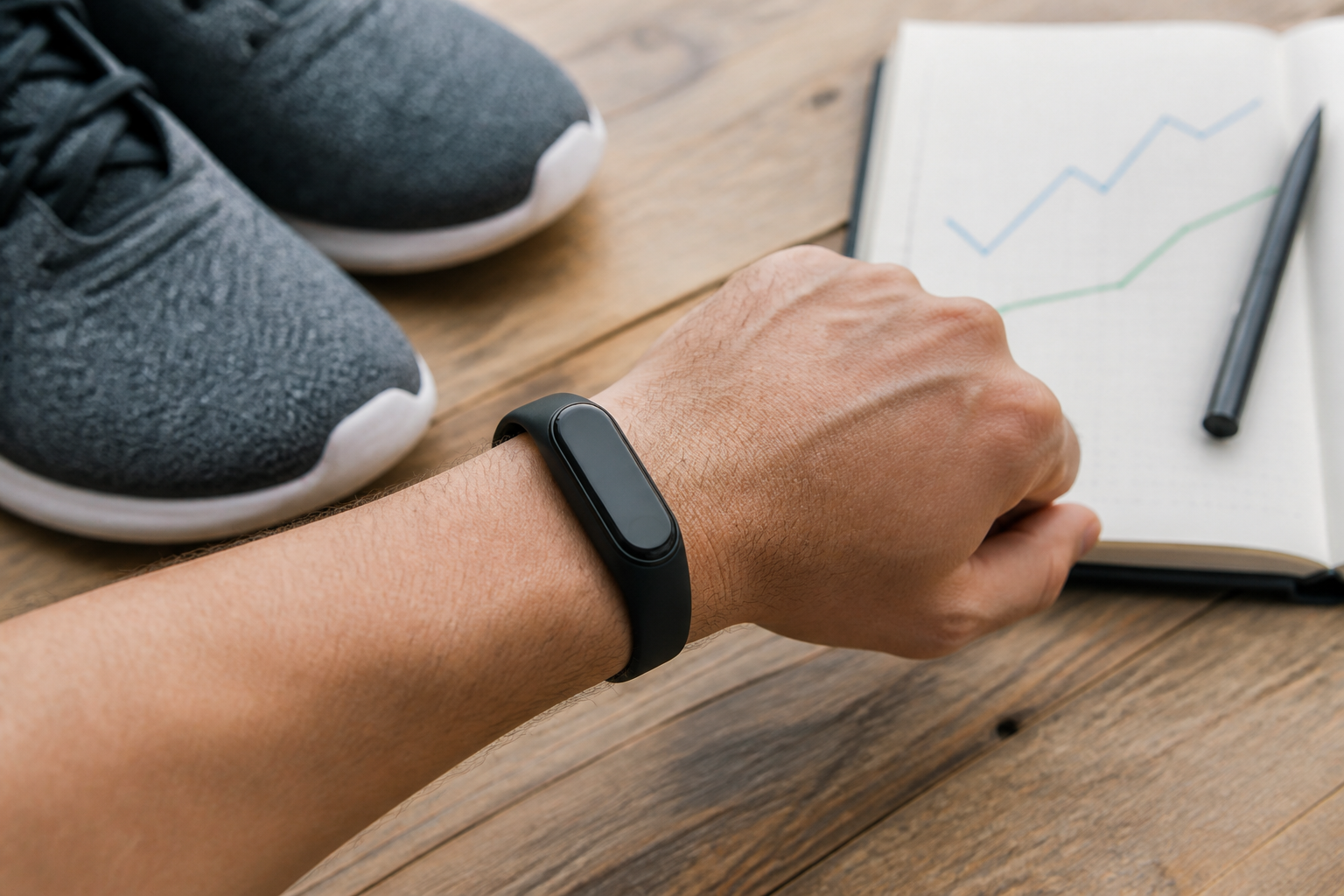
Heart rate zones are ranges used to describe exercise intensity. A fitness watch may divide your session into colourful bands and tell you how long you spent in each one. The display looks precise, but the underlying zones are estimates influenced by formulas, device accuracy and your individual physiology.
Heart rate zones explained well should make cardio easier to understand, not turn every workout into a test. This guide shows how to estimate target heart rate for exercise, combine it with the talk test and use trends without assuming a wearable is a medical device.
If you have cardiovascular disease, unexplained symptoms or take medication that changes heart rate, ask a clinician or appropriately qualified exercise professional for individual guidance. Stop and seek urgent help for chest pressure, fainting or severe unexpected shortness of breath.
What heart rate measures
Heart rate is the number of times the heart beats in a minute. It rises during exercise to help deliver oxygen and fuel to working tissues. The response depends on intensity, but also on heat, hydration, stress, sleep, caffeine, illness, altitude and medication.
A higher number is not automatically a better workout. Easy sessions have value, and the same pace can produce different heart rates on different days.
The common five-zone model
Apps define zones differently, but a typical model looks like this:
Zone 1: very easy
Roughly 50–60% of estimated maximum heart rate. Breathing is relaxed and conversation is easy. This range can suit warm-ups, cool-downs and gentle recovery movement.
Zone 2: easy to moderate
Roughly 60–70%. You can speak in complete sentences. Longer steady sessions often sit here, though the boundary between zones is not a sharp biological line.
Zone 3: moderate to comfortably hard
Roughly 70–80%. Breathing is more noticeable and conversation shortens. Depending on the model, this may include purposeful aerobic work.
Zone 4: hard
Roughly 80–90%. Speaking more than a few words is difficult. This range is generally used in structured intervals by people prepared for vigorous exercise.
Zone 5: very hard
Roughly 90–100%. Effort is near maximal and sustainable only briefly. Most general-health exercise does not need to spend much time here.
These percentages are broad training language, not diagnostic categories.
How to estimate maximum heart rate
The familiar formula is:
Estimated maximum heart rate = 220 − age
For a 40-year-old, that gives 180 beats per minute. A 60–70% zone would be 108–126.
The problem is individual error: true maximum heart rate can differ meaningfully from an age prediction. Other equations may fit population averages differently, but no simple formula knows your personal maximum.
Use a formula to create a starting estimate, then interpret it with perceived effort, the talk test and experience. Do not perform an unsupervised maximal test simply to improve an app setting.
The heart rate reserve method
Some systems account for resting heart rate:
- Estimate maximum heart rate.
- Subtract resting heart rate to find heart rate reserve.
- Multiply the reserve by the desired intensity.
- Add resting heart rate back.
Example for a person with estimated maximum 180 and resting rate 60:
- Reserve: 180 − 60 = 120
- 60%: (120 × 0.60) + 60 = 132
- 70%: (120 × 0.70) + 60 = 144
Their estimated 60–70% reserve range is 132–144. This still depends on an estimated maximum and a reliable resting value, so treat it as guidance rather than a clinical threshold.
Use the talk test alongside the watch
The talk test is refreshingly practical:
- Light: You can talk and sing comfortably.
- Moderate: You can talk but singing would be difficult.
- Vigorous: You can say only a few words before pausing for breath.
If your watch says Zone 4 while you are comfortably telling a long story, the device zones may be poorly configured or the reading may be inaccurate. If it says Zone 2 while you are struggling to speak, trust the stronger real-world signal and reduce effort.
Wrist sensor limitations
Optical wrist sensors estimate pulse from blood-flow changes under the skin. Readings can be affected by:
- a loose or overly tight fit;
- arm movement and gripping;
- cold skin;
- tattoos, hair or sensor placement;
- rapid intensity changes; and
- a rhythm the device is not designed to interpret.
Wear the device according to its instructions, usually a little above the wrist bone. Give it time to settle during the warm-up. A chest strap may respond more quickly during intervals, but it is still equipment, not a substitute for medical assessment.
Heart rate for easy cardio
Easy cardio should feel sustainable. Use a pace at which you can speak comfortably, breathing is controlled and you finish feeling that more was possible.
If your estimated Zone 2 matches that experience, it can help you hold back on days when enthusiasm pushes the pace. If the numbers conflict, prioritise symptoms and perceived effort, then review your settings later.
A common mistake is turning every easy session into a harder one because the displayed heart rate seems “too low.” The purpose of an easy day is not to maximise the number.
Heart rate for intervals
Heart rate lags behind effort. During a short interval, your muscles may be working hard before the watch shows a high zone. Chasing the target can make you accelerate too much near the end.
Use work duration, pace and perceived effort to control short intervals. Review heart rate afterward as context. For longer intervals, the number may be more helpful once it stabilises.
The site’s Japanese walking method guide uses alternating brisk and easy periods. Beginners can control the brisk segment with the talk test rather than trying to hit an exact beat on the first session.
Why the same workout produces different readings
Expect variation. Heart rate may be higher at the same pace when:
- weather is hot or humid;
- you are dehydrated;
- sleep was short;
- stress is elevated;
- you are becoming ill;
- the route has more incline; or
- you recently consumed caffeine.
It may be lower because of medication, cooler conditions, improved fitness, accumulated fatigue or device error.
Compare similar sessions and add context. One unusual workout is less informative than a repeatable pattern.
A beginner three-zone approach
Five zones can be more detail than most people need. Try three practical categories:
- Easy: Full conversation; warm-ups, recovery and longer comfortable sessions.
- Moderate: Conversation possible in shorter sentences; purposeful steady cardio.
- Hard: Only a few words; planned intervals with adequate recovery.
For general health, build most consistency through easy and moderate movement. Add vigorous work gradually when it is appropriate for your fitness and health.
A simple weekly cardio plan
- Session 1: 25 minutes easy, conversational pace
- Session 2: 5-minute warm-up, then 5 rounds of 2 minutes moderate and 2 minutes easy, followed by a cool-down
- Session 3: 30–40 minutes easy to moderate in an enjoyable activity
Start with less time if needed. The World Health Organization’s long-term recommendation for adults is 150 to 300 minutes of moderate aerobic activity weekly, or an equivalent combination, but beginners can build toward it.
Review data without obsessing
After a session, ask:
- Did the recorded intensity match the talk test?
- Was the sensor stable or were there sudden implausible jumps?
- How did heat, sleep and stress affect the day?
- Did I complete the intended easy, moderate or hard session?
- How did I recover by the next day?
Our guide to fitness trackers in 2026 explains a weekly review and traffic-light system. The recovery day guide combines heart rate with soreness, sleep and performance.
When a number needs professional attention
A wearable alert or unusual value is not a diagnosis. Follow the manufacturer’s guidance and seek medical advice when a reading is persistent, unexpected or accompanied by symptoms. Do not use online zones to override advice given for a health condition.
Urgent symptoms—such as chest pain, fainting, severe breathlessness or sudden neurological signs—need urgent assessment regardless of what the watch displays.
The bottom line
Heart rate training zones can organise cardio, but their boundaries are estimates. Start with a formula, check it against the talk test and compare trends across similar sessions. Use the number to support judgment, not replace it.
Smarter cardio is not about spending the most time in the highest zone. It is about choosing an intensity that matches the purpose of the day and that you can recover from.
If you change devices, expect the displayed zones and training labels to change as well. Keep a simple record of route, duration and perceived effort during the transition. Those stable observations help you compare your own training while a new sensor builds its baseline and you learn how its estimates behave.
Further reading
Continue with these guides
- Fitness Technology Guide
- Healthy Habits Guide
- Fitness Trackers 2026: 7 Essential Ways to Use Wearable Data
- Fitness Apps That Help Habits Stick: A Simple Setup Guide
- Exercise for Healthy Ageing: A Weekly Plan for Adults 60+
A note on this post: I’m Ben Shannon, the person behind Healthful Harbor. I’m not a doctor, dietitian, physiotherapist, psychologist or any other kind of clinician. I’m a regular person who reads research, tries things, and writes about what’s worked for me. Everything on this site is general educational information, not individual medical, nutrition or mental-health advice. For your own situation, please talk with a qualified professional who knows your circumstances. See the Health Information Disclaimer for the full picture.