Low-Impact Cardio for Seniors: Safe Ways to Build Fitness
Low-impact cardio for seniors can build stamina without running or jumping. Walking, stationary cycling, water exercise, gentle dance and seated cardio are all options when matched to a person’s balance, joints and health needs.
Choose a safe starting activity
Try five to ten minutes of easy walking on a smooth route, a seated cycle, or pool walking. Use the talk test: at moderate effort you can speak in sentences but not sing comfortably. Build duration gradually over weeks.
Simple weekly start
- Three days: 10 minutes of low-impact cardio.
- Two days: simple strength exercises.
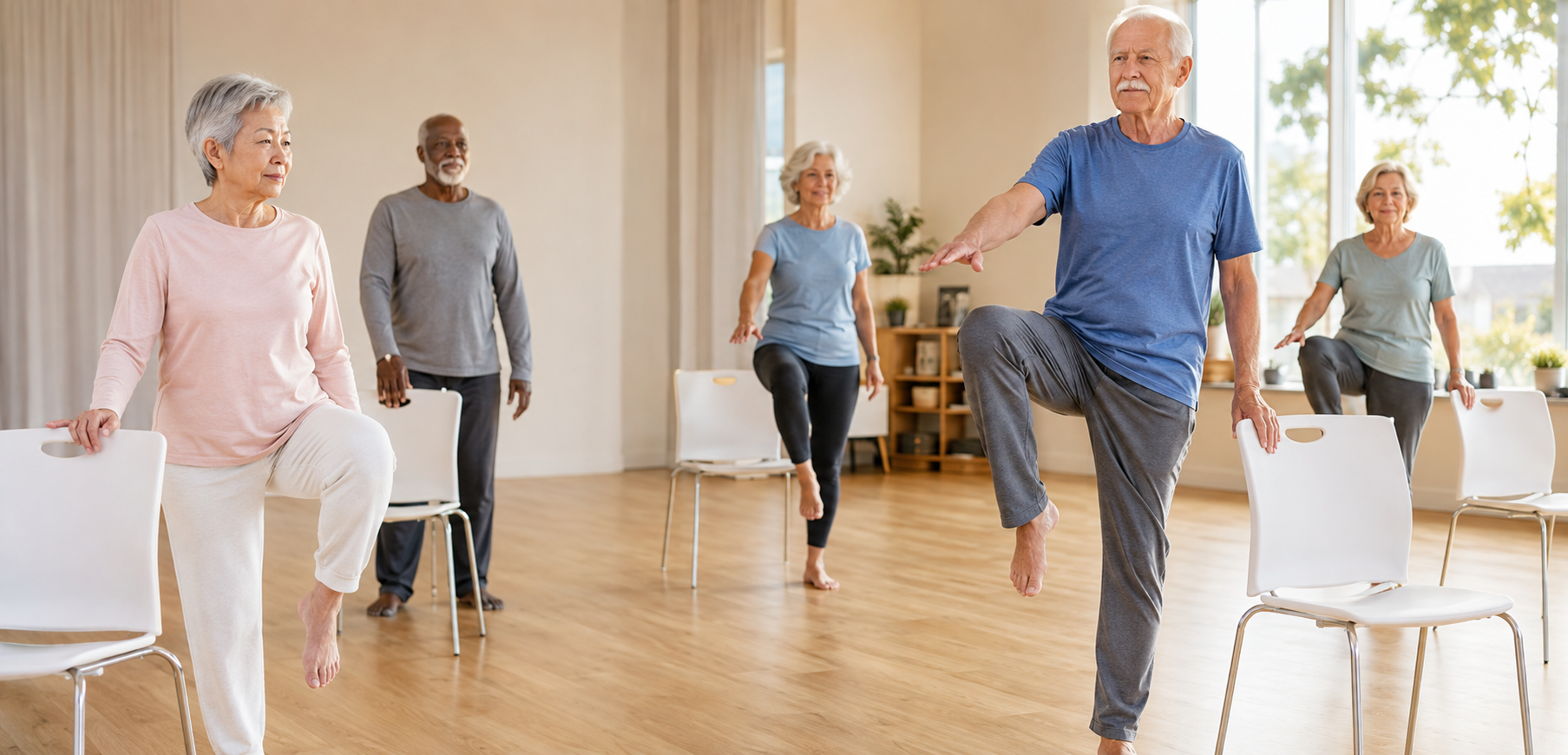
- Three days: supported balance practice.
Older adults are encouraged to include aerobic, muscle-strengthening and balance activity. The exact amount should fit current ability.
Safety
Stop for chest pain, faintness, severe breathlessness, dizziness, or new pain. Seek clinical guidance after recent illness, falls or surgery.
Bottom line
The best cardio option is the one you can repeat safely and enjoy.
Related reading
- Beginner Fitness Guide
- Healthy Ageing Exercise Guide
- Yoga for Beginners
- Gentle Yoga for Seniors
- Healthy Eating for Beginners
Choose the kind of cardio that fits your body
Low-impact means at least one foot stays connected with the ground, or the activity supports your body weight. It does not automatically mean easy. A long, fast walk on hills can still be demanding, while a short seated cycle can be a gentler first step. Pick the option that feels stable and leaves you with energy in reserve.
Walking
Walking is a flexible starting point when your balance and joints tolerate it. Choose flat, familiar ground and wear comfortable shoes. Begin with five to ten minutes at a pace where you can speak in full sentences. A shorter indoor walk, shopping-centre lap or several five-minute walks all count.
Stationary cycling
A stationary bike can reduce impact through the ankles, knees and hips. Adjust the seat so you can reach the pedal without rocking side to side. Start with low resistance and a relaxed pace. If getting on or off the bike feels unsteady, use another option or get individual guidance.
Water movement and gentle dance
Pool walking or water exercise can feel comfortable for some people, while gentle dance can make cardio more enjoyable at home. Use a stable surface, clear the floor and choose movement you can control. Water does not remove every risk, so follow pool rules and use support if you need it.
A two-week beginner plan
- Week 1: do 5 to 10 minutes on three non-consecutive days at an easy, conversational effort.
- Week 2: if you feel recovered, add two to five minutes to one or two sessions—not every session at once.
- Add two brief strength sessions and supported balance practice on other days, with rest whenever you need it.
How to judge the right effort
Use the talk test rather than chasing a device score. Easy-to-moderate cardio lets you talk in full sentences, though singing would be difficult. Slow down, shorten the session or rest if soreness is making everyday movement harder or fatigue lingers into the next day.
Progress safely
After two comfortable weeks, change one thing only: a few extra minutes, a slightly more frequent session, or a small amount of resistance. Do not increase duration, speed and hills at the same time. Consistent, repeatable movement is more useful than a workout that makes the next week harder.
When to pause
Stop exercising and seek urgent help for chest pain, fainting, severe shortness of breath or sudden neurological symptoms. Seek tailored advice before starting or progressing if you have had a recent fall, surgery, fracture, a new heart or lung problem, or pain that changes how you walk.