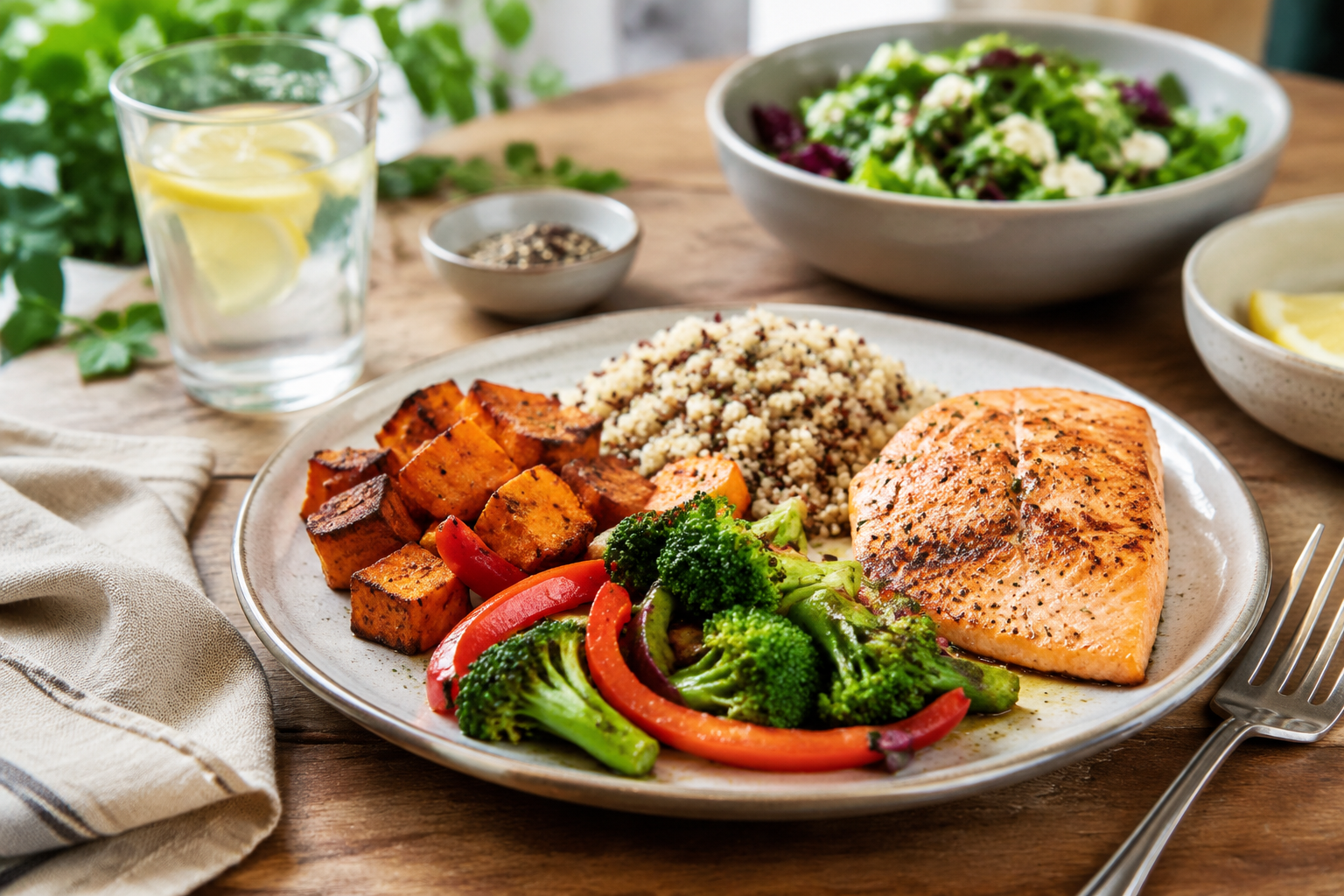
Easy healthy meal prep for one person does not mean filling your fridge with identical containers or cooking for hours on Sunday. A better approach is to prepare a few flexible building blocks, make enough for several meals, and leave room for your appetite and plans to change.
Cooking for one can bring real advantages: you can choose foods you enjoy, adjust portions easily, and make leftovers work in more than one way. The challenge is avoiding waste and decision fatigue. This simple three-day plan is designed to make weekday food feel easier, not more controlled.
Start with the healthy meal prep guide for a broader approach to planning, shopping, and storing food. Our healthy eating for beginners guide can help you build balanced meals without strict rules.
The easiest meal-prep framework
Pick one protein, one grain or starchy food, two vegetables, one flavour booster, and two snack options. You are not preparing a menu of perfect meals; you are making components that can become several different plates.
- Protein: eggs, tinned fish, chicken, tofu, lentils, beans, Greek yoghurt, or another food you enjoy.
- Carbohydrate: rice, pasta, potatoes, wraps, oats, couscous, or whole-grain bread.
- Vegetables: a fresh option plus a frozen or long-lasting option.
- Flavour booster: pesto, salsa, lemon, herbs, yoghurt sauce, curry paste, or a favourite dressing.
A flexible shopping list for three days
Buy only what you expect to use. One example: six eggs, one tin of beans, a small packet of cooked chicken or tofu, oats, microwave rice or a small bag of potatoes, a salad kit, frozen mixed vegetables, two pieces of fruit, yoghurt, whole-grain crackers, and a sauce you like. Swap freely for dietary needs, budget, and taste.
Check what you already have before shopping. A half bag of frozen vegetables, a tin of lentils, or rice in the cupboard may be the beginning of your plan.
Prep in 35 minutes
1. Cook one base
Cook two or three portions of rice, pasta, potatoes, or another staple. Choose a quantity you will comfortably eat within a few days. If cooking a whole batch feels wasteful, use microwave grains or bake two potatoes instead.
2. Prepare one protein
Boil four eggs, cook two portions of chicken or tofu, or rinse and season a tin of beans. Keep the preparation simple. A protein does not need a complicated marinade to be useful.
3. Make vegetables easy
Wash and cut a few crunchy vegetables, then keep frozen vegetables ready for meals that need more volume. Salad leaves, tomatoes, carrots, capsicum, broccoli, or frozen peas all work well depending on what you enjoy.
4. Portion only what helps
Put one meal’s worth in a container if that removes a busy-day barrier. Otherwise, store components separately. Separate ingredients often stay more appealing and give you more choices.
Three days of mix-and-match meals
Day one: warm grain bowl
Combine your grain with cooked protein and frozen vegetables. Add a spoon of salsa, pesto, or yoghurt sauce. Finish with a piece of fruit. This is not a recipe you must follow—use it as a template.
Day two: loaded potato or wrap
Split a cooked potato or fill a wrap with beans, salad vegetables, and your protein. Add lemon, herbs, or sauce. The same ingredients feel different when the format changes.
Day three: quick egg meal
Make scrambled eggs or an omelette with remaining vegetables, then serve with toast, potatoes, or rice. Use leftovers rather than buying a new ingredient for one final meal.
Snack planning for one person
Keep snacks simple: fruit, yoghurt, nuts, roasted chickpeas, crackers with nut or seed butter, or a boiled egg. If you work away from a fridge, see our high-protein desk snacks without refrigeration. A snack is useful when it bridges a long gap between meals; it does not need to be a project.
How to avoid food waste
Use the “eat first” shelf in your fridge for prepared ingredients. Choose recipes that share ingredients rather than buying a long list for one meal. Freeze portions early if your plans change. Fresh vegetables can be turned into soup, stir-fry, omelette, pasta sauce, or a sandwich filling before they are forgotten.
Follow package directions and normal food-safety practice. Refrigerate cooked food promptly, use clean containers, and reheat thoroughly when needed. If you are unsure whether a food has been stored safely, do not rely on smell alone—when in doubt, discard it.
Make it feel less repetitive
Change the sauce, format, or crunchy topping before changing the entire meal. Rice with beans and salsa can become a wrap the next day or a salad bowl the day after. Add herbs, lemon, chilli, or a different dressing only if you enjoy it. The goal is flexibility, not novelty for its own sake.
Meal prep on low-energy weeks
Use shortcuts with no guilt: pre-washed salad, frozen vegetables, tinned beans, microwave grains, rotisserie chicken, or a simple soup and sandwich. Convenience foods can be part of a nourishing pattern when they help you eat regularly. The best plan matches your real capacity that week.
If your schedule is desk-heavy, our nutrition tips for remote workers can help you build meal breaks into the day. Pairing practical meals with regular movement, such as the 10-minute morning mobility routine, can make healthy habits feel more manageable.
Frequently asked questions
How long does meal prep for one take?
It can take 20 to 40 minutes when you prepare simple components. It does not need to involve an entire week of meals.
Is it cheaper to meal prep for one?
It can reduce last-minute takeaway and food waste, but cost depends on what you buy and use. Choose ingredients that overlap and freeze extras early.
Do I need to count calories?
No. A flexible plate with protein, carbohydrate, vegetables or fruit, and foods you enjoy is a useful starting point for many people. Individual advice may help for specific health goals.
Portioning without making food feel restrictive
Portions are practical when they prevent waste or make a busy lunch easier. They do not need to become rules. Start by serving a meal that looks satisfying, eat without rushing where possible, and notice whether you need more. Some days you may be hungrier because you were more active, slept poorly, or simply have a different appetite. Flexible meal prep allows for that.
If you prefer containers, use them to store ingredients rather than pre-deciding every meal. A container of cooked grains, one of vegetables, and one protein source can become different meals depending on what you want that day.
A second three-day combination
For variety next week, try oats or whole-grain toast for breakfast, a lentil-and-vegetable soup for lunch, and sheet-pan vegetables with tofu, fish, or chicken for dinner. Freeze a portion of soup straight away. Use the roasted vegetables in a wrap or with eggs the next day. Planning around overlapping ingredients makes solo cooking less expensive and less repetitive.
Practical storage reminders
Label leftovers with the day they were cooked. Keep your fridge cold, avoid leaving cooked food at room temperature for long, and follow package guidance for reheating and use-by dates. Divide a large cooked meal into shallow containers so it cools more promptly. If you are unsure whether something was stored safely, choose caution.
When meal prep is not the answer
Some weeks are too busy, stressful, or unpredictable for preparing several days of food. It is okay to rely on simple supermarket options, a meal delivery, or takeaway that includes a protein source and vegetables. Meal prep is a support tool, not a measure of success. The aim is to reduce friction around eating, not to create another task to fail at.
How meal prep supports an active week
Having a few easy meals available can be particularly useful on strength-training or walking days, when you may be more hungry later than expected. It removes the need to make a complicated decision when your energy is low. You do not need special post-workout recipes; a balanced meal you enjoy is a strong starting point.
Keep your plan flexible enough for social meals, leftovers, and changing schedules. If you eat out one night, save the prepared component for the next day rather than forcing yourself to eat it. Flexibility helps reduce waste and makes the habit more likely to last.
Next step
Choose one protein, one base, and two vegetables for the next three days. Make one small shop and prepare only what will make tomorrow easier.
Continue with these guides
- Healthy Habits Guide
- Healthy Snacks for Work: 20 Ideas That Travel Well
- Exercise for Healthy Ageing: A Weekly Plan for Adults 60+
Leave a Reply