How to start exercising again after years of inactivity is a question many people ask when life, work, illness, injury, caring responsibilities, or simply loss of routine has put movement on pause. The answer is not to make up for lost time. It is to begin at a level your body can repeat.
A useful restart feels almost modest at first: a short walk, a few sit-to-stands, or five minutes of mobility. That is not “too little.” It is the foundation for a habit that can last longer than a burst of motivation. This guide gives you a gentle way to begin, adjust, and build confidence without treating exercise as punishment.
For a wider starting framework, read our beginner fitness guide. It is the main pillar page for this topic and shows how walking, strength, mobility, and recovery can fit together.
Start with safety, not fear
Most people do not need a perfect fitness level to begin moving, but it is wise to seek individual advice if you have chest pain, fainting, severe shortness of breath, a recent surgery or fracture, new severe pain, or a condition that affects balance. If you are unsure, a GP, physiotherapist, or qualified exercise professional can help you choose a safe starting point.
During activity, stop if pain is sharp or worsening, you feel faint, you develop chest pain, or your breathing feels unusually difficult. Mild effort in muscles and a little increase in breathing are expected. The line to avoid is pushing through symptoms that feel wrong.
Forget the “all or nothing” restart
People often plan to exercise five or six days a week, then stop after a difficult first session. A better restart uses a small dose that leaves you feeling capable of doing it again. You might begin with ten minutes of walking three times this week, or five minutes of chair-based strength twice this week. Consistency comes from a plan that fits your current life, not from an impressive first day.
Choose a reason that matters to you. Perhaps you want more energy for grandchildren, easier stairs, less stiffness after desk work, or more confidence on a holiday. A personal reason is more useful than a vague demand to “get fit.”
Step one: choose your starting movement
Walking is often the simplest option because it needs little equipment and is easy to adapt. Start indoors, around your block, at a shopping centre, or in a park—wherever feels safe and comfortable. If walking is not suitable today, try gentle seated marching, shoulder rolls, or a short mobility routine instead.
A good first target is 5 to 10 minutes at a pace where you can speak in full sentences. Finish with a little energy left. If you have not moved much recently, one five-minute walk is a real session.
Step two: add simple strength work
Strength supports the everyday tasks that walking alone does not fully train: standing from a chair, lifting groceries, carrying laundry, and getting up from the floor. You do not need weights to begin. A stable chair, wall, or bench can be enough.
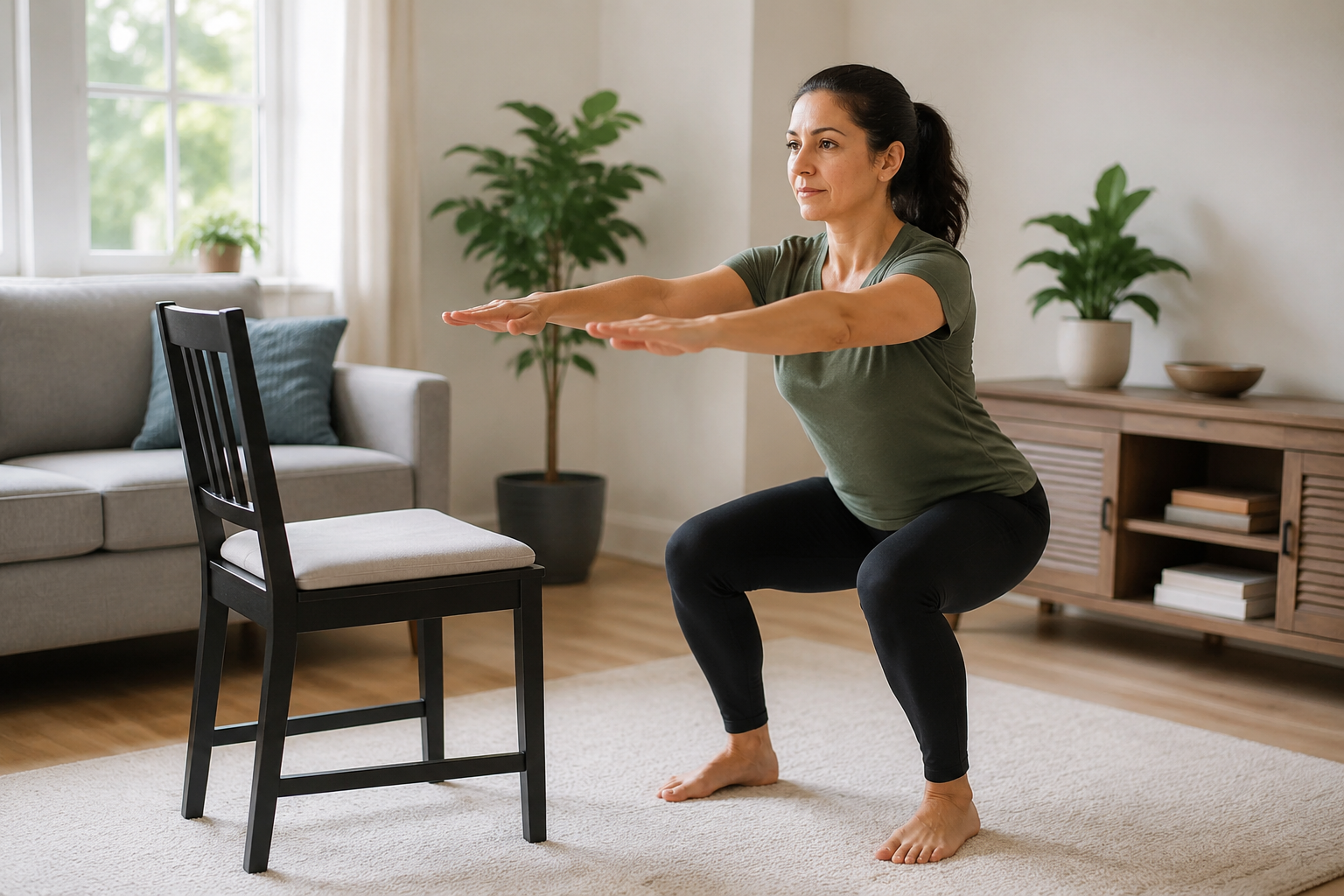
Try one set of 5 chair squats or sit-to-stands twice this week. Use your hands on the chair or thighs if you need them. The goal is a controlled rise and a slow, safe return to the seat. If that feels too much, practise just standing up once or twice during the day.
You can also try a gentle wall push-up: stand arm’s length from a solid wall, place hands at chest height, bend elbows a small amount, then press away. Keep your body in one line and use a range that feels comfortable. Five repetitions is enough at first.
Step three: practise balance and mobility
Balance and mobility help your body move with more confidence. Stand at a kitchen bench and practise slow side-to-side weight shifts with both hands lightly supported. Or use our kitchen-bench balance routine for a clear, beginner-safe session.
For mobility, try the 10-minute morning mobility routine. You do not need to stretch deeply. Gentle shoulder, hip, ankle, and spine movements are enough to help you notice what feels stiff and move within a comfortable range.
A realistic first-week plan
- Day 1: 5–10 minutes of easy walking.
- Day 2: one set of 5 sit-to-stands and 5 wall push-ups, with rests.
- Day 3: rest or five minutes of gentle mobility.
- Day 4: repeat the easy walk.
- Day 5: balance practice at the bench, then a relaxed walk around the house.
- Day 6: repeat the short strength session only if you feel recovered.
- Day 7: complete rest or a comfortable stroll.
You can move the days around. The structure matters more than the calendar: short sessions, rest between strength days, and room to adjust.
How to tell if you are doing too much
Ordinary muscle tenderness can happen when you try new movements. It should generally ease over a day or two. Reduce the dose if soreness makes daily tasks harder, your sleep is disrupted, you feel unusually exhausted, or pain is growing rather than settling. You may also need more recovery if your motivation has dropped because every session feels like a chore.
Recovery is part of the plan. An easy rest-day walk can suit some people, while full rest is better on other days. Read walking on rest days after strength training for a practical way to judge the difference.
Progress one small thing at a time
After one or two weeks, choose just one change: walk for two extra minutes, add one sit-to-stand, or add a second strength set. Do not increase time, speed, hills, and repetitions together. Small changes make it easier to understand how your body responds.
Keep a simple note on your phone or calendar. Record what you did and one word about how it felt: easy, steady, tired, sore, energised. This creates useful evidence that you are building a habit, even before fitness changes are obvious.
What to eat and drink around activity
You do not need special supplements to start exercising. Regular meals, fluids, and foods you enjoy are a sound foundation. A snack can help if it has been a long time since you ate; it does not need to be complicated. See our healthy eating for beginners guide for simple meal-building ideas.
Frequently asked questions
What is the best exercise after years of inactivity?
The best exercise is one you can perform safely and repeat. Easy walking, chair sit-to-stands, gentle mobility, and supported balance work are useful starting points for many people.
How long until exercise feels easier?
Some people notice better confidence or energy within a few weeks, while strength and fitness take longer. Focus on repeatable sessions rather than a deadline.
Can I start exercising at home?
Yes. A clear space, stable chair, wall, and comfortable shoes can be enough for a beginner routine. Choose safe support and gradual progress.
How to make the plan fit a busy life
Attach movement to something you already do. Walk after your morning coffee, do sit-to-stands while the kettle boils, or use a five-minute mobility break before opening your laptop. You do not need a separate fitness identity to begin. You need a cue that makes the next small action easier to remember.
Prepare for practical barriers too. Put walking shoes near the door, choose an indoor route for bad weather, and decide in advance which day you will use as a rest day. If an appointment or busy week interrupts the plan, resume with the last comfortable dose rather than trying to catch up.
Build confidence without relying on motivation
Motivation changes from day to day. A simple plan reduces the need to negotiate with yourself. Make the goal specific: walk for seven minutes after lunch on Monday, Wednesday, and Friday. Then give yourself permission to stop at seven minutes. Often you may choose to continue, but the plan succeeds either way.
Celebrate functional changes rather than only weight or appearance. Notice when getting up from a chair feels smoother, when you have more energy for errands, or when a short hill feels less daunting. These are meaningful signs that your body is adapting.
What to do after a missed week
Missing a week is common and does not erase your progress. Return to the easiest version you had been doing, perhaps five minutes of walking and one strength set. Treat the first session back as a re-entry, not a test. This is especially important after illness, travel, or a period of poor sleep.
When to ask for extra help
A physiotherapist, exercise physiologist, or qualified trainer can be useful if you feel nervous about starting, have repeated pain, or want a plan tailored to a condition or injury. You do not need to wait until something goes wrong. Good guidance can make the first steps feel clearer and safer.
Keep the restart kind and practical
The language you use with yourself matters. You are not “behind” because you are starting again, and you do not need to earn rest through exercise. A short session after years of inactivity is an act of care for your future mobility, energy, and confidence. Some weeks will be easier than others. What matters is returning to a manageable version instead of abandoning the routine when life gets busy.
It can help to involve another person. Ask a friend to join a short walk, tell a family member when you plan to go, or keep your shoes by the door as a visible reminder. Accountability should feel supportive, not like pressure.
Simple goals for the first month
In week one, focus only on showing up for three brief movement breaks. In week two, repeat the same plan and notice which activity you prefer. In week three, add a small amount of time or one extra repetition. In week four, review your notes and choose the next modest step. This gives your body time to adapt and helps you build trust in the process.
Next step
Choose one five- or ten-minute walk this week and put it in your calendar. Starting small is not delaying progress; it is how you make progress sustainable.
Related guides
- Beginner fitness guide
- Healthy ageing exercise guide
- Strength training for beginners
- Functional fitness exercises
- Japanese walking method
Leave a Reply