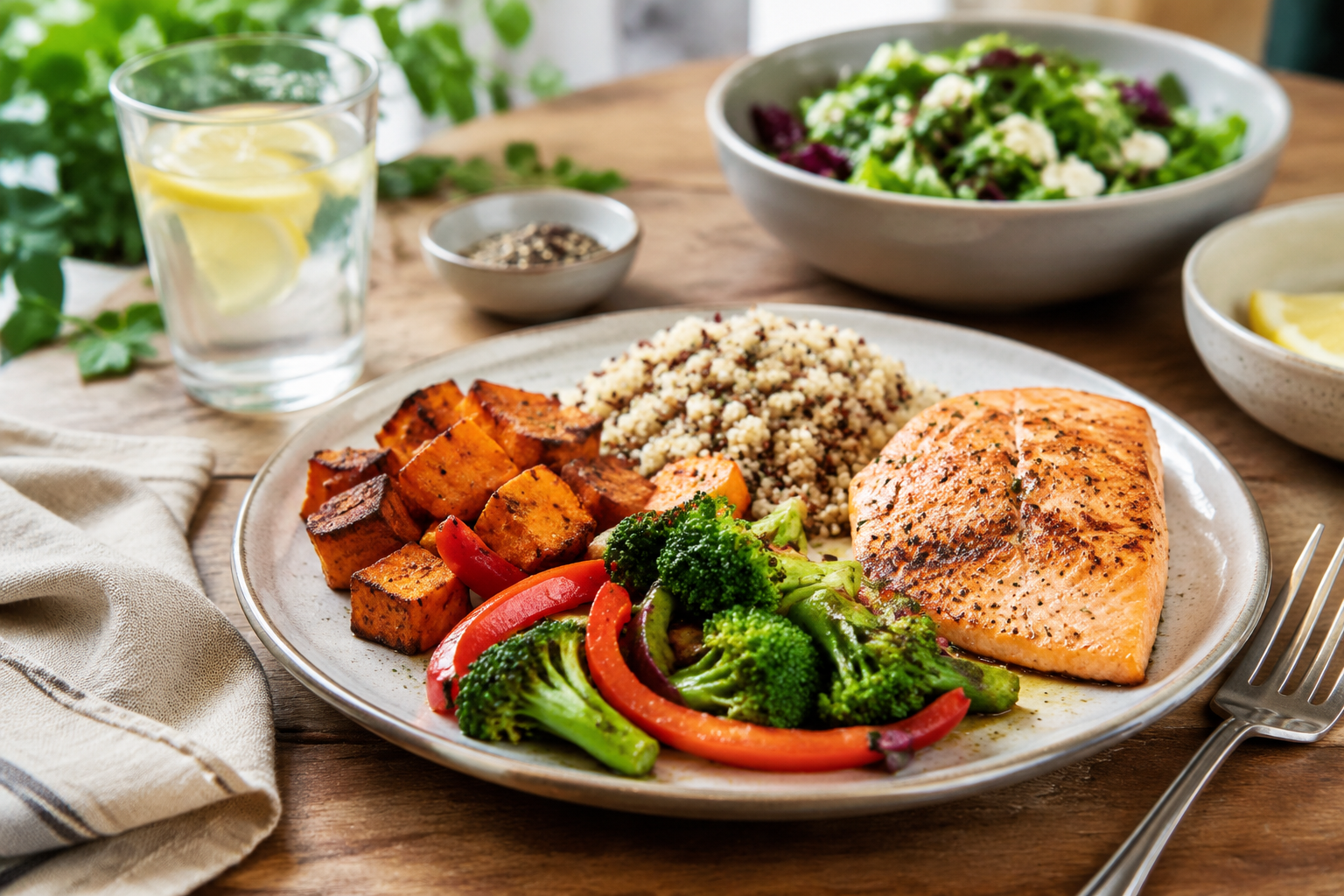
Healthy lunches for remote workers on a budget do not need to be expensive, picture-perfect, or prepared hours in advance. Working from home can make lunch easier in some ways, but it can also lead to skipped meals, constant grazing, or last-minute choices when meetings run over.
A practical lunch is one that fits your time, appetite, budget, and kitchen. The goal is not to follow a rigid plan. It is to have a few reliable combinations that make a proper break feel easier than eating whatever is closest to your desk.
For more strategies built specifically for home workdays, see our nutrition tips for remote workers. It is the main pillar page related to this topic.
What makes a satisfying work-from-home lunch?
Most satisfying lunches include a protein food, a carbohydrate source, vegetables or fruit, and flavour. This can be as simple as eggs on toast with tomatoes, a bean-and-rice bowl, or leftover chicken and vegetables in a wrap. There is no need to measure every ingredient.
Protein may help a meal feel more filling. Carbohydrates provide energy and can come from bread, rice, pasta, potatoes, oats, or wraps. Vegetables and fruit add colour, texture, and fibre. A sauce, herbs, or seasoning makes the meal more enjoyable and more likely to be repeated.
Plan for the real working day
Look at tomorrow’s calendar before you go to bed. If you have a long meeting at noon, prepare something that can be assembled in five minutes or eaten later without much effort. If you have more time, cook an extra portion at dinner and use it for lunch. Planning does not need to be elaborate to be useful.
Set a lunch alarm if you tend to work through breaks. Step away from the desk when possible. Even ten calm minutes away from your screen can make a meal feel more satisfying.
12 easy healthy lunches for remote workers
1. Leftover grain bowl
Use leftover rice, pasta, couscous, or potatoes with beans, chicken, tofu, eggs, or tinned fish. Add frozen vegetables or salad leaves and a dressing you like.
2. Eggs on toast with vegetables
Scramble or fry eggs and serve them on whole-grain toast with tomatoes, spinach, mushrooms, or leftover vegetables. It is quick, affordable, and easy to adjust.
3. Bean-and-vegetable wrap
Fill a wrap with rinsed beans, salad vegetables, cheese or yoghurt, and salsa. Add leftover rice if you need a more substantial meal.
4. Lentil soup with bread
A tinned or homemade lentil soup plus whole-grain bread and fruit is a simple lunch for cooler days. Add yoghurt or a boiled egg if you want more protein.
5. Tuna, chickpea, and salad plate
Combine tinned tuna or salmon with chickpeas, cucumber, tomato, lemon, and a little olive oil or dressing. Serve with crackers or toast.
6. Baked potato with toppings
Microwave or bake a potato, then add beans, cottage cheese, yoghurt, tinned fish, or leftover vegetables. A potato is inexpensive and works with many toppings.
7. Quick fried rice
Use leftover rice, frozen mixed vegetables, an egg, and soy sauce or another seasoning. Keep the heat moderate and add whatever protein is available.
8. Hummus-style snack plate
Pair hummus or another dip with crackers, carrots, capsicum, fruit, cheese, boiled eggs, or roasted chickpeas. This is useful on days when a cooked meal feels unrealistic.
9. Pesto pasta with peas
Cook pasta, stir through frozen peas and a spoon of pesto, then add beans, chicken, or cheese. Make two portions if you want tomorrow’s lunch sorted as well.
10. Tofu or chicken stir-fry
Use a frozen vegetable mix, a protein food, and noodles or rice. Stir-fries are excellent for using small amounts of vegetables before they spoil.
11. Breakfast-for-lunch oats
Oats with yoghurt or milk, fruit, nuts or seeds, and peanut or seed butter can be a filling option when savoury food does not appeal. It is still a real lunch.
12. Freezer back-up meal
Keep one or two frozen soups, curries, or grain bowls for very busy days. A convenient option is often better than skipping lunch or waiting until you are overly hungry.
A low-waste shopping pattern
Choose ingredients that overlap. For example, buy a bag of salad leaves, a few tomatoes, eggs, a tin of beans, wraps, and frozen vegetables. Those items can become eggs on toast, wraps, bowls, salads, and stir-fries. Add one or two foods you genuinely enjoy so the plan does not feel like a chore.
Frozen vegetables, tinned beans, tinned fish, eggs, oats, rice, and potatoes are often budget-friendly staples with a long shelf life. Fresh food is still useful, but you do not need every meal to rely on a large variety of fresh ingredients.
Prep only what helps
Some people like to cook several portions on Sunday. Others do better by washing vegetables, boiling eggs, and making a little extra dinner. Both are meal prep. Use the approach that reduces work for your future self.
For a flexible solo-cooking plan, visit easy healthy meal prep for one person. It shows how to prepare components without committing to the same lunch every day.
Keep snacks from becoming lunch by accident
Snacks are useful when you need a bridge between meals, but they may not be satisfying enough to replace lunch every day. If you work through lunch and end up grazing all afternoon, try making a simple plate with a protein food, carbohydrate, fruit or vegetables, and something you enjoy.
For shelf-stable options, read our high-protein desk snacks without refrigeration. Use them as support on busy days rather than a requirement to eat perfectly.
Food safety and storage
Refrigerate cooked foods promptly and follow package storage directions. Use clean containers and reheat food thoroughly when needed. If you make several portions, label them with the date. When in doubt about how long something has been stored or whether it was kept cold enough, choose caution.
Frequently asked questions
What is the cheapest healthy lunch to make at home?
Meals built around beans, eggs, oats, potatoes, rice, frozen vegetables, and seasonal produce can be affordable. The best choice depends on your preferences and what you will actually use.
How can I stop skipping lunch while working remotely?
Put a lunch break in your calendar, keep one fast option available, and decide tomorrow’s lunch before the workday starts. A five-minute meal is still better than no break.
Do I need to meal prep every week?
No. A few staple foods, leftovers, and a freezer meal can be enough. Meal prep should make life easier, not create another obligation.
Build a lunch routine that you will actually use
Choose a time that is realistic, not idealised. If noon is too busy, make lunch at 11:30 or 1:30. Keep a quick option visible in the fridge or pantry and make it easy to see at a glance: boiled eggs, leftover rice, frozen vegetables, fruit, and a tin of beans can become a proper meal with very little effort.
It also helps to set a boundary around work. Close your laptop or step into another room for ten minutes if you can. Eating while reading emails is sometimes unavoidable, but a short screen-free pause makes it easier to notice whether you are satisfied and ready to return to work.
What a balanced lunch can look like
There is no one correct lunch plate. A useful guide is to include a protein food, a carbohydrate, and some fruit or vegetables, then add flavour and enough food to satisfy you. A wrap with beans and salad, a bowl of soup with bread and yoghurt, or leftovers with fruit all qualify. Use this as a flexible pattern, not a scorecard.
For a broader overview of meal-building, return to our Healthy Eating for Beginners Guide. That main pillar page helps connect everyday choices without turning food into a strict set of rules.
Next step
Choose two lunch ideas from this list and add the ingredients to your next shop. Make tomorrow’s work lunch easier before the day gets busy.
Continue with these guides
- Healthy Meal Prep Guide
- Healthy Habits Guide
- Healthy Snacks for Work: 20 Ideas That Travel Well
- Exercise for Healthy Ageing: A Weekly Plan for Adults 60+
Leave a Reply