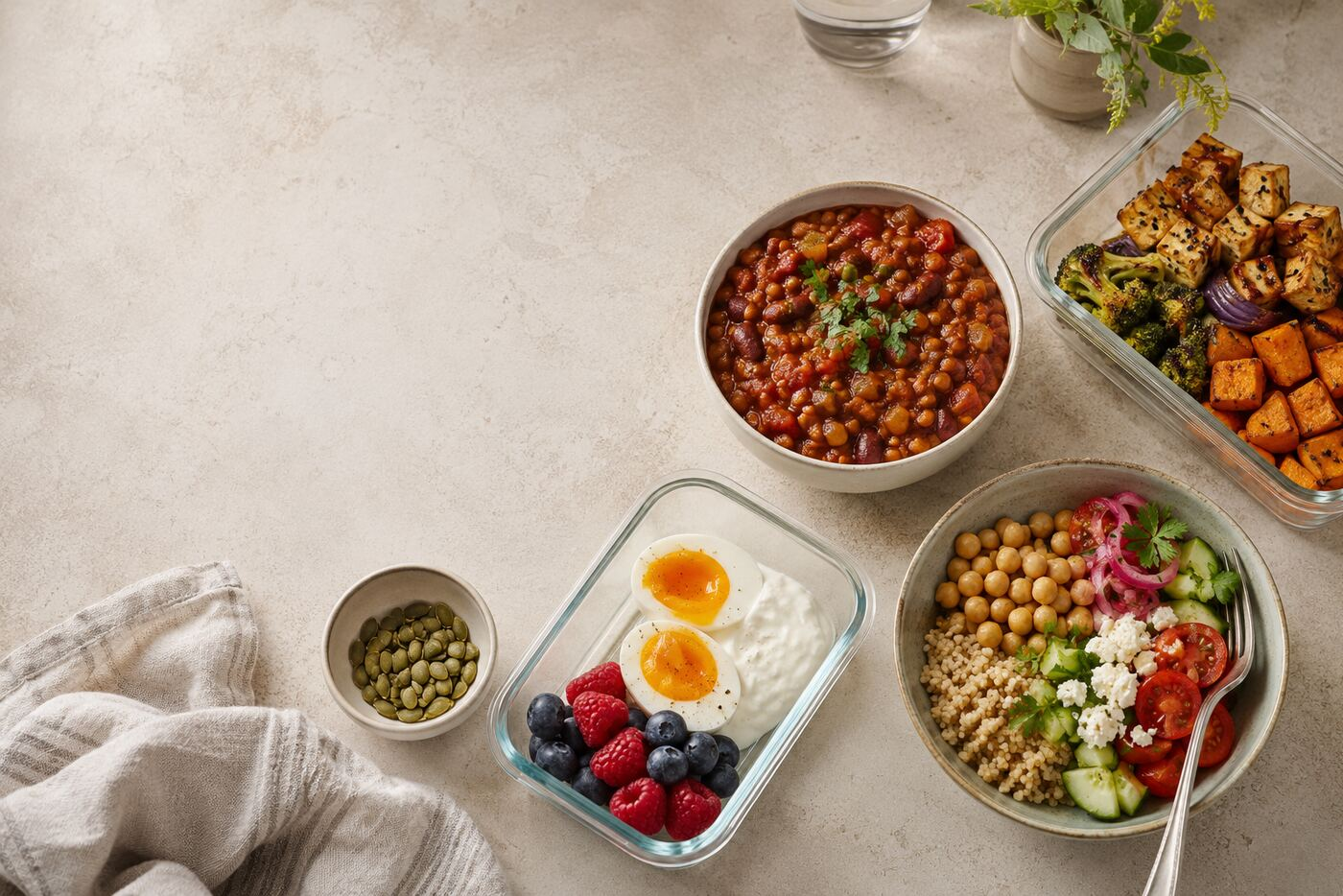
High-protein meal prep ideas can make busy weeks easier when they use familiar foods, enough variety and realistic portions. The goal is not to chase an extreme protein number. It is to include protein foods across meals alongside vegetables or fruit, carbohydrate-rich foods, fats and foods you enjoy.
This guide gives practical high-protein meal-prep ideas for beginners, including flexible vegetarian options. If you have kidney disease, are pregnant, manage an eating disorder or have been advised to limit protein, seek tailored advice from a qualified health professional.
What makes high-protein meal prep practical?
Choose two or three protein foods you are willing to eat more than once, then prepare them in different formats. Eggs, Greek-style yoghurt, milk or fortified alternatives, tofu, tempeh, lentils, beans, fish, chicken and lean meat can all contribute. Your exact needs depend on body size, activity, age, health and total diet, so avoid copying a generic target from social media.
Five flexible protein bases
1. Egg and vegetable muffins
Bake beaten eggs with chopped vegetables and cheese if desired. Pair with toast, fruit or a grain salad for a fuller meal.
2. Chicken, tofu or chickpea trays
Roast a protein food with vegetables and seasonings on one tray. Use the mixture in bowls, wraps or salads through the week.
3. Lentil and bean chilli
Cook a batch with tomatoes, beans, lentils and vegetables. Serve it with rice, baked potato, corn or wholegrain bread.
4. Yoghurt-based breakfast or snack pots
Layer yoghurt or a fortified alternative with fruit, oats, nuts or seeds. Prepare toppings separately if you prefer more crunch.
5. Fish or bean lunch bowls
Combine tinned fish, beans or tofu with grains, vegetables and a dressing. Use a different sauce or herb mix each day to avoid repetition.
A simple three-day plan
- Day 1: chickpea and roast-vegetable bowl with a yoghurt dressing.
- Day 2: leftover lentil chilli with rice and a side salad.
- Day 3: wrap with chicken, tofu or beans, crunchy vegetables and hummus.
Add fruit, milk, yoghurt or another snack only if it suits your appetite and schedule. Meal prep should support regular eating, not turn food into a calculation project.
How to build a balanced high-protein meal
Protein is only one part of a meal. Include vegetables or fruit for colour and fibre, carbohydrate-rich foods for energy and satisfaction, and fats or flavourful ingredients that make the food enjoyable. A plate that is only protein and vegetables may leave some people hungry or make the routine difficult to keep.
Vegetarian and plant-forward ideas
Beans, lentils, chickpeas, tofu, tempeh, eggs, dairy foods and fortified alternatives can all fit a protein-containing meal. Combine legumes with grains, vegetables and sauces you enjoy. Variety matters because different foods contribute different nutrients.
How to vary one batch across the week
Repetition is easier when the format and flavour change. A tray of roasted tofu, chicken or chickpeas can become a grain bowl with lemon dressing, a wrap with hummus, or a warm plate with potatoes and vegetables. Lentil chilli can be served over rice, spooned onto a baked potato or paired with toast and a side salad.
Keep sauces and crunchy toppings separate until serving. Herbs, salsa, yoghurt dressing, pesto, nuts, seeds and pickled vegetables can change the character of a meal without adding another full cooking session. If you do not want the same base three days in a row, freeze one portion early and use a quick alternative such as eggs, yoghurt, beans or tinned fish.
This component approach is usually more adaptable than filling five identical containers. It also lets household members adjust portions and ingredients for their own appetite and preferences.
Storage and food safety
Cool cooked meals promptly, store them in the fridge and use an insulated bag with an ice pack when a fridge is unavailable. Freeze portions you will not use within a few days. Reheat hot meals thoroughly and discard food that has been left at an unsafe temperature or seems spoiled.
A simple high-protein prep session
Choose one cooked base, one quick protein and one backup rather than preparing a different recipe for every day. For example, roast a tray of chicken, tofu or chickpeas; cook a pot of lentil chilli; and keep eggs, yoghurt, tinned fish or beans available for low-effort meals. While those cook, wash vegetables, prepare a grain or potatoes and mix one dressing.
- Start the item with the longest cooking time.
- Prepare vegetables and a carbohydrate-rich base.
- Cook or portion two protein foods.
- Cool cooked food promptly before refrigerating.
- Freeze portions you will not use within the next few days.
This creates interchangeable components without requiring an afternoon of cooking. It also makes it easier to vary meals: the same chickpeas can go into a grain bowl, a wrap or a warm curry.
Adjust the plan for appetite, budget and preferences
You do not need the most expensive protein product. Eggs, lentils, beans, tinned fish, milk, yoghurt and tofu can be economical choices, depending on local prices. Combining a smaller amount of meat with beans or lentils can stretch a meal while adding fibre and variety.
If a prepared meal does not keep you satisfied, increase the overall meal rather than adding protein automatically. More rice, bread, potatoes, fruit, vegetables, fats or another snack may be appropriate. Appetite varies from day to day, and a meal-prep plan should leave room to respond to it.
Frequently asked questions
Do I need protein powder for meal prep?
No. Powder can be convenient for some people, but ordinary foods can provide protein too. Choose the option that fits your budget, preferences and health needs.
Can high-protein meal prep help with exercise recovery?
Regular meals and adequate overall food intake matter more than a perfect timing rule for most beginners. If you are training hard or have specific performance goals, individual advice can help.
How can I avoid eating the same meal every day?
Prepare components rather than identical containers. Use the same protein base in bowls, wraps, salads and warm meals with different sauces or vegetables.
Related guides
- Healthy Meal Prep Guide
- Healthy Habits Guide
- Healthy Snacks for Work
- Nutrition Tips for Remote Workers
- Nutrition for Cognitive Health
Leave a Reply