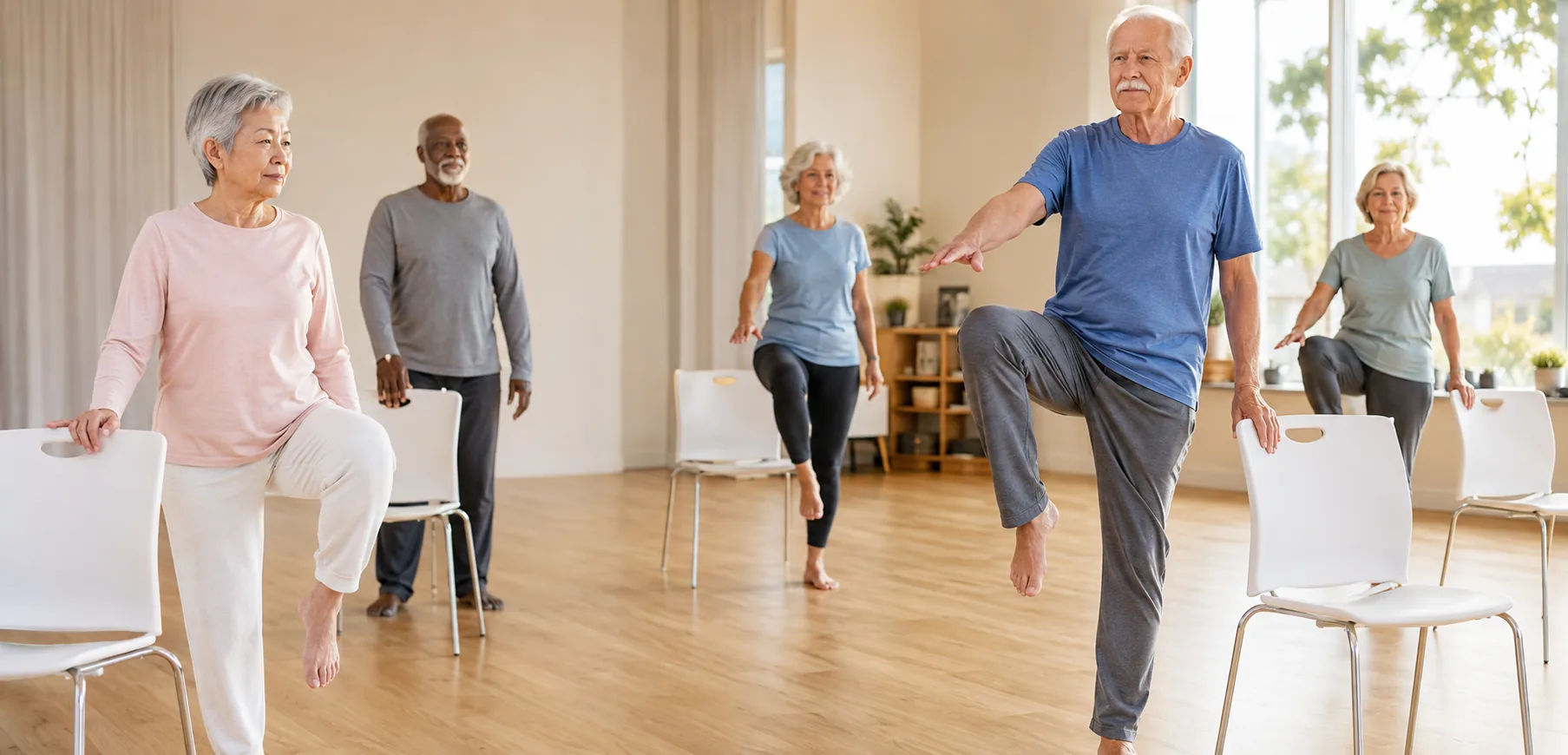
Healing Movement Flow: A Gentle Routine for Mobility and Confidence
Healing movement flow is a simple name for an unhurried sequence that helps you reconnect with comfortable movement. It is not a promise to cure pain, injury, stress or illness. It is a practical way to practise breathing, gentle range of motion, supported balance and everyday strength at a dose your body can tolerate.
The best place to begin is below your limit. Choose a clear space, sturdy chair and comfortable clothing. Move slowly enough to notice what feels fine, what feels stiff and what needs a smaller range.
Safety first
Stop for chest pain, faintness, severe breathlessness, sudden dizziness, new weakness or sharp/worsening pain. Seek clinician or physiotherapist guidance after recent surgery, a fall, an unstable condition, or symptoms that affect everyday function.
Why gentle movement matters
When pain or fatigue makes activity difficult, it is tempting to stop all movement. Yet prolonged inactivity can make daily tasks harder. Low-impact options such as walking, swimming and tai chi can place less stress on joints when appropriately chosen (see the WHO physical activity guidelines for adult recommendations). The aim is not to ignore pain; it is to find a level of activity that supports function without triggering a flare.
A 12-minute healing movement flow
1. Settle and breathe
Sit or stand with support nearby. Take five relaxed breaths. Let the shoulders soften and keep the jaw loose.
2. Ankle and hand circles
Make slow circles in both directions. Complete five each way; this is preparation, not a stretch test.
3. Seated cat-cow
Hands on thighs. Gently lift the breastbone, then round the upper back a little. Repeat six times without forcing the neck.
4. Supported weight shifts
Hold a counter and transfer a small amount of weight side to side. Pause over each foot. Do eight shifts.
5. Sit-to-stand or seated knee extension
Choose the version you can control. Do five slow repetitions, resting between each if needed.
6. Wall reach and shoulder glide
Slide hands gently up a wall only as high as comfortable. Lower slowly. Repeat six times.
7. Easy walk and reset
Walk around the room for two minutes, then sit and notice how you feel.
How to progress
Repeat the flow two or three times a week. First improve control; then add one repetition or a minute of walking. A good session leaves you feeling capable, not drained. Use the next-day check: normal daily movement, mild improving soreness and unchanged balance mean the dose was likely reasonable.
Related guidance: Healthy Ageing Exercise Guide, Yoga for Beginners, Qigong Flow Exercises, Gentle Yoga for Seniors, and Healthy Eating for Beginners.
Bottom line
Healing movement flow is a repeatable starting point, not a treatment plan. Use support, stay within comfortable limits and build gradually.
Continue with these guides
- Healthy Habits Guide
- Chair Pilates for Seniors: Gentle Strength and Mobility
- Nutrition for Cognitive Health: Food Habits for Healthy Ageing
A note on this post: I’m Ben Shannon, the person behind Healthful Harbor. I’m not a doctor, dietitian, physiotherapist, psychologist or any other kind of clinician. I’m a regular person who reads research, tries things, and writes about what’s worked for me. Everything on this site is general educational information, not individual medical, nutrition or mental-health advice. For your own situation, please talk with a qualified professional who knows your circumstances. See the Health Information Disclaimer for the full picture.