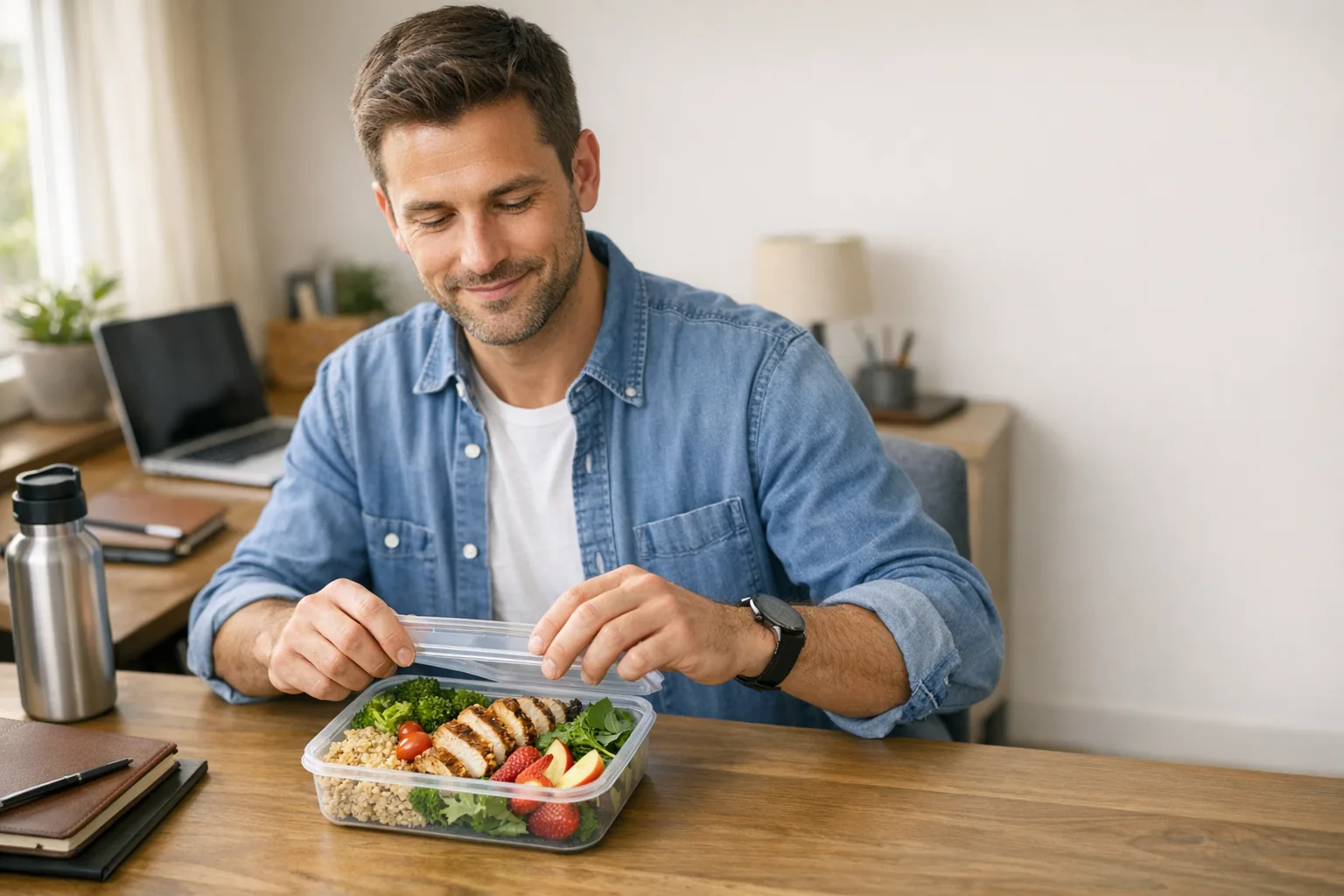
Healthy snacks for work should solve a practical problem: hunger between meals when time, refrigeration or food choices are limited. A useful snack combines satisfaction, portability and food safety. It does not need to be low-calorie, branded as “clean” or arranged for social media.
Pairing produce or a whole grain with a protein food or healthy fat often creates a more satisfying option. Appetite and needs vary, so a snack can be small or substantial. People with allergies, diabetes, coeliac disease or other medical needs should adapt choices with appropriate guidance.
The portable snack formula
Choose one from each side:
- Fibre or produce: fruit, vegetables, wholegrain crackers, oats or popcorn.
- Protein or healthy fat: yoghurt, cheese, eggs, nuts, seeds, hummus, beans or nut/seed spread.
Examples include apple with peanut butter or crackers with cheese. One food is also fine when that is what you want.
1. Apple and peanut or seed butter
Pack a whole apple and an individual container of spread. Use a seed butter where nut-free policies apply. Confirm cross-contact warnings for allergies.
2. Yoghurt, berries and oats
Use plain yoghurt, berries and a spoon of oats or seeds. Keep it refrigerated or use an insulated bag with an ice brick.
3. Wholegrain crackers and cheese
Portion crackers and cheese, adding grapes or cherry tomatoes. Keep cheese cold.
4. Carrot and cucumber with hummus
Pack cut vegetables with hummus in a leakproof container. Refrigerate promptly.
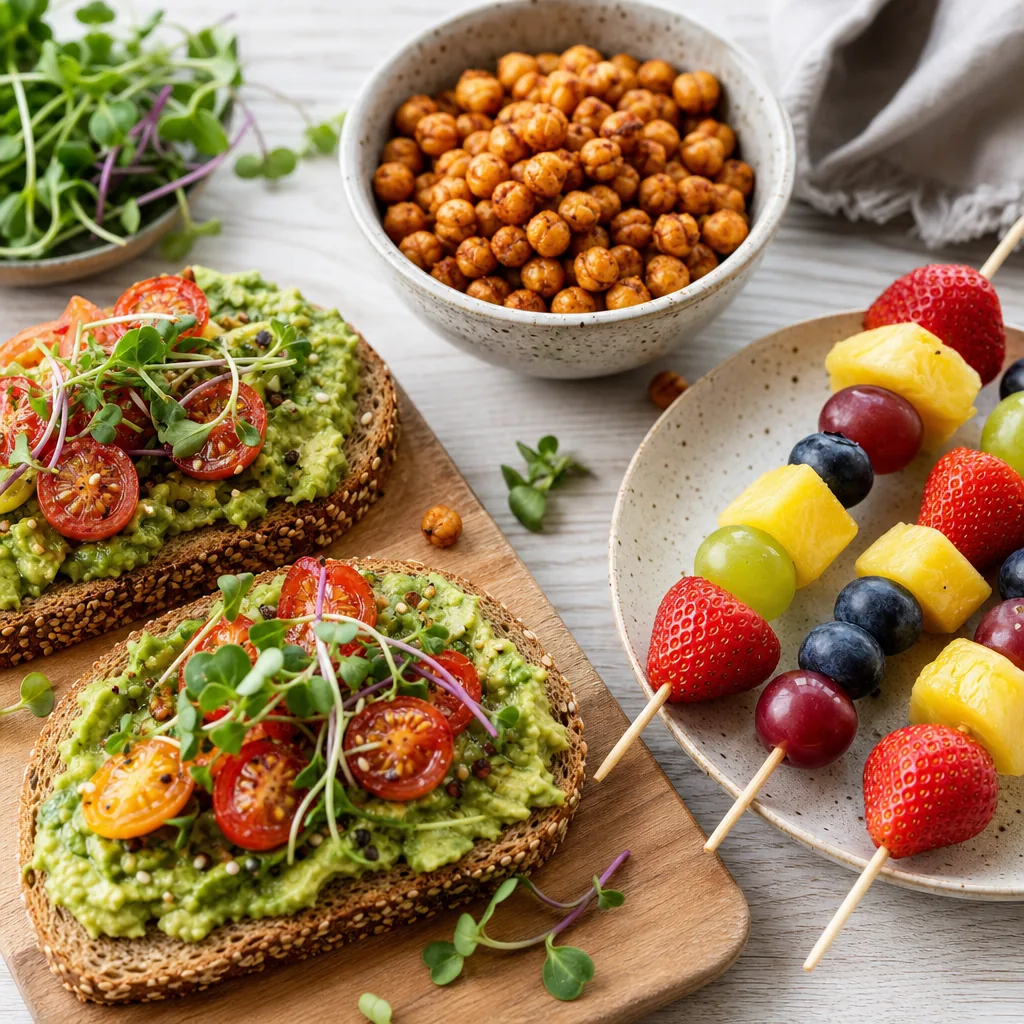
5. Roasted chickpeas
Roasted chickpeas provide crunch, fibre and protein. Prepare at home or choose a packaged option with a sodium level that suits you.
6. Trail mix
Combine unsalted nuts, seeds and a small amount of dried fruit. Portion into containers so the bag remains easy to carry and rotate ingredients for variety.
7. Banana and milk
Pair a banana with UHT milk or fortified soy milk. This option works when refrigeration is unavailable until opening.
8. Boiled egg and wholegrain toast
Pack a peeled or unpeeled boiled egg with toast or crackers and sliced tomato. Keep egg cold and follow storage guidance.
9. Pear and walnuts
A whole pear travels well when packed to avoid bruising. Pair with walnuts or pumpkin seeds.
10. Edamame
Cook frozen edamame according to instructions, cool promptly and pack cold. Choose shelled beans for easier desk eating.
11. Cottage cheese and tomato
Pack cottage cheese with cherry tomatoes, pepper and wholegrain crackers. Use an insulated lunch bag.
12. Air-popped popcorn and seeds
Popcorn is a whole grain. Add pumpkin seeds or serve with a protein food. Avoid assuming every flavoured packet has the same nutrition profile.
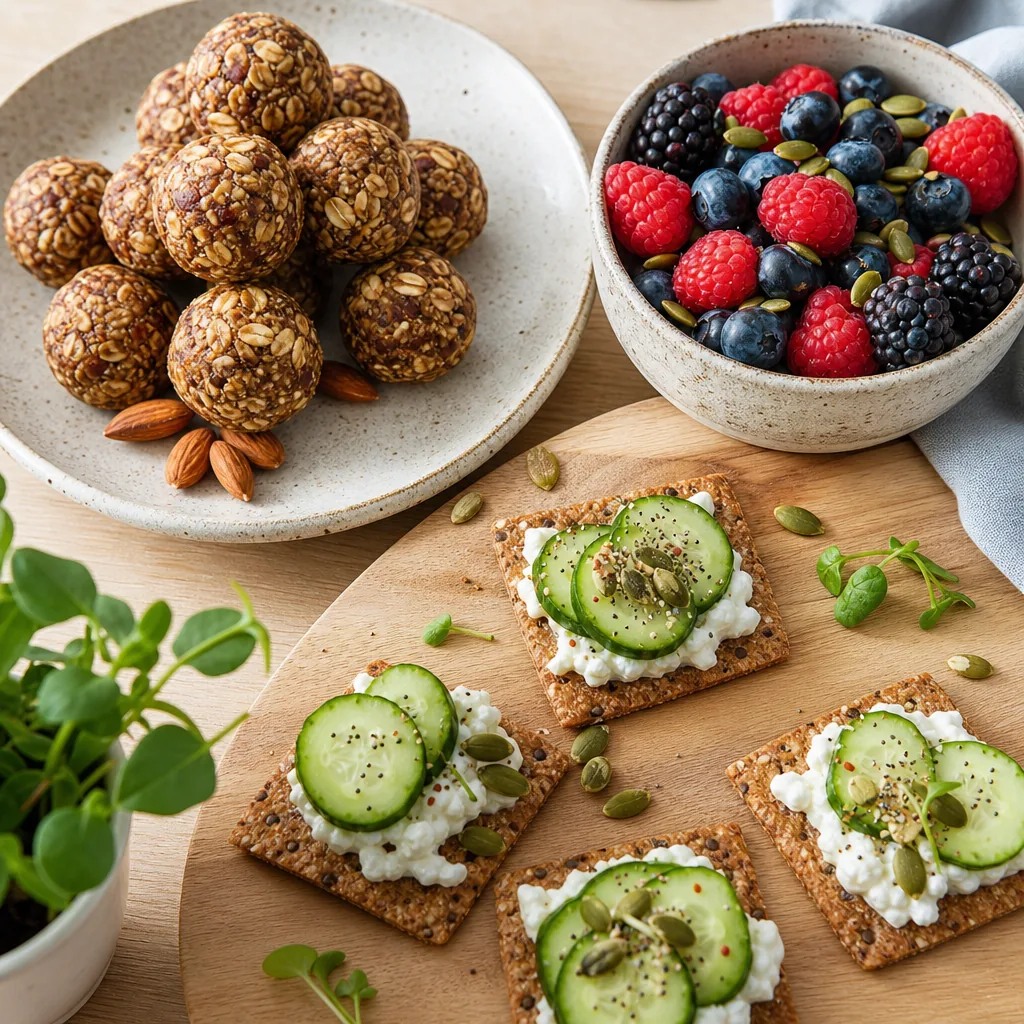
13. Oat and nut-butter bites
Combine oats, nut or seed butter and optional dried fruit, then roll into small portions. Refrigerate and label for allergens.
14. Tuna and wholegrain crackers
Use a sealed single-serve tuna pack with crackers and cucumber. Follow workplace and pregnancy-related fish guidance and consider odour in shared spaces.
15. Avocado crispbread
Pack a small avocado or prepared portion with wholegrain crispbread and lemon. Keep cut avocado cold and use promptly.
16. Fruit and roasted broad beans
Pair a mandarin or apple with roasted broad beans. Check packaged products for allergens and sodium.
17. Mini Mediterranean snack box
Pack hummus, olives, cucumber, tomato, wholegrain pita and a boiled egg or roasted chickpeas. This can become a small meal for long shifts.
18. Chia yoghurt cup
Stir chia seeds into yoghurt with fruit and refrigerate overnight. Add liquid if the texture becomes too thick.
19. Leftover mini wrap
Fill half a wholegrain wrap with chicken, tofu, beans or egg plus vegetables. Keep cold and use safe leftovers.
20. Emergency desk snack
Store wholegrain crackers, UHT milk, canned beans with a pull tab, nut/seed spread or a low-sugar cereal. Check expiry dates every month.
Five no-fridge combinations
When foods remain sealed and labels permit room-temperature storage:
- apple plus nut/seed butter;
- banana plus UHT milk;
- wholegrain crackers plus roasted chickpeas;
- mandarin plus nuts or seeds; and
- popcorn plus a shelf-stable protein option.
Once opened, UHT milk and other products may need refrigeration. Follow labels.
Five refrigerated combinations
- yoghurt, berries and oats;
- egg, crackers and tomato;
- hummus and vegetables;
- cottage cheese and fruit; and
- leftover mini wrap.
Use a workplace refrigerator or an insulated bag with a frozen ice brick. Do not rely on an air-conditioned room to keep perishable food safe.
Prepare snacks in 20 minutes
- Wash whole fruit.
- Cut two days of sturdy vegetables.
- Portion nuts, seeds or roasted legumes.
- Boil eggs or prepare yoghurt cups.
- Put tomorrow’s snack beside the lunch container.
Prepare only what will keep safely and with good quality.
Match snacks to hunger
Use a small option when a meal is soon and a more substantial combination for long gaps or active work. Hunger is not a failure of meal planning.
If a snack never satisfies, add more volume, protein, carbohydrate or fat—or plan an actual meal. Avoid turning snacks into tiny portions that leave you preoccupied with food.
Allergies and shared workplaces
Follow workplace allergy policies. Wash hands and surfaces, label containers and avoid shared utensils that create cross-contact. “Nut-free” does not mean every seed product is safe for every person; check individual allergens.
Never pressure a colleague to explain a medical diet.
Food safety at work
Keep perishable food cold, reheat leftovers until appropriately hot and avoid leaving them at room temperature for long periods. Clean shared refrigerators and healthy office snacks with your name and date.
If the workplace fridge is unreliable, use an insulated bag or choose shelf-stable foods. Smell cannot reliably identify all food-safety risks.
Avoid marketing traps
Protein bars, vegetable chips and “wellness” bites can be convenient, but claims do not tell the whole story. Compared with portable healthy snacks serving size, protein, fibre, added sugar, sodium and allergens. Protein bars, vegetable chips, and “wellness” bites offer convenience, but their claims can be misleading. It’s important to evaluate serving size, protein content, fiber, added sugars, sodium levels, and potential allergens. A simple mix of fruit and yogurt might be more affordable and just as beneficial.
No snack earns moral labels such as good, bad, clean or guilty. The overall pattern matters.
Link snacks to meal prep
Choose snacks that reuse weekly ingredients. The Mediterranean meal prep plan already uses fruit, hummus, vegetables, nuts, eggs and whole grains. The meal prep for beginners system helps you prepare components without overproducing.
Common questions
Do I need to snack?
No. Some people prefer meals only. Snack when it supports hunger, activity, medication timing or the day’s schedule.
Are protein bars healthy?
They can be convenient, but products vary. Choose based on need, ingredients, cost and tolerance rather than the word “protein.”
Is fruit too high in sugar?
Whole fruit provides fibre, water and nutrients. Individual diabetes management may affect portions and pairings, but fruit does not need to be feared.
What about shift work?
Pack several flexible components and a small meal rather than relying on one snack. Keep caffeine and food safety in mind across the shift.
Budget-friendly snack planning
Use supermarket unit prices and choose ingredients that serve several roles. Oats can become breakfast or snack bites; carrots and hummus fit lunch and snacks; frozen berries work in yoghurt without spoiling quickly.
Other lower-cost options include seasonal fruit, home-popped popcorn, boiled eggs, canned chickpeas, peanut butter and wholegrain toast. Individual packets cost more, so portion from larger packs when storage, hygiene and allergies allow.
A five-day work snack rotation
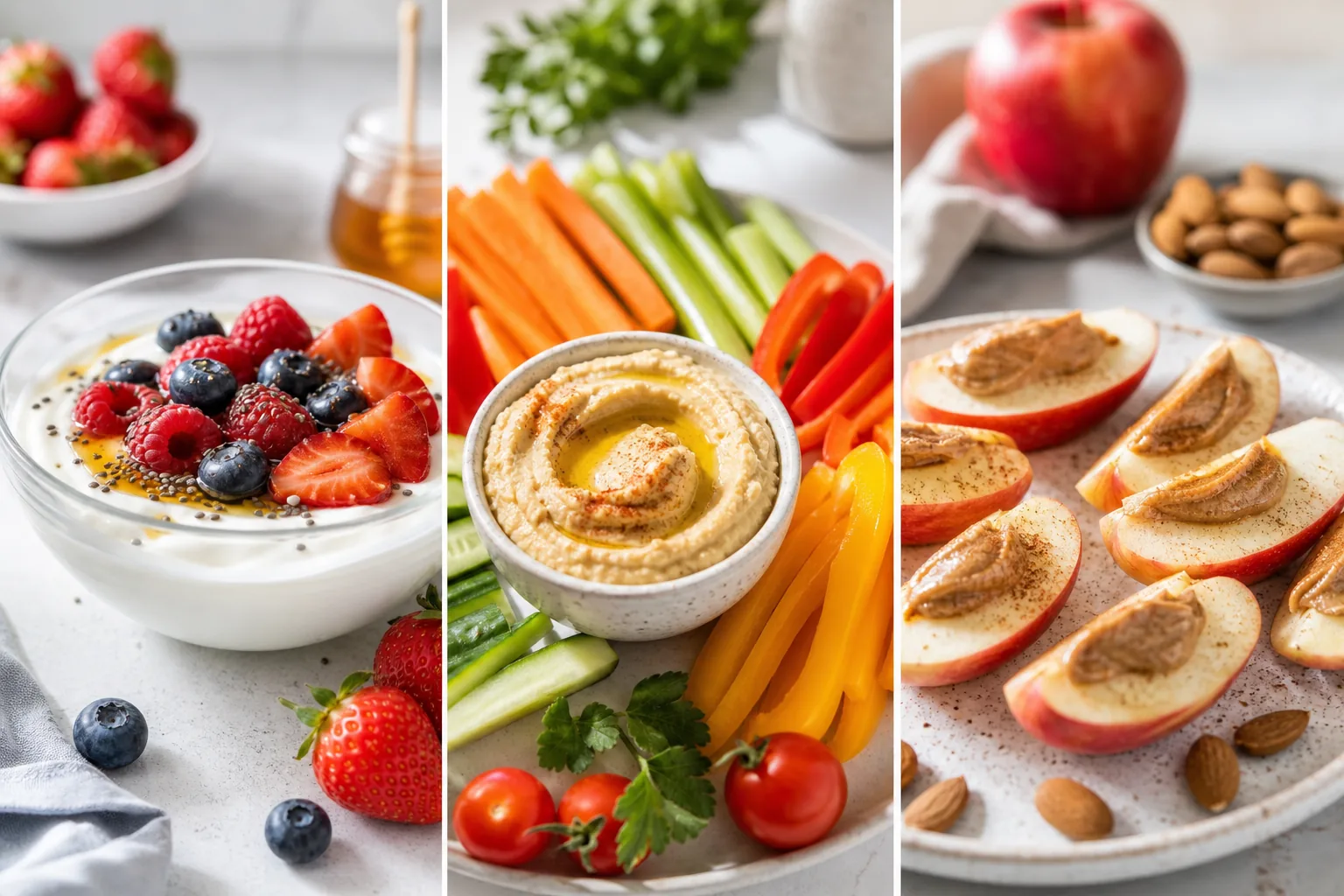
- Monday: Apple and peanut or seed butter
- Tuesday: Yoghurt, oats and frozen berries
- Wednesday: Hummus, carrots and wholegrain crackers
- Thursday: Boiled egg, tomato and toast
- Friday: Popcorn, roasted chickpeas and fruit
The rotation repeats core ingredients without giving you the exact same snack every day.
For physically active jobs
People doing manual work may need larger snacks or an additional meal. Combine carbohydrate and protein—for example, a substantial wrap, yoghurt with oats and fruit, or a snack box with bread, hummus, egg and vegetables.
Hydration and heat also matter. Do not use coffee or energy drinks to replace food and fluid through a long shift.
For desk-based work
Plan a snack if hunger commonly arrives, but do not eat by the clock merely because food is visible. Keep it away from the keyboard, take a brief pause and notice whether you want the snack now or later.
This is not a rule against eating at the desk. It is a way to give the food enough attention to register.
Make the vending machine a backup, not an enemy
When planned food runs out, choose what meets the need from what is available. Look for nuts, milk, yoghurt, popcorn, wholegrain crackers or a sandwich, but one confectionery snack does not damage an overall pattern.
Aim to incorporate a variety of colors on your plate, as this often indicates a range of nutrients. Consider preparing meals in advance to avoid relying on last-minute options that may be less nutritious. Staying mindful of portion sizes can prevent overeating, even with healthier choices. Remember to take breaks to stretch and recharge, as this can enhance focus and productivity throughout the day. Lastly, keep a water bottle handy to ensure you stay hydrated while working.
Rigid “never” rules can make ordinary choices feel like failure. Restock the emergency drawer and continue.
The bottom line
Healthy snacks for work combine practical storage with foods you enjoy. Pair fruit, vegetables or whole grains with yoghurt, eggs, legumes, nuts, seeds or another protein food when you want longer satisfaction.
The best office snack is the one that is available, safe and sufficient when hunger arrives.
Further reading
Related reading
Build healthier workday eating habits with these practical guides:
- Healthy Eating for Beginners
- Healthy Meal Prep Guide
- Nutrition Tips for Remote Workers
- Healthy Habits Guide
Continue with these guides
- Nutrition for Cognitive Health: Food Habits for Healthy Ageing
- Exercise for Healthy Ageing: A Weekly Plan for Adults 60+
A note on this post: I’m Ben Shannon, the person behind Healthful Harbor. I’m not a doctor, dietitian, physiotherapist, psychologist or any other kind of clinician. I’m a regular person who reads research, tries things, and writes about what’s worked for me. Everything on this site is general educational information, not individual medical, nutrition or mental-health advice. For your own situation, please talk with a qualified professional who knows your circumstances. See the Health Information Disclaimer for the full picture.