Yoga for Arthritis: Gentle, Adaptable Movement
Yoga for arthritis relief can be a practical starting point when it is approached slowly, with comfortable ranges and no pressure to copy advanced poses. This page gives a manageable home option for beginners.
Safety first
Use a clear space and stable support. Stop for chest pain, faintness, severe breathlessness, sharp or worsening pain, dizziness, or new balance problems. Seek clinical or physiotherapy advice after a recent fall, surgery, unstable condition, or worsening joint symptoms.
Simple beginner routine
Use chair cat-cow, ankle circles, supported weight shifts, gentle shoulder movement and short walks. On flare days reduce range and duration; avoid aggressive stretching, deep loaded bends or holding painful positions.
How to progress
Start with one round two or three times weekly. First improve control, then add a repetition or a few minutes. The right routine is one you can repeat without feeling overwhelmed.
Build this into a balanced plan with our Yoga for Beginners guide, Healthy Ageing guide, qigong flow exercises, gentle yoga for seniors, and healthy eating guide. For a separate attention practice, see our Mindfulness for Joint Pain guide.
Bottom line
Gentle, consistent practice is more useful than forcing a difficult workout. Adjust the movements to your body and build gradually.
Start with comfort and support
Yoga for arthritis can be adapted for people who want gentle movement around stiff or sore joints. It should not require deep stretches, fast transitions or getting down to the floor if that does not feel safe. The aim is to practise comfortable mobility, steady breathing and confidence in everyday movement.
Symptoms can change from day to day. On a more difficult day, choose a shorter session, use a chair or wall, and keep the range smaller. Skip positions that cause sharp pain, unstable joints, dizziness or symptoms that linger or worsen afterward.
When to get individual advice
Speak with a doctor, physiotherapist or qualified exercise professional if you have a recent joint injury or replacement, a significant flare, new swelling, unstable joints, frequent falls or uncertainty about what is safe. Seek urgent care for sudden severe pain, new weakness, fever or symptoms after a significant injury.
A gentle 10-minute sequence
1. Supported breathing and posture
Sit or stand with a stable chair or bench nearby. Take five easy breaths, relax the shoulders and notice a comfortable upright position.
2. Seated or standing shoulder rolls
Make small, slow circles in both directions. Keep the motion easy rather than trying to reach a large range.
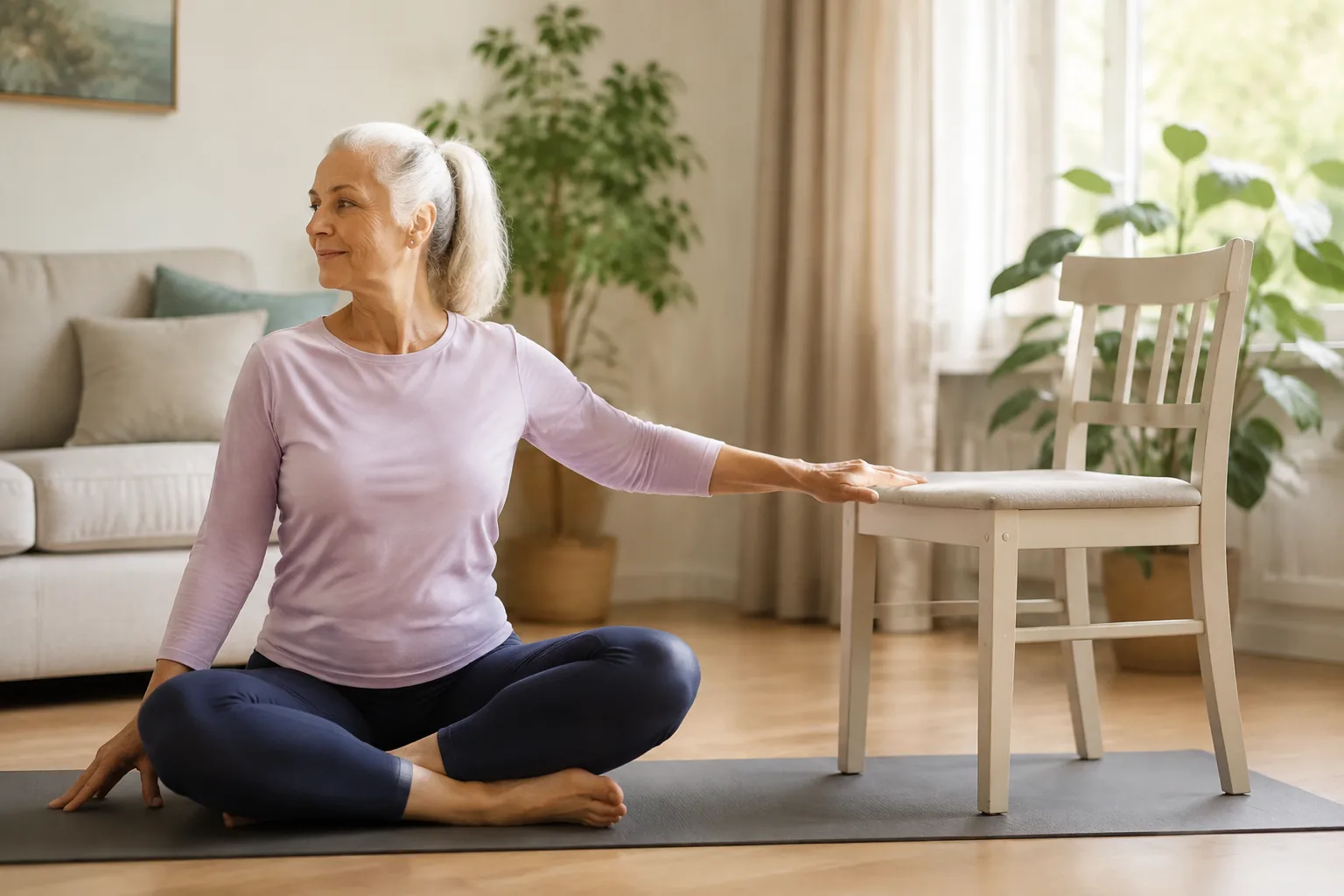
3. Chair-supported side reach
Rest one hand on a chair and reach the other arm only as high as feels comfortable. Breathe out as you return. Repeat each side three to five times.
4. Supported weight shifts
With both hands on a bench or chair, shift gently from one foot to the other. This can support balance awareness without a demanding pose.
5. Seated knee straightening
From a stable chair, slowly straighten one knee partway, lower and switch sides. Use a smaller range if the knee is sensitive.
6. Calm finish
Return to a comfortable seated or standing position and take a few slow breaths. A short session that you can repeat is more useful than pushing through discomfort.
Build a balanced movement week
Yoga is one option within a wider routine that can include walking, adapted strength work, balance practice and adequate recovery. Use the Yoga for Beginners Guide for foundational modifications, the Healthy Ageing Guide for a broader plan, and Gentle Yoga for Seniors for other supported movement choices. The Healthy Habits Guide and Nutrition for Cognitive Health round out the cluster with practical food and habit support.
Further reading
For general information about arthritis, symptoms and treatment options, see Healthdirect Australia: Arthritis.