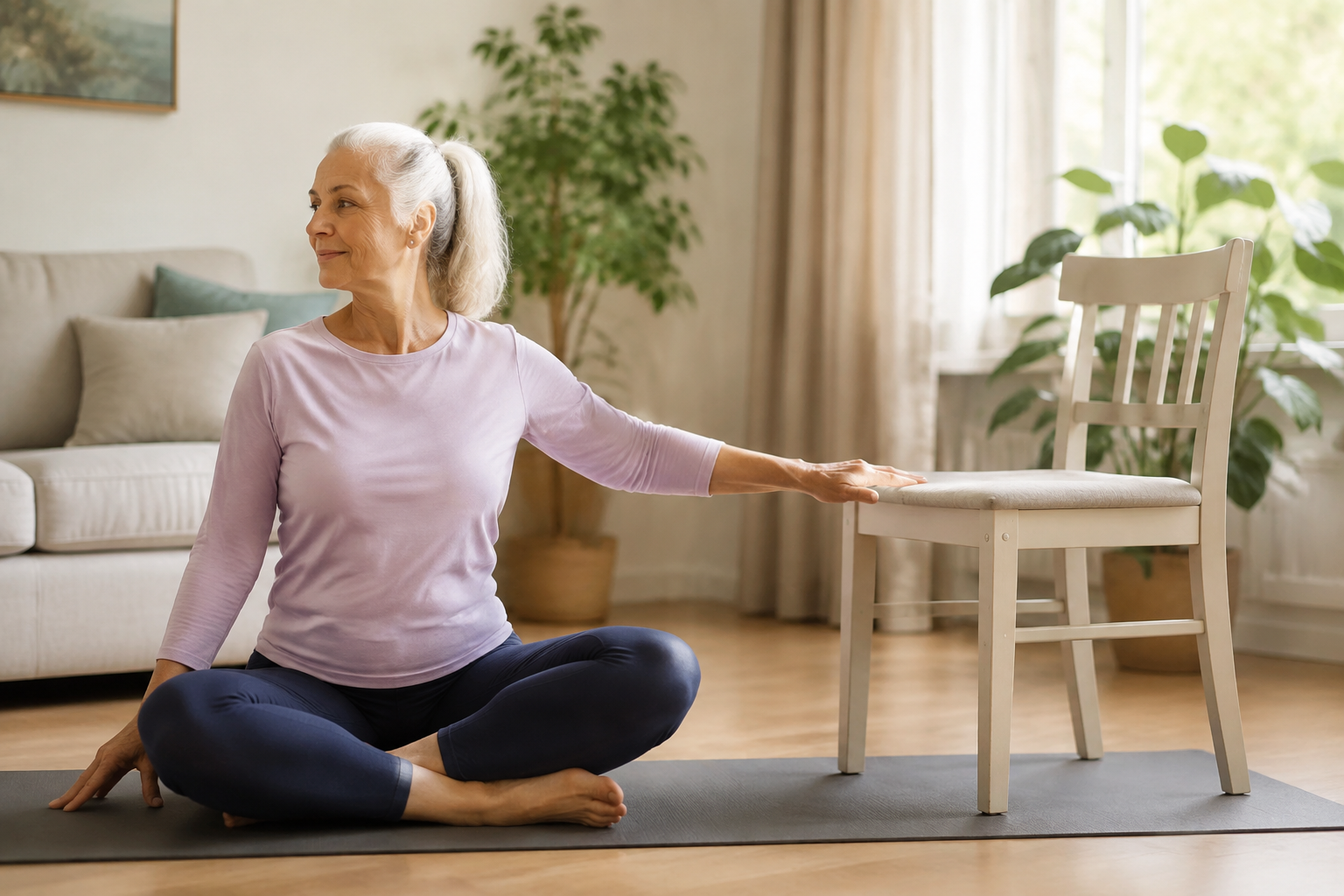
Yoga for Tech Neck: Gentle Stretches for Neck Tension
Yoga for tech neck can be a practical starting point when it is approached slowly, with comfortable ranges and no pressure to copy advanced poses. This page gives a manageable home option for beginners.
Safety first
Use a clear space and stable support. Stop for chest pain, faintness, severe breathlessness, sharp or worsening pain, dizziness, or new balance problems. Seek clinical or physiotherapy advice after a recent fall, surgery, unstable condition, or worsening joint symptoms.
Simple beginner routine
Try chin nods, shoulder rolls, wall angels, chest opening at a doorway, seated upper-back turns and a supported child’s-pose alternative. Move slowly; avoid forcing the neck backward or stretching into pain.
How to progress
Start with one round two or three times weekly. First improve control, then add a repetition or a few minutes. The right routine is one you can repeat without feeling overwhelmed.
Build this into a balanced plan with our Yoga for Beginners guide, Healthy Ageing guide, qigong flow exercises, gentle yoga for seniors, and healthy eating guide.
Bottom line
Gentle, consistent practice is more useful than forcing a difficult workout. Adjust the movements to your body and build gradually.
Related guides
- Yoga for beginners guide
- Mental wellbeing and stress management
- Healthy habits guide
- Healthy ageing exercise guide
- Gentle yoga for seniors
A gentle 10-minute tech-neck routine
Use a chair and a clear wall space. Start with five small chin nods: keep your head level, glide the chin gently back as if making a double chin, then release. This is a small control exercise, not a hard stretch.
Next, make five slow shoulder rolls in each direction. Stand with your back near a wall for five wall angels: keep the movement short and let your arms slide only as high as your shoulders stay comfortable. Finish with a doorway chest opening for two easy breaths per side and a seated upper-back turn on each side.
Move at a pace that lets you breathe normally. Stop if you feel sharp, spreading or worsening pain, numbness, tingling, dizziness, or a headache that is new or severe. It is fine to skip any movement that does not suit your body.
Use the routine between screen blocks
A short movement break every hour or two is usually more practical than one long session. Change position, look away from the screen, rest your arms, and place the screen at a height that does not make you crane your neck. The aim is variety, not a perfectly rigid posture.